

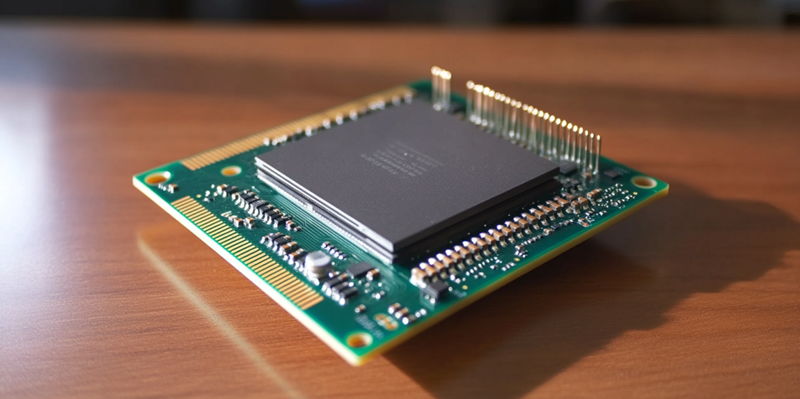
The anticipation surrounding AMD’s upcoming Radeon RX 8800 XT graphics card has surged with recent leaks suggesting substantial performance and efficiency improvements. These advancements, embedded within AMD’s RDNA 4 architecture, are poised to reignite the competitive landscape against Nvidia’s formidable RTX 4080 and RTX 4080 Super GPUs. Speculations primarily revolve around the RX 8800 XT’s remarkable boost in ray tracing capabilities, signaling a potential shift in AMD’s position within the GPU industry. Enthusiasts are eager to see whether these leaks translate into a product that can genuinely stand toe-to-toe with Nvidia’s offerings.
Performance Improvements
Enhancements in Rasterization and Ray Tracing
The RX 8800 XT showcases AMD’s commitment to elevating performance, with leaked specifications hinting at a significant leap forward. Notably, the RX 8800 XT is rumored to achieve rasterization performance on par with Nvidia’s RTX 4080. This parity underscores AMD’s advancements, as the RTX 4080 has been a benchmark within its segment. Beyond rasterization, the RX 8800 XT is expected to excel in ray tracing, an area where AMD’s previous generations have lagged behind. The card’s ray tracing prowess reportedly rivals that of Nvidia’s RTX 4080 Super, marking a remarkable 45% performance boost over AMD’s current flagship, the RX 7900 XTX, in ray tracing-heavy games like Resident Evil 4 Remake.
This performance boost is not solely about keeping pace with Nvidia but aims to redefine expectations for AMD’s high-end GPUs. The leap in ray tracing performance suggests a strategic pivot, overcoming a notable limitation of the previous RDNA iterations. Enhanced ray tracing will likely appeal to gamers and professionals who require superior graphical fidelity and realistic lighting effects. Given the growing prevalence of ray tracing in modern gaming titles and creative applications, the RX 8800 XT’s advancements could significantly influence buying decisions, potentially drawing users who had previously favored Nvidia for its superior ray tracing capabilities.
Efficiency Enhancements
Arguably as crucial as raw performance is the RX 8800 XT’s anticipated efficiency improvements. Despite delivering enhanced capabilities, the RX 8800 XT is expected to be more power efficient, consuming 25% less power than its predecessor, the RX 7900 XTX. This decrease in power consumption underscores AMD’s strategic push toward producing GPUs that balance performance with energy efficiency, a factor increasingly important in today’s technology landscape where power and thermal considerations play a significant role in designing and utilizing high-performance components.
This power efficiency likely stems from architectural optimizations within AMD’s RDNA 4 framework. These improvements not only enhance performance-per-watt but also align with broader industry trends favoring eco-friendly computing solutions. Lower power consumption could translate into quieter, cooler operations, offering a more pleasant user experience. Furthermore, energy-efficient designs can mitigate the need for expansive cooling solutions, potentially lowering overall system costs and making high-end GPUs more accessible to a broader audience. AMD’s focus on efficiency also positions the RX 8800 XT favorably within the market as power usage becomes a critical consideration for both individual consumers and data centers seeking to optimize energy costs.
Market Positioning and Launch Timeline
Mid-Range Market Strategy
AMD’s strategic positioning of the RX 8800 XT reflects a calculated approach to the current GPU market dynamics. Despite the significant advancements in performance and efficiency, AMD has opted to align the RX 8800 XT with mid-range market expectations. This decision effectively narrows the competitive scope to Nvidia’s RTX 4080 series, presenting the RX 8800 XT as a viable alternative without necessarily producing a high-end flagship intended to directly combat Nvidia’s top-tier GPUs. This strategy could attract consumers who prioritize a balance of performance and cost, particularly in an era where budget constraints and value propositions are increasingly pivotal.
The focus on the mid-range sector also suggests AMD’s acknowledgment of shifting consumer preferences. By offering a high-performing, energy-efficient GPU within a more accessible price bracket, AMD aims to capture a broader customer base, including gamers, creators, and professionals who seek robust performance without the premium price tag associated with high-end GPUs. This market positioning not only broadens AMD’s competitive landscape but also responds to an industry push for more cost-effective high-performance solutions.
Anticipated Launch and Production Timeline
The RX 8800 XT is projected for mass production by mid-December 2024, anticipating an official launch in early 2025. If these timelines hold, consumer availability could be expected in January or February 2025. This timing aligns with historical trends of post-holiday season product launches, ensuring a fresh market presence at the beginning of the year. A timely launch maximizes visibility and allows AMD to capitalize on consumer interest at a period when many are looking to upgrade or build new systems.
The launch timing also strategically positions AMD to compete with Nvidia’s anticipated releases, possibly presenting consumers with a compelling choice amid Nvidia’s next-gen GPUs’ debut. Early 2025 could be a critical period for AMD, marking its reentry into a competitive fray with a product that not only equalizes but potentially surpasses existing competitors in specific performance metrics. AMD’s expected focus on efficiency and ray tracing could further amplify the RX 8800 XT’s market impact, establishing it as a noteworthy contender in the GPU space.
Strategic Focus on Ray Tracing
Repositioning AMD in the GPU Market
The substantial advancements in ray tracing performance could markedly shift AMD’s position within the GPU market, addressing a well-documented shortfall in its prior architectures. The RX 8800 XT’s expected performance in the realm of ray tracing, a key feature of modern gaming and graphical applications, aligns with an industry-wide shift towards this technology. By leveling and potentially surpassing the performance benchmarks set by Nvidia’s RTX 4080 Super, AMD is making a bold statement about its technological strides and ambition to reclaim visibility in the high-performance GPU segment.
Improved ray tracing performance elevates the RX 8800 XT’s appeal to a range of users demanding top-tier visual realism and performance. Gamers, developers, and content creators alike seek GPUs capable of handling the extensive computational loads that come with real-time ray tracing. This strategic focus not only enhances game visuals but also supports advanced rendering techniques in professional applications, thus broadening the RX 8800 XT’s usability and appeal. By fortifying its ray tracing capabilities, AMD directly addresses a consumer demand its previous offerings struggled to meet.
Addressing Industry Trends with DLSS and Performance Balance
Excitement is building around AMD’s soon-to-be-released Radeon RX 8800 XT graphics card, thanks to recent leaks hinting at significant performance and efficiency upgrades. Featuring AMD’s advanced RDNA 4 architecture, these improvements are set to shake up the competition with Nvidia’s powerful RTX 4080 and RTX 4080 Super GPUs. Much of the buzz centers on the RX 8800 XT’s impressive boost in ray tracing capabilities, which could mark a pivotal shift in AMD’s standing within the GPU industry. Enthusiasts and industry watchers are keen to see if these leaks will translate into a product that truly competes head-to-head with Nvidia’s offerings. Additionally, the enhanced performance may attract gamers and professionals alike who seek high-quality graphics rendering and efficient processing power. As more details emerge, the Radeon RX 8800 XT might not only reignite the AMD vs. Nvidia rivalry but also redefine consumer expectations for cutting-edge graphics technology. Only time will tell if AMD can deliver on these promising advancements, potentially altering the landscape of the GPU market.