

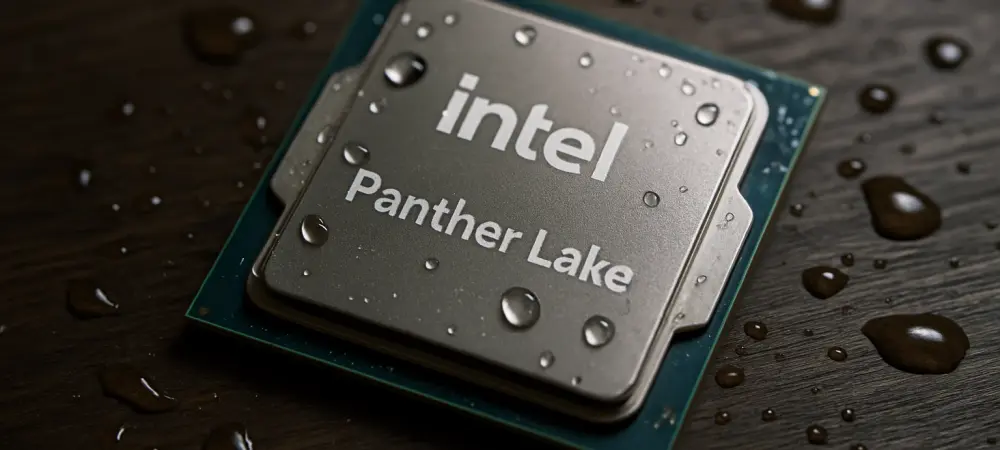
Setting the Stage: Intel’s Critical Manufacturing Stumble
In the high-stakes arena of semiconductor manufacturing, Intel stands at a pivotal crossroads as it grapples with significant production delays for its Panther Lake (PTL) chips, built on the advanced Intel 18A process node. These chips were expected to bolster Intel’s position in the competitive CPU market, yet dismal yield rates and persistent defects have thrown timelines into disarray, with only about 10% of units meeting required standards. This market analysis delves into the implications of these setbacks, exploring how they ripple across Intel’s foundry ambitions and the broader semiconductor landscape. The purpose is to unpack current trends, assess data-driven projections, and provide strategic insights into how Intel’s challenges could reshape industry dynamics. As a key player, Intel’s struggles are not just a company-specific issue but a signal of deeper currents affecting global tech supply chains.
Diving Deep: Market Trends and Projections in Intel’s Struggle
Unraveling the Yield Rate Crisis and Production Bottlenecks
The core of Intel’s current predicament lies in the alarmingly low yield rates for Panther Lake chips, a metric that reflects the percentage of usable chips produced from each manufacturing batch. With defect rates reportedly three times higher than acceptable levels for high-volume manufacturing, Intel faces a steep challenge in meeting its planned launch schedules for the fourth quarter of this year. Industry data suggests that such inefficiencies not only delay product rollouts but also inflate production costs, squeezing profit margins in an already competitive sector. This issue with the 18A node, designed primarily for internal use, highlights technical barriers that could hinder Intel’s ability to scale output as projected for the first quarter of next year.
Competitive Pressures and Shifting Market Dynamics
Intel’s delays occur against a backdrop of intense rivalry, where competitors like TSMC and AMD are aggressively advancing their own cutting-edge nodes, capturing market share in high-performance computing and consumer electronics. Market analysis indicates that Intel’s slippage in delivery timelines for Panther Lake could cede ground to these rivals, especially in segments where speed-to-market is critical. Furthermore, regional factors, such as U.S. government initiatives to boost domestic semiconductor production through incentives, add pressure on Intel to perform as a national champion. Trends show that customer loyalty in this space is fragile, with enterprise clients potentially pivoting to alternatives if Intel cannot stabilize its production outlook soon.
Foundry Ambitions at Risk: Strategic Implications
Intel’s broader strategy to transform its foundry division into a powerhouse rivaling TSMC is under threat due to these manufacturing hiccups. The company has positioned its foundry services as a cornerstone of its turnaround plan, targeting both internal chip production and external client contracts. However, persistent issues with the 18A process suggest that Intel may not be ready to handle external demands at this node, as supply chain metrics reveal minimal progress in yield optimization. Projections for the next two years, from 2025 to 2027, indicate that if Intel fails to resolve these challenges, it might need to scale back ambitions for leading-edge manufacturing, potentially outsourcing certain aspects to competitors while refocusing on design strengths.
Economic and Technological Trends Shaping the Future
Looking ahead, the semiconductor market is poised for transformation with innovations like extreme ultraviolet lithography and modular chiplet designs offering potential solutions to production woes. Intel could leverage these advancements to overcome current bottlenecks, though escalating R&D costs pose a financial hurdle. Market forecasts suggest that regulatory support, including subsidies aimed at strengthening domestic production, might ease some economic burdens for Intel over the coming years. However, global economic uncertainties could dampen investment in such high-risk, high-reward technologies, forcing a delicate balance between innovation and fiscal prudence in Intel’s strategic planning.
Reflecting on the Path Forward: Strategic Takeaways
Looking back, Intel’s battle with Panther Lake production delays underscores a defining chapter in its storied history within the semiconductor industry. The severe yield issues with the 18A node and the subsequent postponement of critical launch timelines reveal vulnerabilities that test the company’s resilience. These challenges not only impact immediate product availability but also cast a shadow over Intel’s competitive standing and foundry aspirations. Moving forward, strategic recommendations include prioritizing rapid yield optimization through targeted investments in process refinement. Additionally, diversifying supply chain dependencies by exploring partnerships for certain manufacturing needs could mitigate risks. For stakeholders across the tech ecosystem, monitoring Intel’s recovery efforts and adapting procurement strategies to account for potential delays become essential steps. Ultimately, Intel’s journey offers a lesson in balancing ambition with operational feasibility, paving the way for more adaptive approaches in an ever-evolving market.