

Pioneering a New Era in AI Technology
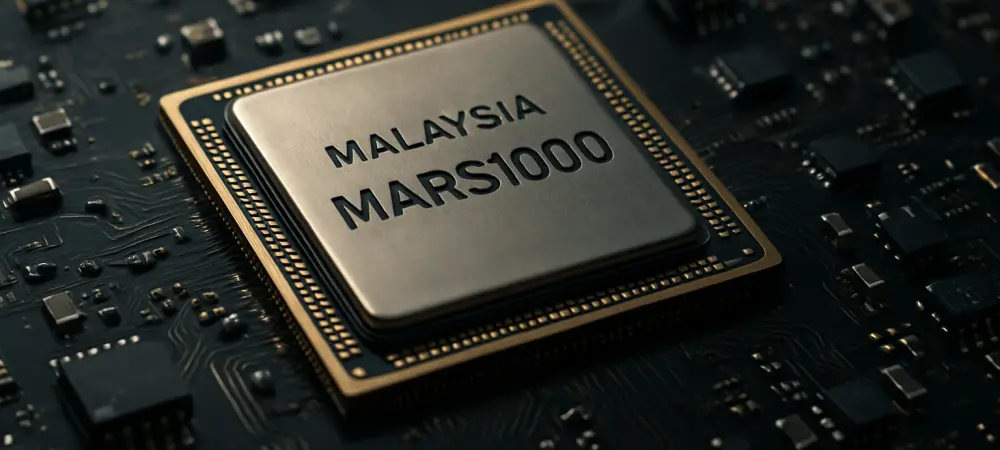
Imagine a world where autonomous vehicles and industrial robots process complex decisions in real time, without the lag of cloud dependency. This vision is inching closer to reality with Malaysia’s unveiling of the MARS1000, an edge AI chip designed by local innovator SkyeChip. As the global artificial intelligence market surges past trillion-dollar projections, this development positions Malaysia as an emerging contender in a fiercely competitive landscape. The significance of this chip extends beyond a single innovation; it reflects a broader ambition to reshape the AI hardware sector and secure a foothold in the global supply chain.
This market analysis delves into the potential of the MARS1000 to influence industry dynamics, examining its role against current trends and future forecasts. By exploring Malaysia’s historical strengths in semiconductors, the chip’s unique capabilities, competitive challenges, and evolving market conditions, this piece aims to provide stakeholders with a clear perspective on whether this innovation can carve out a sustainable niche. The insights offered here are critical for understanding how regional players like Malaysia could disrupt or complement the dominance of established tech giants.
Market Dynamics and the Rise of Edge AI
Malaysia’s Semiconductor Foundation Fuels AI Ambitions
Malaysia has long been a pivotal hub in the global semiconductor industry, specializing in packaging and manufacturing for major equipment suppliers like Lam Research. This established infrastructure provides a robust platform for the country to pivot toward innovation in AI hardware. With significant investments from tech giants such as Oracle Corp. and Microsoft in AI data centers, Malaysia is witnessing a transformation from a manufacturing base to a potential leader in chip design. The government’s commitment to invest at least 25 billion ringgit (approximately $6 billion) underscores a strategic push to elevate the nation’s role in the high-value segments of the tech ecosystem.
Recent data highlights the rapid growth of the AI chip market, with edge computing emerging as a key driver. Unlike data center chips that dominate large-scale AI training, edge AI focuses on localized processing, catering to industries like automotive and robotics where latency and security are paramount. Malaysia’s entry with the MARS1000 aligns with this trend, tapping into a segment projected to grow at a compound annual rate of over 20% from 2025 to 2030. This positioning could allow the country to capture a share of a market increasingly driven by the demand for real-time decision-making capabilities.
Competitive Landscape: Challenges for New Entrants
Despite the promising outlook, the AI hardware market remains a battleground dominated by giants like Nvidia, AMD, and Intel, whose products set benchmarks for performance and scalability. For a newcomer like SkyeChip, matching these standards poses a significant hurdle, particularly in terms of technological sophistication and market penetration. The MARS1000, while innovative in its edge AI focus, lacks the raw processing power of data center chips, limiting its appeal to specific niches rather than broad applications.
Manufacturing logistics further complicate the outlook. Uncertainties surrounding production locations and partnerships raise questions about scalability and cost competitiveness. Industry reports suggest that securing alliances with global foundries or tech firms will be essential for Malaysia to overcome these barriers. Without such collaborations, the risk of being overshadowed by established players looms large, potentially stunting the chip’s adoption despite its targeted design advantages.
Geopolitical Influences and Regulatory Headwinds
Navigating International Restrictions
Geopolitical tensions add another layer of complexity to Malaysia’s AI ambitions. Proposed restrictions from the U.S. administration on AI chip exports to countries like Malaysia, driven by concerns over transshipment to restricted markets such as China, threaten to disrupt progress. These policies could limit access to critical technologies or components incorporating American innovations, directly impacting the MARS1000’s development pipeline.
In response, Malaysia has strengthened export controls on chips tied to U.S. technology, signaling a commitment to compliance and transparency. This proactive stance aims to mitigate risks and build trust with international partners. However, regional disparities in tech regulations and the broader uncertainty of global trade policies continue to pose challenges. Market analysts emphasize that sustained diplomatic engagement and adherence to stringent standards will be crucial for Malaysia to navigate this intricate landscape successfully.
Impact on Market Projections
The interplay of geopolitics and technology regulation could reshape market projections for AI hardware in Southeast Asia. While the region is expected to see a surge in demand for edge AI solutions, driven by industrial automation and smart infrastructure, regulatory barriers may slow adoption rates. Forecasts indicate that countries with robust compliance frameworks are likely to attract more foreign direct investment in tech sectors. For Malaysia, balancing innovation with adherence to global norms will determine whether it can sustain momentum and emerge as a trusted player in the AI chip market.
Future Trends and Malaysia’s Strategic Positioning
Edge AI as a Growth Catalyst
Looking ahead, the AI chip industry is set for transformative shifts, with edge computing poised to redefine application landscapes. The integration of AI into everyday devices, from smart appliances to autonomous systems, fuels demand for energy-efficient, localized processing solutions. Malaysia’s focus on edge AI with the MARS1000 aligns seamlessly with this trajectory, offering a potential edge in markets prioritizing low latency and enhanced data privacy.
Technological advancements in chip design and fabrication processes are expected to further amplify opportunities. If supported by consistent government funding and partnerships with global tech leaders, Malaysia could leverage these innovations to enhance the MARS1000’s capabilities. Industry projections suggest that nations investing in domestic semiconductor expertise will gain strategic advantages as supply chain diversification becomes a priority amid global uncertainties.
Economic and Competitive Uncertainties
Nevertheless, economic fluctuations and supply chain disruptions remain critical risks. Volatile raw material costs and potential trade conflicts could hinder Malaysia’s ability to scale production or maintain competitive pricing. Additionally, the pace of innovation in the AI sector means that today’s niche advantages may erode quickly without continuous R&D investment. Market observers note that building a resilient ecosystem—encompassing talent development, infrastructure, and international collaboration—will be vital for Malaysia to stay relevant in this fast-evolving field.
Reflecting on Malaysia’s AI Hardware Journey
Looking back, the unveiling of the MARS1000 marked a significant milestone in Malaysia’s quest to transition from a semiconductor manufacturing hub to an innovator in AI hardware. The analysis revealed that while the chip carved out a niche in edge AI, it grappled with formidable competitive and geopolitical challenges. The interplay of market trends, regulatory landscapes, and strategic investments painted a complex yet promising picture of the nation’s tech trajectory.
For stakeholders, the path forward demands a focus on forging robust public-private partnerships to accelerate innovation in chip design. Cultivating a skilled workforce through targeted education initiatives emerges as another priority to sustain long-term growth. Moreover, active engagement with global regulatory bodies to ensure compliance with export controls stands out as a necessary step to build trust and secure market access. These actionable measures, coupled with a commitment to adaptability, offer a roadmap for Malaysia to transform its bold vision into enduring success in the global AI arena.