

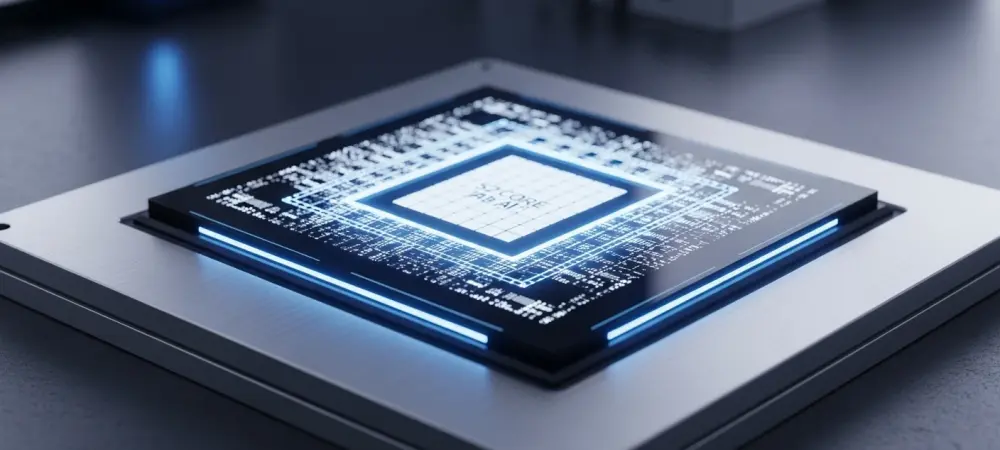
The high-performance computing market is currently witnessing a tectonic shift as Intel attempts to dismantle the gaming supremacy long held by its primary rivals. This transition is not merely an incremental update but a complete structural overhaul known as the Nova Lake architecture. By moving away from traditional monolithic designs toward a sophisticated multi-die strategy, Intel is signaling a departure from old constraints. This review examines how this new platform aims to redefine the desktop experience through the introduction of the LGA 1954 socket and a renewed focus on massive parallelism and specialized silicon.
Evolution of Intel’s Desktop Strategy and the LGA 1954 Platform
Intel has pivoted toward a modular philosophy that emphasizes flexibility and scalability over single-piece silicon. The move to the LGA 1954 platform is a strategic necessity, providing the physical and electrical infrastructure required to manage significantly higher pin counts and power delivery demands. This change is essential for supporting the massive data throughput required by modern enthusiasts who demand more than just raw clock speeds.
While previous generations focused on refining existing processes, Nova Lake represents a clean-slate approach to reclaiming the gaming crown. By utilizing a multi-die layout, Intel can mix and match different process nodes, optimizing for yield and performance simultaneously. This architectural shift is Intel’s direct answer to the efficiency and modularity advantages that have benefited competitors in recent years.
Technical Specifications and Performance Pillars
Hybrid Core Architecture: Coyote Cove and Arctic Wolf
The heart of Nova Lake lies in its aggressive 52-core flagship configuration, which utilizes a sophisticated blend of Coyote Cove and Arctic Wolf cores. The Coyote Cove P-cores are engineered for maximum instructions per clock, targeting heavy gaming and single-threaded workloads. Meanwhile, the Arctic Wolf E-cores focus on high-density throughput, allowing the system to handle background processes without starving the primary application of resources. This dual-die arrangement allows for 16 performance cores for the first time, a move that fundamentally changes the multitasking landscape. By decoupling these core types across different dies, Intel manages the thermal density more effectively than previous designs. This ensures that even under heavy sustained loads, the performance dip remains minimal compared to older, more constrained architectures.
Advanced Graphics and AI Integration: Xe3p and NPU 6
Graphics and artificial intelligence are no longer secondary considerations in the modern desktop stack. The integration of Xe3p graphics architecture provides a significant uplift in onboard visual processing, making entry-level configurations more viable for gaming than ever before. Furthermore, the Intel NPU 6 introduces dedicated hardware for AI-accelerated tasks, such as noise cancellation and video enhancement, which were previously offloaded to the CPU or a dedicated GPU.
This inclusion matters because it frees up the primary cores to focus entirely on logic and physics calculations in gaming. The NPU 6 specifically targets the emerging trend of local AI development, providing a low-latency environment for creators who need to run large language models or generative tools locally. It represents a shift from general-purpose computing toward a more specialized, task-aware hardware environment.
Specialized Cache Solutions and Memory Subsystems
Perhaps the most critical weapon in Nova Lake’s arsenal is the introduction of a specialized large-cache chip. This component is a direct challenge to 3D V-Cache technology, addressing the latency issues that often bottleneck high-frame-rate gaming. By placing a massive pool of cache closer to the execution units, Intel reduces the frequency of “cache misses,” which is often the difference between a smooth experience and micro-stuttering. Complementing this is the shift to 8,000 MT/s memory support, which drastically broadens the data highway between the processor and the system RAM. This high-speed DDR5 integration is vital for the 52-core flagship, as high core counts often suffer from bandwidth starvation. The synergy between the massive cache and rapid memory speeds creates a platform that excels in data-heavy environments and competitive gaming scenarios.
Latest Developments in Multi-Die Scaling and Connectivity
Connectivity has seen a massive leap forward with the integration of Thunderbolt 5 and PCIe 5.0 across the board. These standards allow for unprecedented external data transfer speeds and support for the next generation of ultra-fast storage and high-bandwidth peripherals. This ensures that the platform remains relevant for years, accommodating future hardware that hasn’t even hit the market yet.
Moreover, Intel is experimenting with an “off-the-charts” enthusiast branding strategy. This moves the highest-tier products into a specialized category above the traditional Core Ultra 9, signaling that these chips are intended for a niche audience that prioritizes performance above all else. This branding reflects the reality of the multi-die design, where top-bin silicon is reserved for the most demanding applications.
Real-World Applications Across the Performance Spectrum
The versatility of Nova Lake extends from ultra-high-end enthusiast rigs to surprisingly capable budget solutions. On the entry-level side, a configuration pairing 16 CPU cores with 12 GPU cores offers a compelling value proposition for users who need a balanced system without the cost of a discrete graphics card. This democratization of high core counts ensures that productivity is not limited to the premium segment. In professional environments, the high core density and enhanced memory bandwidth are transformative. Content creators working with 8K video or complex 3D renders benefit from the massive parallel processing power of the 52-core flagship. The architecture provides a stable foundation for AI development, where the combination of the NPU and high-speed memory allows for faster local iterations and testing.
Technical Hurdles and Market Obstacles
Despite its impressive specs, Nova Lake faces significant challenges regarding thermal and power management. Cooling a 52-core dual-die processor requires high-end thermal solutions, which may alienate users looking for simpler builds. The complexity of the multi-die interconnect also introduces potential latency penalties if not perfectly optimized, a hurdle that Intel must clear to maintain its gaming edge.
Market pressure remains intense as AMD’s Zen 6 architecture looms with its own set of innovations. The transition to the LGA 1954 socket also forces a complete platform upgrade for existing users, which can be a significant financial barrier. Balancing the high costs of specialized cache and high-speed DDR5 support against the performance gains will be the ultimate test for Nova Lake’s market adoption.
Future Outlook for Intel’s High-End Desktop Roadmap
Looking ahead, the success of this strategic pivot will likely depend on further refinements of the cache-stacking technology. As software developers begin to optimize for these massive cache pools and dedicated AI hardware, the performance gap between specialized and general-purpose silicon will only widen. We may see even higher core counts as Intel perfects its multi-die manufacturing processes. Long-term, this architecture sets the stage for a more modular PC ecosystem where specific silicon tiles can be updated independently of the entire CPU. This “chiplet-first” mentality suggests that the days of monolithic desktop processors are largely over. The evolution of specialized silicon for gaming and AI indicates that future roadmaps will prioritize task-specific acceleration over simple frequency increases.
Summary and Overall Assessment of Nova Lake
The Nova Lake architecture successfully established a new baseline for what enthusiasts should expect from high-end desktop hardware. By integrating massive cache solutions and a formidable 52-core count, Intel effectively addressed the performance plateaus that had previously allowed competitors to lead in gaming. The platform provided a robust answer to the demands of both elite gamers and professional creators through its sophisticated multi-die design and next-generation connectivity. Ultimately, this transition proved that Intel was willing to embrace radical structural changes to reclaim its industry standing. While the thermal and platform costs were non-trivial, the resulting leap in throughput and AI capabilities offered a clear path forward for the semiconductor industry. This architecture did more than just increase speeds; it redefined the balance of power in the enthusiast market and paved the way for a more specialized computing future.