

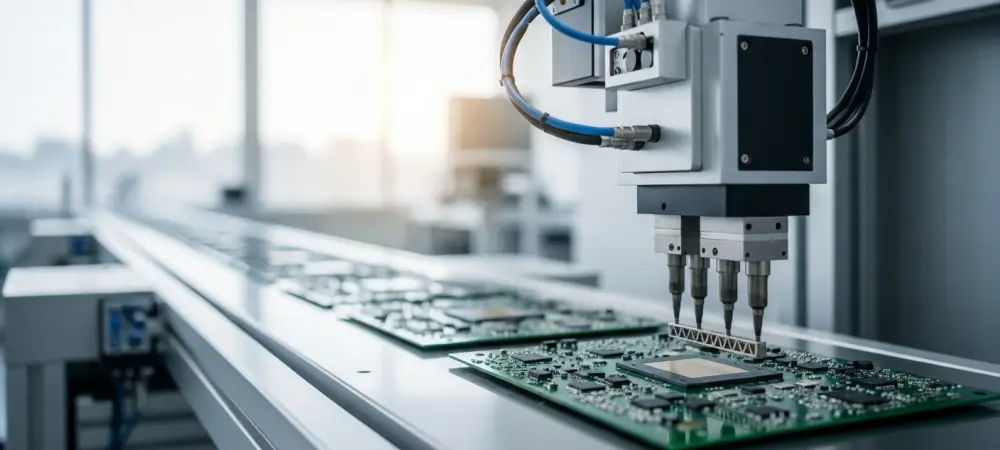
The relentless pursuit of Moore’s Law has shifted from the microscopic scaling of individual transistors to the sophisticated structural integration of diverse silicon components within a single package. Intel’s Embedded Multi-die Interconnect Bridge, widely known as EMIB, represents a fundamental departure from traditional monolithic chip design. Instead of forcing all functions onto a single, massive piece of silicon, this technology enables the assembly of smaller, specialized chiplets into a cohesive whole. This paradigm shift addresses the physical and economic limits of semiconductor fabrication, where the cost and complexity of manufacturing giant chips have become nearly prohibitive. By focusing on how these pieces talk to one another, Intel has carved out a unique position in the advanced packaging market.
This review explores the evolution of the technology, its key features, performance metrics, and the impact it has had on various applications. The purpose of this review is to provide a thorough understanding of the technology, its current capabilities, and its potential future development.
Evolution of Intel’s 2.5D Packaging: Defining EMIB
The transition toward 2.5D packaging was born out of a necessity to bypass the “reticle limit,” which is the maximum physical size a single chip can be printed with current lithography tools. Traditional 2.5D solutions typically rely on a large silicon interposer—a separate layer of silicon that sits beneath the active chips to provide electrical connections. However, these interposers are expensive and can be prone to defects. Intel’s EMIB technology innovated by replacing the massive interposer with a tiny silicon “bridge” embedded directly into the package substrate. This bridge only exists where it is needed—under the edges where two chips meet—which significantly reduces material costs and improves electrical signal integrity.
The relevance of this technology in the current landscape cannot be overstated. As artificial intelligence and high-performance computing demand more memory bandwidth and processing power, the ability to link CPUs, GPUs, and High Bandwidth Memory (HBM) with minimal latency is the primary bottleneck. EMIB offers a high-density interconnect that behaves like a single chip while maintaining the flexibility of a modular system. It allows Intel to mix and match different process nodes, combining cutting-edge logic with more mature, cost-effective components, thereby optimizing the performance-to-price ratio for complex systems.
Technical Architecture and Interconnect Innovations
EMIB-M: Efficiency-Optimized Configurations
The efficiency-focused iteration of the bridge technology, known as EMIB-M, centers on providing a stable and cost-effective interconnect for high-volume applications. One of its most significant components is the integration of Metal-Insulator-Metal (MIM) capacitors directly into the silicon bridge. These capacitors act as local reservoirs of electrical charge, which are vital for smoothing out voltage fluctuations and reducing high-frequency noise. In a system where chiplets are switching billions of times per second, this power stability is essential for preventing data errors and maintaining high operational speeds.
Furthermore, EMIB-M utilizes a configuration where power is routed around the silicon bridge to reach the chiplets. This design choice prioritizes thermal management and cost, as it avoids the complexity of drilling vertical holes through the bridge itself. The result is a highly reliable 2.5D structure that facilitates logic-to-memory connections without the excessive overhead associated with more extreme performance architectures. It serves as a middle ground for manufacturers who need advanced density but are sensitive to the thermal and financial costs of top-tier packaging.
EMIB-T: Performance-Optimized and Through Silicon Vias
In contrast, EMIB-T is designed for the most demanding workloads, such as large-scale AI training and hyperscale data centers. The defining characteristic of this version is the inclusion of Through Silicon Vias (TSVs), which are vertical electrical connections that pass entirely through the silicon bridge. This architecture allows for a “direct-path” power delivery system, where electricity can travel straight up through the bridge into the chiplets. By reducing the distance power must travel, EMIB-T minimizes electrical resistance and enables much higher interconnect densities than its efficiency-optimized counterpart.
This performance-oriented configuration is essential for scaling up bandwidth. As the industry moves toward integrating more HBM stacks, the physical space between components becomes increasingly crowded. EMIB-T’s ability to handle vertical and horizontal data paths simultaneously provides the necessary “highway system” for data-intensive tasks. In real-world usage, this means lower latency and higher throughput, allowing massive datasets to move between memory and the processor at speeds that were previously unattainable with conventional substrate-based connections.
Manufacturing Breakthroughs and Yield Milestones
A significant hurdle for any advanced packaging technology is the yield—the ratio of functional units to the total produced. Recently, Intel reached a major manufacturing milestone by achieving a 90% yield rate for its EMIB-based products. This achievement is a critical indicator of maturity, as it suggests that the complexities of embedding silicon bridges into organic substrates have been largely mastered. High yields translate directly into lower costs for customers and more predictable supply chains, which is a major factor for companies deciding between Intel and its competitors.
This stability has influenced industry behavior, shifting the perception of Intel Foundry from a captive internal supplier to a viable merchant foundry. The manufacturing process now utilizes automated inspection and advanced placement techniques that ensure the bridges are aligned with sub-micron precision. These developments have mitigated the risks of delamination or electrical shorts, which were common challenges in the early experimental phases of 2.5D packaging. Consequently, the technology has transitioned from a niche premium offering to a mainstream manufacturing standard.
Real-World Applications and Hyperscaler Adoption
The practical utility of EMIB is most visible in the specialized hardware being developed by tech giants. Google, for instance, has leveraged this technology for its Tensor Processing Units (TPUs), which are the backbone of its AI services. By using EMIB to connect its custom logic with HBM, Google achieved the bandwidth necessary for training massive language models. Similarly, Nvidia has explored this packaging for its future AI architectures, recognizing that the ability to bridge multiple logic dies is the only way to sustain the performance gains required by the next generation of neural networks.
Beyond AI, the technology has seen notable implementations in the telecommunications sector. High-speed networking switches require immense data throughput and low power consumption, making the efficiency of EMIB an ideal fit. Meta has also expressed interest in using these packaging solutions for custom-designed CPUs slated for deployment in its global data center fleet. These implementations show that EMIB is not just a specialized tool for CPUs but a versatile platform that supports a wide range of high-performance silicon.
Challenges and Market Competition in Advanced Packaging
Despite its successes, Intel faces stiff competition, primarily from TSMC’s CoWoS (Chip on Wafer on Substrate) technology. While EMIB is often more cost-effective because it uses smaller bridges rather than a full interposer, TSMC’s ecosystem is deeply entrenched with major players like Apple and Nvidia. The challenge for Intel lies in convincing these customers to shift their designs to a different packaging philosophy. This requires not only technical parity but also a seamless design-to-production pipeline that accommodates various third-party chiplets.
Technical hurdles also remain, particularly regarding heat dissipation. As the density of interconnects increases, the heat generated in a small area can become difficult to manage. Although EMIB-M and EMIB-T address this in different ways, the physical limits of thermal cooling continue to put pressure on packaging engineers. Ongoing development efforts are currently focused on integrating advanced liquid cooling interfaces and more thermally conductive materials into the substrate to ensure that the increased performance does not lead to thermal throttling or hardware failure.
Future Outlook: Reticle Scaling and the 2028 Roadmap
Looking toward the horizon, the roadmap for EMIB is defined by “reticle scaling.” By 2028, Intel plans to expand the physical size of its packages to exceed 12 times the standard reticle limit. These massive “super-chips” will likely measure roughly 120x180mm and could house more than 24 HBM dies and nearly 40 silicon bridges. This scale of integration will be necessary as AI models continue to grow exponentially, requiring hardware that can act as a single, massive computational unit rather than a cluster of smaller, disconnected chips.
Future developments are also expected to focus on “mixed-node” integration. This will allow a customer to take a high-performance chiplet manufactured on a 2-nanometer node and bridge it to a specialized IO or memory controller made on a more mature 7-nanometer node. This flexibility will be the long-term impact of the technology, democratizing access to high-performance computing by allowing designers to optimize their budgets without sacrificing the core speed of their most critical logic components.
Conclusion: Assessment of Intel’s Foundry Strategy
The evolution of EMIB technology provided a clear path for Intel to transform its manufacturing identity. By reaching the 90% yield milestone, the company demonstrated that high-density interconnects were no longer a boutique experimental feature but a reliable industrial standard. The distinct paths of EMIB-M and EMIB-T allowed for a diverse range of applications, from cost-sensitive networking hardware to performance-critical AI accelerators. This versatility proved essential as the industry shifted away from monolithic designs toward more modular, chiplet-based architectures.
Ultimately, the strategic deployment of these silicon bridges allowed Intel to offer a compelling alternative to more expensive interposer-based solutions. The focus on reticle scaling and mixed-node compatibility positioned the foundry to handle the massive computational demands expected through 2028. As the technology matured, it bridged the gap between raw transistor power and practical, scalable system design. This journey confirmed that the future of semiconductor leadership depended as much on how chips were connected as on how they were printed.