

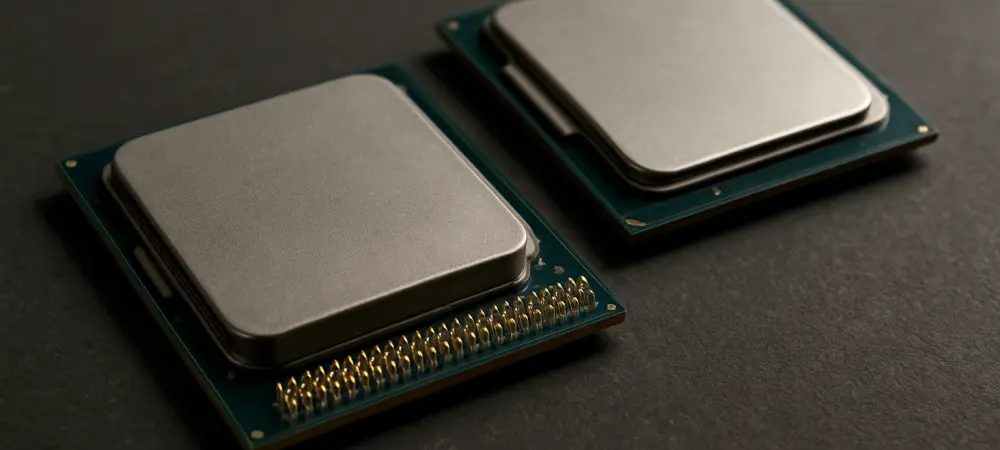
In the ever-evolving world of budget PC building, a staggering reality emerges: nearly 60% of enthusiasts prioritize cost over cutting-edge performance when assembling systems in the $500 to $800 range, highlighting the fierce competition between Intel and AMD in the sub-$200 CPU market where every dollar counts. Today, the spotlight falls on two contenders vying for dominance in this segment: Intel’s Arrow Lake lineup, specifically the Core Ultra 5 225F, and AMD’s Ryzen 5, with a focus on the Ryzen 5 7600. This comparison aims to dissect their strengths and weaknesses, helping budget-conscious builders make an informed choice.
The stakes are high as Intel seeks to reclaim ground lost to AMD’s superior performance-to-price ratio in recent years. With aggressive discounts and improved stability, Intel’s latest offerings challenge AMD’s stronghold. Meanwhile, AMD continues to appeal to users seeking reliable performance at a slightly higher cost. This analysis will explore how these processors stack up in terms of price, performance, and dependability for affordable PC setups.
Introduction to Intel Arrow Lake and AMD Ryzen 5
Intel’s Arrow Lake series marks a new chapter for the company, with the Core Ultra 5 225F emerging as a notable option in the budget CPU arena. Positioned as an entry-level processor within the lineup, this 10-core chip targets users who need decent performance without breaking the bank. Its recent discount to $168.35, down 27% from an original price of $231.00, makes it a compelling choice for cost-sensitive buyers looking to maximize value.
On the other hand, AMD’s Ryzen 5 series, particularly the Ryzen 5 7600, holds a strong reputation in the budget segment. Known for delivering consistent performance, this processor often appeals to gamers and productivity users who want a balance of power and affordability. While typically priced higher than Intel’s discounted offering, it remains a benchmark for reliability in sub-$200 builds, often paired with cost-effective motherboards.
Both CPUs cater to budget-conscious consumers and PC builders assembling systems in the $500 to $800 range, where every component choice impacts the overall cost. Their relevance lies in addressing the needs of users who prioritize essential functionality over enthusiast-grade specs. For students, casual gamers, and small business owners, these processors offer a gateway to capable systems without exorbitant expenses.
The broader CPU market reflects Intel’s ongoing struggle to match AMD’s value proposition, especially after facing criticism for past instability issues. AMD has capitalized on this, strengthening its position with processors that often outperform Intel’s equivalents at similar price points. As Intel rolls out aggressive pricing strategies starting this year, the competition in the budget segment intensifies, setting the stage for a closer examination of these two chips.
Performance and Value Comparison
Price and Affordability
At a discounted price of $168.35, the Intel Core Ultra 5 225F stands out as an exceptional deal in the budget CPU market. This 27% reduction from its initial $231.00 price tag undercuts not only AMD’s Ryzen 5 7600, which often retails at a higher cost even during sales, but also Intel’s own Core i5-14400F, a popular choice in this category. This pricing positions the Core Ultra 5 225F as a top contender for builders on tight budgets.
AMD’s Ryzen 5 7600, while offering strong performance, struggles to compete with Intel’s current discount. Even with occasional price drops, it rarely dips below the Core Ultra 5 225F’s current rate, making it a less attractive option for those prioritizing cost above all else. For users focused solely on affordability, Intel’s deal presents a rare opportunity to save without significant compromise.
Intel’s aggressive pricing strategy appears to be a calculated move to regain market share among cost-conscious buyers. By slashing prices on Arrow Lake SKUs, the company aims to shift perceptions of value, especially in a segment where AMD has long dominated. This approach could reshape consumer preferences if sustained, though it raises questions about long-term profitability and brand perception in the budget tier.
Performance Metrics
When it comes to raw performance, the 10-core Intel Core Ultra 5 225F offers adequate capabilities for budget PC builds, handling basic gaming and productivity tasks with ease. Benchmarks indicate it performs well enough for casual users, though it falls short of enthusiast expectations, mirroring the broader underwhelming reception of the Arrow Lake series. Community feedback suggests it’s a practical choice for everyday workloads like web browsing, streaming, and light multitasking. In contrast, the AMD Ryzen 5 7600 often edges out Intel’s offering in performance tests, particularly in gaming and multi-threaded applications. Its architecture provides a slight advantage in efficiency and speed, making it a preferred pick for users who push their systems a bit harder. Reports from budget builders highlight its ability to manage more demanding software without noticeable lag, giving it a performance edge over the Core Ultra 5 225F.
For typical budget system workloads, both CPUs deliver satisfactory results, though their strengths differ. The Intel chip suffices for minimal setups focused on cost savings, while AMD’s processor caters to those willing to invest a bit more for smoother operation in slightly heavier tasks. Choosing between them often depends on whether raw performance or price takes precedence in a build.
Stability and Reliability
Stability has been a sore point for Intel in recent generations, with the 13th and 14th Gen Raptor Lake CPUs facing widespread criticism for instability. However, the Arrow Lake series, including the Core Ultra 5 225F, shows marked improvement in this area. Users report a more dependable experience, making it a safer bet for budget builds where consistent operation is crucial over flashy performance. AMD’s Ryzen 5 7600, meanwhile, enjoys a solid reputation for reliability in the budget tier. Rarely plagued by the kind of issues that affected Intel’s earlier offerings, it has built trust among users who value uptime and minimal troubleshooting. This consistency makes it a go-to option for those wary of potential hiccups in daily use.
For long-term use in affordable PC setups, stability plays a pivotal role in user satisfaction. Intel’s improved reliability with the Core Ultra 5 225F helps rebuild confidence, though it still competes with AMD’s established track record. Buyers seeking peace of mind may lean toward AMD, while those swayed by Intel’s lower price might find its current stability sufficient for their needs.
Challenges and Limitations
Intel’s Arrow Lake CPUs, despite competitive pricing, have faced significant disappointment among enthusiasts, particularly in communities like PCMR. Higher-end models such as the Core Ultra 9 285K have underperformed compared to expectations, casting a shadow over the entire lineup. This sentiment trickles down to budget options like the Core Ultra 5 225F, which, while affordable, struggles to inspire confidence among users seeking top-tier innovation.
Specific to the Core Ultra 5 225F, its status as the slowest in the Arrow Lake family poses a drawback for those concerned with future-proofing. Its performance, while adequate for basic tasks, may not hold up as software demands grow over time. This limitation could deter builders who anticipate needing more power in the coming years, pushing them toward alternatives with better longevity.
AMD’s Ryzen 5 7600 isn’t without flaws, as its higher cost can feel like overkill for ultra-budget builds where every penny matters. Additionally, platform compatibility issues, such as the need for specific AM5 motherboards and DDR5 memory, can inflate overall system costs. These factors might discourage users with strict financial constraints or older hardware they wish to reuse.
Intel faces an uphill battle in matching AMD’s value proposition in the budget segment, where perception often favors the latter’s balance of price and performance. Further price drops on Arrow Lake CPUs could risk devaluing the brand if seen as desperation rather than strategy. This dynamic adds uncertainty to Intel’s efforts to carve out a lasting foothold against AMD’s entrenched popularity.
Conclusion and Recommendation
Reflecting on the comparison between Intel’s Core Ultra 5 225F and AMD’s Ryzen 5 7600, distinct differences emerged in price, performance, and stability. The Intel processor, with its discounted rate of $168.35, delivered unmatched affordability for budget builders in the $500 to $800 range, while offering sufficient capability for basic needs. AMD’s option, though pricier, provided a performance edge that appealed to those with slightly higher demands. For builders prioritizing cost above all, the Core Ultra 5 225F stood as a clear winner at its reduced price, catering perfectly to minimal setups. Conversely, the Ryzen 5 7600 proved more suitable for users willing to spend extra for enhanced reliability and speed. This dichotomy highlighted the tailored appeal of each CPU based on specific user priorities.
Looking ahead, budget builders should monitor Intel’s pricing trends, as additional discounts on Arrow Lake SKUs could further shift the value landscape. Exploring bundled deals or compatible components can maximize savings with either CPU. As competition heats up, staying informed about upcoming releases and price adjustments will ensure the best decisions for affordable, reliable PC builds in this dynamic market.