

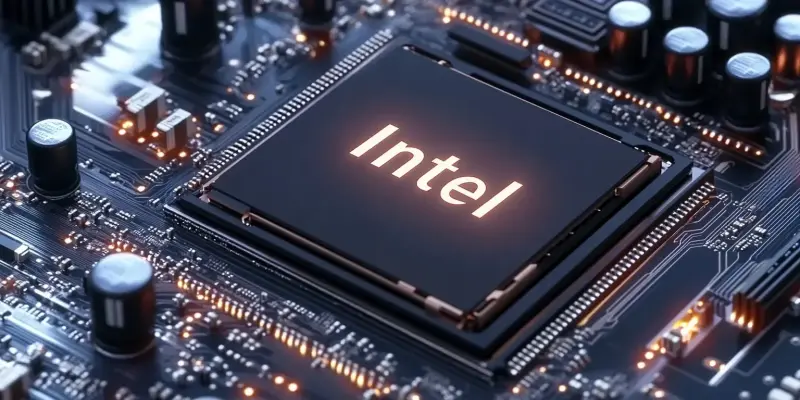
As the semiconductor industry continues to push the boundaries of innovation, two giants, Intel and TSMC, are gearing up for a highly anticipated battle in 2025. Both companies are set to launch their cutting-edge process nodes, Intel’s 18A and TSMC’s N2, which promise to redefine the landscape of semiconductor technology. These advancements carry significant implications for performance, efficiency, and manufacturing timelines, making the next couple of years crucial for the tech world. The competition is not just about transistor counts but also involves complex technologies and strategic production timelines that will ultimately determine who comes out on top.
Architectural Innovations and Performance
Intel’s upcoming 18A process node is set to introduce several groundbreaking technologies aimed at enhancing performance and efficiency. One of the most notable innovations is the PowerVia backside power delivery, which promises to significantly improve both speed and efficiency. This innovative technology is expected to set Intel’s 18A apart from its competition, although it’s important to note that not all 18A chips will incorporate PowerVia. This selective application could result in varying performance levels across different products, potentially offering Intel a strategic advantage by allowing customization based on specific use cases and requirements.
On the other hand, TSMC’s N2 process node is poised to showcase remarkable advancements in transistor density, boasting an impressive 313 million transistors per square millimeter. This density is a significant leap compared to Intel’s 18A, which is projected to have 238 million transistors per square millimeter, and Samsung’s SF3, with 231 million. While a higher transistor density doesn’t directly translate to better performance, it can provide substantial benefits for particular workloads and applications. Consequently, the architectural differences between Intel’s 18A and TSMC’s N2 highlight the unique strengths each company brings to the table, emphasizing the multifaceted nature of semiconductor innovation.
Efficiency and Production Timelines
When it comes to power efficiency, TSMC has historically held the lead, and their N2 process node is expected to continue this trend. Power efficiency is a critical factor for many applications, particularly in mobile and battery-powered devices, where every watt saved can translate to longer battery life and lower overall power consumption. TSMC’s consistent focus on enhancing power efficiency could give them a substantial edge in markets where this attribute is paramount. However, assessing performance is more complex, with projections suggesting that Intel’s 18A may have the upper hand based on extrapolations from previous node improvements.
A crucial aspect of this competition is the production timeline. Intel has announced that they will commence high-volume manufacturing for their 18A chips by mid-2025, with products expected to hit the market by the end of that year. In contrast, TSMC plans to begin volume production of their N2 node in late 2025, with products arriving around mid-2026. This difference in timelines could provide Intel with a strategic advantage, allowing them to capitalize on their technological advancements sooner and potentially capture a larger market share before TSMC brings its N2 products to consumers. The head start in production could be a decisive factor in the battle for semiconductor supremacy.
Advancing Semiconductor Technology
As the semiconductor industry continues to stretch the limits of innovation, two leading companies, Intel and TSMC, are on the brink of a highly anticipated showdown in 2025. Both industry giants are preparing to introduce their groundbreaking process nodes—Intel’s 18A and TSMC’s N2. These next-generation technologies promise to transform the semiconductor landscape profoundly, with substantial ramifications for performance, energy efficiency, and production schedules. Over the next few years, the developments in this sector will be crucial for the entire tech world. The battle is not merely about the number of transistors; it encompasses advanced technologies and meticulously planned production timelines. Every strategic decision will be critical in determining which company ultimately leads the industry. Both Intel and TSMC are investing heavily in research, design, and manufacturing processes to ensure they stay ahead of the curve. The outcome of this rivalry will shape the future of electronic devices and technology as a whole.