

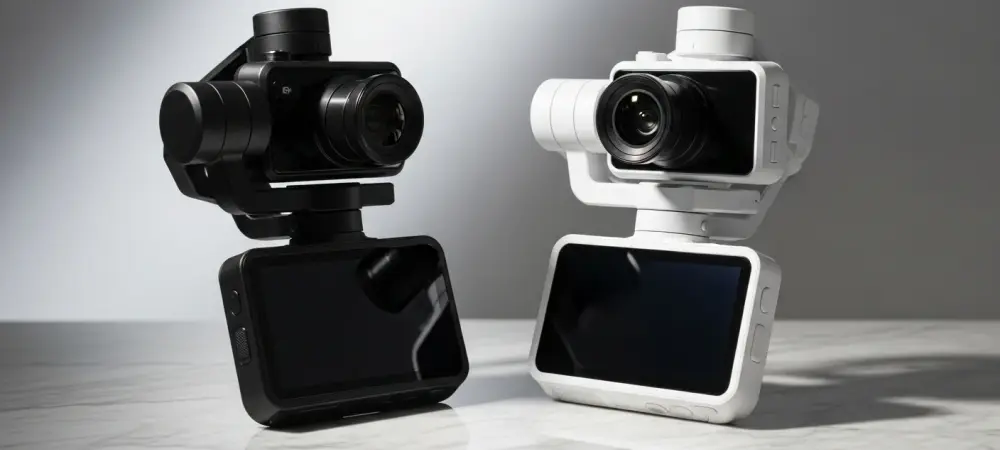
The rapid transformation of vlogging technology has reached a critical juncture where creators no longer choose between portability and cinematic power. For years, the handheld market was defined by action cameras, but the shift toward integrated gimbal systems has redefined solo storytelling. Today, the landscape is shaped by the rivalry between the reliability of DJI and the disruptive innovations of Insta360, particularly with the emergence of the Luna Ultra.
Evolution of Handheld Vlogging: Defining the Insta360 and DJI Ecosystems
Portable cameras have moved away from basic recording toward precise tools designed for the creator economy. Modern vloggers on platforms like YouTube and TikTok demand professional stability that fits in a pocket. This demand led to specialized ecosystems that prioritize high-resolution video and mobile workflows. The DJI Osmo Pocket series stands as the industry standard, prized for its intuitive interface. However, leaked details regarding the Insta360 Luna Ultra suggest a shift toward a premium, modular approach. While DJI focuses on an all-in-one chassis, Insta360 positions the Luna Ultra as a high-end alternative that challenges traditional design through hardware power.
Core Performance and Hardware Specifications
Video Quality and Resolution Capabilities
A striking distinction lies in the resolution benchmarks. The Insta360 Luna Ultra is rumored to support 8K video, a leap over the 4K limitation of the DJI Osmo Pocket 4. This jump in pixel count provides filmmakers with more room to crop or reframe footage in post-production without losing essential detail.
Modular Design and Remote Functionality
Design innovation dictates how these tools are used. The Luna Ultra introduces a clever detachable control unit that functions as a wireless remote, while the DJI Osmo Pocket maintains a fixed-screen design. This modularity, available in black and white colorways, offers a choice between structural simplicity and adaptable freedom.
Creative Workflow and Remote Operation
For solo creators, the Luna Ultra’s wireless remote addresses the pain point of framing shots from a distance. By detaching the screen, a user can monitor composition while the camera is mounted independently on a vehicle or tripod. This flexibility contrasts with the integrated DJI design, which often requires a secondary smartphone connection.
Practical Challenges and Market Considerations
A modular design introduces durability concerns compared to the simple DJI chassis. Furthermore, 8K hardware suggests a higher price point and technical hurdles regarding massive file sizes. These considerations highlight the trade-off between the cutting-edge capabilities of Insta360 and the proven efficiency that DJI has cultivated over generations.
Final Assessment: Choosing the Right Handheld Camera
The arrival of the Luna Ultra marked a moment where creators chose between resolution-heavy modularity and integrated refinement. Professionals requiring maximum flexibility found the 8K features and remote monitoring indispensable. Conversely, those valuing a streamlined, reliable experience often remained with the DJI ecosystem. This competition pushed the industry to adopt higher standards, ensuring that future handheld tools focused on removing technical barriers for every filmmaker.