

Establishing a clear chain of accountability through transparent decision-making is essential for companies that require high reliability in their automated supply chain operations. In the current landscape of 2026, the initial wave of excitement surrounding general-purpose artificial intelligence has given way to a more pragmatic realization: industrial environments demand precision that off-the-shelf models simply cannot provide. Whether it is managing a complex assembly line or optimizing a global logistics network, the margin for error remains nonexistent. Organizations now face the daunting challenge of integrating advanced intelligence without sacrificing the control and visibility that define successful enterprise management. This shift has prompted a move toward “Industry AI,” where the focus is no longer on the novelty of the technology itself but on how deeply it can be embedded into specific vertical workflows. By prioritizing specialized knowledge over generic capabilities, businesses are finally bridging the gap between experimental pilots and robust, production-ready automation that delivers consistent results across the entire value chain.
Redefining Vertical Solutions through Specialized AI
The Limitations of General Intelligence: Why Industry Context Matters
Recent market analysis suggests that two-thirds of global enterprises believe that generic, general-purpose AI solutions fail to address the unique complexities of their specific industries. This realization has sparked a fundamental shift in how technology providers approach automation, moving away from broad applications toward a more specialized architectural approach. This strategy treats intelligence not as a separate add-on, but as a core component of the enterprise operating system. For instance, in the realm of heavy manufacturing, a standard large language model lacks the nuanced understanding of equipment duty cycles or the specific constraints of high-mix, low-volume production. By embedding specialized logic directly into the technological foundation, providers can offer tools that understand the difference between a minor delay and a critical supply chain failure. This vertical focus ensures that the insights generated are not only accurate but also immediately actionable within the context of the user’s daily operations, providing a level of relevance that was previously unattainable with broader, consumer-oriented models.
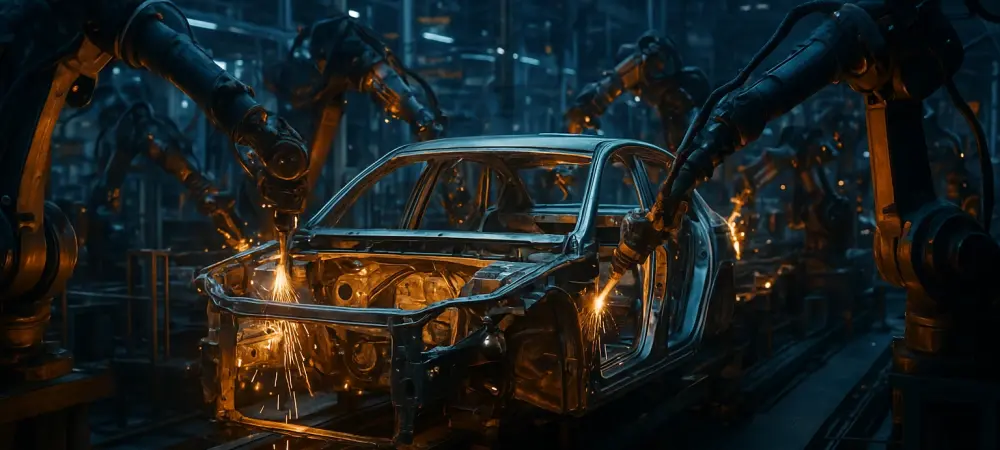
In sectors like automotive manufacturing, where the synchronization of thousands of components is vital, the precision of AI-driven workflows has become a competitive necessity. Generic tools often struggle with the specific timing and material availability constraints that characterize modern assembly lines. An effective industrial system must be able to predict how a delay in a secondary component delivery will ripple through the entire production schedule, affecting everything from labor allocation to final shipping deadlines. By focusing on these granular details, industry-specific AI allows for the creation of workflows that are tailored to the exact requirements of the sector. This level of specialization addresses the specific pain points that generic models overlook, such as the need for real-time inventory adjustments based on fluctuating demand and variable lead times. Consequently, the integration of deep vertical expertise into the automated framework transforms AI from a technical curiosity into a mission-critical asset for the shop floor. This evolution ensures that automation serves the business rather than forcing the business to adapt to the limitations of the software.
Architectural Integration: Embedding Intelligence into the Foundation
The foundation of this specialized approach lies in an architectural strategy that prioritizes the integration of AI directly into the existing enterprise infrastructure, such as the Infor OS platform. Rather than offering AI as a standalone product that requires complex external connections, this method ensures that intelligence is woven into the very fabric of the organization’s data management system. An open architecture is essential here, as it allows for the seamless flow of information between different modules, from procurement to customer service. This integration means that AI agents can access the most relevant data in real time, enabling them to make informed recommendations that reflect the current state of the business. By maintaining this open structure, companies can avoid the pitfalls of data silos, ensuring that every part of the organization benefits from the insights generated by the automated system. This holistic view is what enables the high degree of precision required for effective industry-specific process automation, allowing for a more responsive and agile business model that can adapt to changing market conditions.
Building on this architectural foundation, the concept of industrial intelligence emphasizes the importance of precision workflows that are pre-configured for the unique demands of different market segments. This approach eliminates the need for extensive customization, allowing businesses to implement sophisticated automation strategies with minimal friction. When AI is treated as an architectural layer, it can be leveraged across multiple applications, providing a consistent level of intelligence throughout the entire enterprise. This consistency is crucial for maintaining operational stability, especially when dealing with complex multi-site deployments or global supply chains. Furthermore, an integrated approach allows for better resource management, as the AI can optimize processes across different departments simultaneously. By prioritizing this deep level of integration, organizations can move beyond simple task automation toward a more comprehensive form of cognitive orchestration. This evolution ensures that every automated decision is grounded in a thorough understanding of the overarching business goals, providing a clear path toward sustainable operational excellence.
Establishing Governance and Trust in Autonomous Workflows
The Human-in-the-Loop Model: Ensuring Reliability and Oversight
Trust and observability remain the most significant hurdles to the widespread adoption of automated decision-making in industrial contexts. To overcome these challenges, a “human-in-the-loop” model has become the standard for transitioning from manual processes to more autonomous functions. In this framework, human operators initially review the recommendations provided by AI agents, verifying their accuracy and relevance before they are executed. This phase is critical for building confidence in the system’s capabilities and ensuring that the automated logic aligns with real-world operational requirements. As the system demonstrates consistent reliability, the level of human intervention can be gradually reduced, allowing the AI to take on more autonomous responsibilities. However, this transition is not about replacing human expertise but about augmenting it with data-driven insights. By keeping humans at the center of the process, organizations can maintain a high level of control while still benefiting from the speed and efficiency that automation provides, creating a balanced approach that values both technological power and human judgment. Ensuring accountability in these automated systems requires treating AI agents as “citizens of the enterprise,” subject to the same rigorous standards of governance and auditability as human employees. This involves implementing robust access controls and maintaining a complete trace of how every single decision is reached by the system. If an automated agent identifies a supply shortage and suggests a change in the production schedule, there must be a clear record of the data points and logic used to arrive at that conclusion. This level of transparency is essential for regulatory compliance and for maintaining trust among stakeholders. By providing a clear audit trail, businesses can quickly identify and rectify any issues that arise, ensuring that the system remains reliable and effective. Furthermore, this approach allows for better risk management, as operators can anticipate how the AI will respond to different scenarios. Ultimately, the goal is to create a transparent environment where automated agents and human operators can work together in a secure and productive manner, fostering a culture of accountability.
Implementation Excellence: Rapid Deployment and Measured Outcomes
The successful implementation of industry-specific AI currently depends on the support of experts who understand both the technology and the unique challenges of the sector. Forward-deployed engineers play a vital role in this process, working directly with customers to ensure that process automation moves rapidly from the conceptual stage to practical application. These industry specialists possess the technical knowledge required to configure AI agents for specific tasks and the operational insight needed to integrate them into existing workflows. Their hands-on involvement helps to bridge the gap between advanced technology and real-world business needs, ensuring that the resulting solutions deliver measurable value. By collaborating closely with internal teams, these engineers can identify the most impactful areas for automation and develop tailored strategies to address them. This collaborative approach not only speeds up the deployment process but also ensures that the final system is fully optimized for the specific requirements of the industrial environment, maximizing the return on investment.
The shift toward specialized, traceable solutions was a defining moment for industrial automation. It became clear that the integration of advanced engineering with human oversight provided a more sustainable path forward than reliance on generic models. Businesses that prioritized deep vertical expertise found themselves better equipped to handle the complexities of modern manufacturing and supply chain management. The rapid compression of time to value, often achieving results in just one to three weeks, proved that targeted AI interventions could yield immediate improvements in operational efficiency. For organizations looking to replicate this success, the first step involved identifying specific, high-impact workflows that would benefit most from increased precision. They then focused on establishing clear governance frameworks to ensure transparency and accountability across all automated processes. By fostering a culture of continuous improvement and expert collaboration, these companies successfully turned AI into a reliable engine for long-term growth and resilience, setting a new benchmark for the industry.