

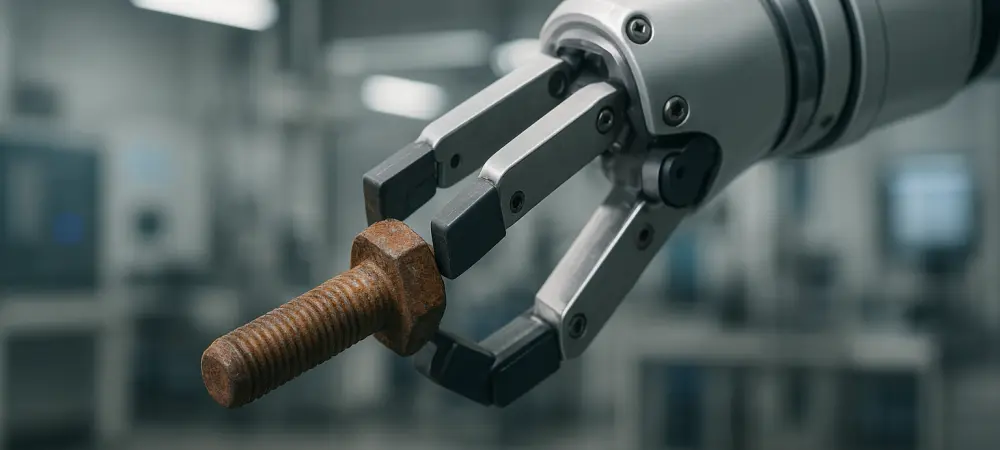
Observation of a human hand effortlessly maneuvering a rusted bolt reveals a level of mechanical intuition that remains the ultimate holy grail for modern robotics engineers. This disconnect stems from a fundamental scarcity: the robotics industry lacks the sheer volume of structured, movement-based information necessary to teach machines the subtle art of physical logic. Unlike a large language model that digests the entire internet to learn syntax, a robot must understand the specific weight of a tool or the precise visual cues that signal a grip is about to fail. The current landscape of automation is characterized by a paradoxical data bottleneck that threatens to stall progress precisely when hardware capabilities are peaking. Developers have realized that digital archives of text are no substitute for the sequential reasoning required to navigate a physical environment. To move forward, machines require a new kind of nutritional intake—billions of hours of human motion translated into a language the silicon brain can actually use. This data must capture not just the end state of a task, but the fluid “why” and “how” behind every micro-movement. Without a breakthrough in how this information is collected and processed, the vision of truly autonomous mechanical helpers will remain trapped behind a barrier of manual, unscalable labor.
The Invisible Wall in the Race for Autonomous Machines
The transition toward true autonomy has hit a snag that few anticipated during the early boom of generative intelligence. While we have effectively digitized the human voice and the human eye’s aesthetic sense, we have yet to digitize human dexterity at scale. This gap is most evident in unstructured environments—places like kitchens, construction sites, or hospitals—where the lack of a “physical grammar” makes robots prone to failure. The industry has reached a point where the bottleneck is no longer the chips or the sensors, but the absence of high-fidelity, labeled behavioral data. Robots cannot simply watch a movie to learn how to change a tire; they require a deep understanding of the forces, sequences, and temporal shifts that occur during that specific physical interaction.
This invisible wall is constructed from the sheer complexity of “common sense” physics. For a human, picking up a fragile glass requires no conscious thought, but for a robot, it involves a complex calculation of friction, pressure, and visual feedback that must be learned through trial and error. Because this data is not readily available on the open internet in a structured format, developers have been forced to rely on small, curated datasets that lack the diversity needed for generalization. This creates a ceiling for performance, where a robot might excel at one specific task in a lab but fail immediately when the lighting changes or the object is slightly out of place. The race for autonomous machines is now a race for the data that defines physical reality.
The problem is exacerbated by the fact that motion is inherently temporal and sequential. Traditional machine learning models were built to analyze static patterns, but robotic tasks are a series of causal relationships where step A directly influences the success of step B. If a training set lacks this connective tissue, the robot learns a series of disconnected poses rather than a fluid motion. Consequently, the industry is searching for a way to turn the massive existing archives of human activity—found in millions of hours of professional and hobbyist video—into a structured map of physical logic. This transition from “seeing” to “understanding action” represents the most significant hurdle for automation in the current 2026 to 2028 development cycle.
Why Raw Video Isn’t Enough for Machine Learning
One might assume that the vast oceans of video content available today would provide an ample training ground for robots, yet raw footage is often more of a distraction than a resource for machine learning. Most multimodal models are designed to interpret video as a series of disconnected snapshots, effectively ignoring the fluid cause-and-effect reasoning that is vital for physical tasks. When an algorithm views a video of a person assembling a circuit board, it may recognize the components, but it often fails to perceive the subtle tension in the fingers or the specific order of operations that prevents a short circuit. This “temporal blindness” means that even the most advanced generic AI can struggle to understand the actual mechanics of the work being performed.
Another significant hurdle is the perspective gap, specifically the challenge of egocentric, or first-person, viewpoints. Robots typically experience the world through cameras mounted on their bodies, which creates a visual feed that is shaky, frequently obstructed by their own limbs, and visually chaotic. Most standard AI models are trained on third-person “cinematic” footage where the subject is centered and the lighting is clear. When these models are applied to the “hand-eye” perspective of a worker or a robot, they often lose track of objects or misinterpret the scale and distance of the task at hand. This discrepancy makes it nearly impossible for a standard algorithm to extract useful training data from the very footage that is most relevant to robotic execution.
Furthermore, the historical reliance on teleoperation—where a human remotely controls a robot to record “perfect” data—is an economic dead end. While teleoperation provides the clean, high-precision information robots need, it is agonizingly slow and prohibitively expensive, requiring a one-to-one ratio of human experts to machines. It is simply impossible to scale this method to the billions of hours of data required to reach human-level autonomy. This has left the industry in a precarious position: raw video is too messy and unstructured to be useful, while clean, teleoperated data is too rare to be sufficient. The current paradigm demands a technological bridge that can extract the gold of behavioral logic from the dross of raw, uncurated human video.
Turning Raw Human Motion Into Structured Robotic Intelligence
The emergence of specialized architectures like TwelveLabs’ Pegasus 1.6 marks a departure from general-purpose AI toward a system designed specifically to bridge the gap between human activity and machine execution. At its core, this model is built for native temporal reasoning, meaning it does not just look at frames in isolation but understands the arc of an action as it unfolds over time. By analyzing the “before, during, and after” of a physical movement, the system can identify the specific moment a grip is secured or the exact trajectory of a tool. This capability allows the model to act as a translator, converting the visual chaos of human work into a clean, timestamped set of instructions that a robot’s control system can digest.
Optimization for egocentric footage is perhaps the most critical advancement in this new generation of models. Pegasus 1.6 was engineered to thrive in the difficult visual environment of first-person perspectives, where hands and tools often block the camera’s view or move rapidly in and out of the frame. By mastering this viewpoint, the model can accurately label complex hand-to-object interactions even when the footage is captured by a body-worn camera in a bustling industrial setting. This allows enterprises to leverage the existing daily routines of their human workers as a source of training data, effectively turning every hour of human labor into a secondary product: structured robotic intelligence.
Beyond simple recognition, the system provides automated action segmentation, which is the process of breaking down hours of raw footage into distinct, logical steps. Instead of a developer having to manually mark where “picking up a component” ends and “applying adhesive” begins, the model identifies these transitions with high precision. It can even act as a quality filter, automatically flagging footage that is too blurry, redundant, or sensitive for the training pipeline. This level of automated curation ensures that the resulting dataset is high-quality and diverse, focusing the robot’s learning on the most informative and challenging parts of a task rather than repeating the same simple motions ad nauseam.
The Economic Impact of High-Speed Data Labeling
The shift from human-intensive data curation to automated, model-driven labeling represents a massive economic pivot for the robotics sector. Industry leaders, including TwelveLabs CEO Jae Lee, have pointed out that the “data-hungry” nature of modern robotics cannot be satisfied by current manual methods without bankrupting the companies involved. The sheer speed of Pegasus 1.6, which is capable of processing 17 years of video footage in less than a single day, fundamentally changes the math of robot development. Tasks that previously required thousands of human hours and millions of dollars in annotation costs can now be handled by a specialized model at a fraction of the price and time.
This speed does more than just save money; it changes the strategy of how robots are trained. By converting massive archives of general human work into structured labels, the model provides a “broad base of behavioral knowledge” that serves as a foundation for all robotic tasks. This allows developers to reserve the expensive, high-precision teleoperation method for the very final stages of fine-tuning, rather than using it for basic instruction. In this new hierarchy, video models provide the “common sense” of physical movement, while specialized sensors and human intervention provide the expert-level finish. This tiered approach drastically lowers the barrier to entry for startups and accelerates the deployment of specialized robots in the 2026 market.
When compared to other tools in the market, such as Nvidia’s Cosmos Curator, the focus of Pegasus 1.6 remains on its role as a deep “interpreter” of action. While some competitors focus heavily on data filtering and deduplication, TwelveLabs has positioned its model to add descriptive depth—literally writing the “manual” for the movements it sees. This creates a much richer training set that includes not just labels, but nuanced descriptions of how actions were performed. For an industry that has long been data-constrained, the ability to turn “dead” video archives into “live” training assets is a competitive advantage that can shave years off the timeline for a commercial robot rollout.
Practical Strategies for Integrating Pegasus 1.6 into Robotics Workflows
For organizations aiming to dissolve their own data bottlenecks, the integration of advanced video-to-action models requires a strategic framework to ensure the output is actually useful for hardware. A primary recommendation is to execute bounded pilots, where the technology is applied to a single, well-defined task rather than a whole factory floor. By comparing the model’s automated labels against the judgment of human experts for a specific assembly process, companies can verify the accuracy of the temporal reasoning before scaling. This approach minimizes the risk of feeding “hallucinated” action logic into the robot’s controller, which could lead to physical damage or safety hazards in the real world.
Another vital strategy involves the fusion of video data with multi-sensory inputs. While Pegasus 1.6 is world-class at describing “what it sees,” video alone cannot capture the haptic nuances of pressure, torque, or the “feel” of a mechanical click. Smart developers use the video model to provide the high-level “behavioral map”—the steps and trajectories—while overlaying data from tactile sensors to complete the training profile. This dual-track approach ensures the robot learns both the visual cues and the physical forces required to succeed. By treating the video model as the “vision system” and the haptic data as the “nervous system,” engineers can create a much more robust and capable autonomous agent.
Finally, enterprises must be diligent in auditing for throughput and diversity. The model’s high processing speed should be used to clear backlogs of raw footage, but developers must remain mindful of the “segmentation multiplier” in pricing, which can increase costs for extremely complex, multi-layered annotations. Furthermore, the model’s ability to detect anomalies should be used to seek out “edge cases”—those rare, difficult moments where a human makes a mistake or a tool breaks. These unusual events are often a hundred times more valuable for training a resilient robot than thousands of hours of perfect, repetitive motion. Curating for these difficult moments is what ultimately separates a laboratory prototype from a commercially viable machine.
The emergence of specialized video architectures provided a much-needed bridge between the digital and physical worlds. Engineers successfully utilized native temporal reasoning to turn billions of hours of neglected raw footage into a structured library of human intent. This evolution allowed the robotics industry to bypass the economic trap of manual teleoperation, moving instead toward a model of automated behavioral curation. By focusing on the nuances of egocentric perspectives and sequential logic, the community moved closer to creating machines that moved with the fluid grace once reserved for biological organisms. This period of transition was defined by a shift in perspective, where the goal was no longer to just see the world, but to truly understand how to interact with it. Developers eventually realized that the path toward the future required a deep, data-driven respect for the complexities of human motion. As the bottleneck cleared, the focus shifted toward refining the multi-sensory fusion that allowed these machines to finally step out of the shadows and into the sunlight of the real world.