

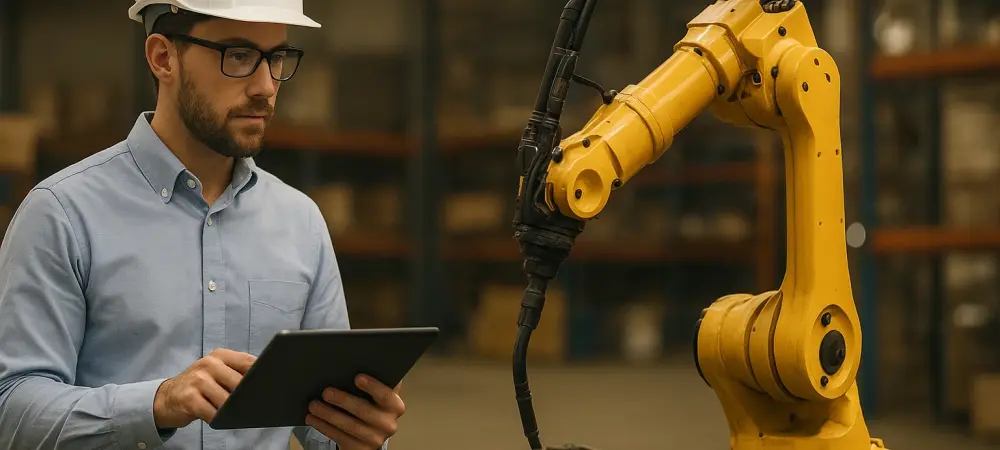
If a logistics company spends three months teaching a robotic arm to pick up artisanal glassware without shattering it, the owner likely believes they have built a proprietary competitive advantage. However, the modern automation contract introduces a troubling paradox: while the factory owner retains the title to the hardware and the raw sensor data, the vendor frequently maintains a perpetual right to the “intelligence” distilled from those very operations. This invisible transfer of expertise creates a reality where a single site’s hard-won efficiency gains can be quietly packaged and shipped to a competitor via a fleet-wide software update, effectively turning one company’s research and development into a universal utility.
The complexity of these arrangements lies in the fact that robotic learning does not behave like a tangible tool that can be inventoried or locked in a safe. In the current landscape of 2026, the value of a robotic fleet is increasingly determined by its ability to adapt to edge cases—those rare and difficult maneuvers that occur on a busy factory floor. When a robot masters such a challenge, the resulting neural weight adjustments are rarely confined to that specific machine. Instead, these refinements flow back to the vendor’s central models, where they are blended with data from thousands of other deployments. For the industrial operator, this creates a situation where they are paying to train a workforce that can be instantly cloned by their rivals, undermining the strategic moat they intended to build through automation.
To understand this dilemma, one must view operational learning through the lens of an energy grid. Operational data acts like a commodity, such as natural gas, which can be stored, metered, and owned with clear title. However, once that data is “burned” to train a model, the resulting intelligence behaves like electricity entering a vast power grid. Once the electrons are commingled, they become impossible to separate or recover as discrete units. This commingling effect means that once a robot has learned from a site, that knowledge becomes a permanent, non-severable part of the vendor’s proprietary intellectual property, regardless of who owns the raw logs.
The Invisible Asset: When Your Factory Teaches Your Competitor’s Fleet
The modern automation contract often hides a critical imbalance under the guise of standard technical language. Operators typically insist on owning the telemetry, images, and sensor logs generated by their machines, viewing this as a victory for data privacy; yet, the true asset is not the raw footage of a robotic arm moving through space, but the refined algorithmic “weights” that dictate the optimal path for that movement. By focusing on the feedstock rather than the finished product, companies inadvertently grant vendors the right to commoditize their unique operational nuances. This allows the robotics provider to build a “shared brain” that grows more sophisticated with every hour of operation at a client site, creating a collective intelligence that no individual customer truly owns.
This scenario becomes particularly poignant when a specialized manufacturer spends months optimizing a robot to handle fragile or irregularly shaped inventory. If the contract permits the vendor to use this “anonymized performance data” for product improvement, those very optimizations will eventually appear in the next firmware update delivered to every other customer in the same industry. Consequently, the first mover’s innovation becomes the industry standard overnight, erasing the competitive edge that the original investment was supposed to secure.
Furthermore, the “commingling” of learning makes the concept of a clean exit nearly impossible under current legal standards. If a company decides to switch vendors, they might be able to take their raw data with them, but they cannot take the “experience” the fleet gained while on their floor. This creates a perpetual dependency where the customer must continue to rent the “intelligence” they helped build, or face a significant drop in performance by starting over with a “blank” model from a different provider.
Why the Model Layer Is the New Front Line in Industrial Contracts
A fundamental shift is occurring in how industrial assets are valued, moving away from hardware depreciation and toward the compounding value of physical AI. In 2026, the value is increasingly concentrated in the “model layer”—the software that interprets physical reality and executes complex tasks with minimal human intervention. This shift has turned the robotics stack into a battlefield where the distinction between “severable” data and “non-severable” learning determines the long-term profitability of an automation strategy.
Traditional legal frameworks, including the hard-won victories for the Right to Repair and the EU Data Act, often fall short of addressing this new reality. While the EU Data Act provides operators with statutory access to the data their machines generate, it specifically excludes information derived through proprietary, complex algorithms unless otherwise agreed upon. This leaves a massive loophole for vendors, as the most valuable part of the robotics ecosystem—the trained model weights and site memory—sits behind a wall of proprietary “complex algorithms.” Without explicit contractual language, the operator is left with a pile of raw data while the vendor keeps the functional intelligence.
The resulting “flywheel effect” creates a proprietary moat for robotics vendors that customers eventually have to rent back at a premium. As more sites contribute to the base model, the model becomes more accurate, making it harder for any new competitor to enter the market. However, for the customer, this flywheel can feel more like a treadmill. They contribute the very data that makes the vendor’s platform indispensable, yet they receive no equity or royalty for their contribution to the shared model. This dynamic is forcing a re-evaluation of how physical AI agreements are structured, as sophisticated buyers realize that hardware is a cost-plus line item, while training rights are the real prize.
Breaking Down the Robotics Stack: Data, Models, and Site Memory
Navigating the ownership of robotic intelligence requires a clear understanding of the layers that make up the modern robotics stack. At the foundation is the Raw Data Layer, which consists of telemetry, high-resolution imagery, and raw sensor logs. This is the “feedstock” that operators typically keep, and while it is necessary for training, it is useless without the computational power and algorithmic framework to process it. Most contracts are clear about the operator’s title to this layer, but few acknowledge that the value of this data is realized only when it is transformed into something else.
Above the raw data sits the Shared Fleet Model, where the vendor’s base algorithms learn from every edge case encountered across all customer deployments. This is where “pool membership” becomes a critical issue; when a customer’s machine encounters a rare mechanical failure and learns how to recover, that recovery logic is absorbed into the fleet-wide model. While this benefits all users by creating a more robust system, it also means that the specific environmental challenges of one facility are being used to “de-risk” the operations of every other facility in the vendor’s network.
The most contentious area is often the “Fine-Tune Trap,” where a site-specific model is created to handle the unique needs of a particular factory. On the surface, the operator may be told they own these site-specific weights, but this ownership is often an empty gesture because these weights are generally useless without a perpetual license to the vendor’s proprietary runtime and base model. This technical lock-in ensures that even if a customer “owns” the learning, they cannot actually use it without the vendor’s continued cooperation.
Beyond formal models, there is the emerging concept of “Site Memory,” which refers to a robot’s ability to remember specific facility details without traditional retraining. This includes maps of dynamic obstacles, the specific “feel” of a certain conveyor belt, or the frequency of local interference. This site memory is a distinct asset that is often overlooked in negotiations, yet it represents the accumulated experience of the robot on the job. Who owns this memory and whether it can be transferred to a new system is a question that many industrial operators are only beginning to ask as they look toward multi-vendor environments.
Insights From the Market Leaders: How the Largest Buyers Are Changing the Rules
The most sophisticated buyers in the industrial space are no longer signing boilerplate agreements; they are actively climbing what is known as the “ladder of claims.” These companies have recognized that their operational environments are the premier laboratories for physical AI, and they are beginning to charge the vendors for access to those labs. By treating their data as a valuable intellectual property contribution rather than a byproduct of a service, they are shifting the power dynamic in automation.
Investor sentiment is also beginning to track these contractual nuances through a metric known as “Data-Unencumbered ARR.” This term refers to annual recurring revenue generated from contracts where the vendor has an unrestricted right to train their models on customer data. High-growth robotics companies are being valued more highly if they can prove they have the contractual “right to learn” from their users without paying for it. For the customer, this means that their signature on a contract is not just a purchase of a service, but a contribution to the vendor’s market valuation, often with no direct financial return for the data provided.
Public filings from industry leaders like Boston Dynamics and Richtech Robotics reveal a growing emphasis on these training rights as core business assets. For instance, recent filings from 2026 indicate that robotics companies are explicitly identifying their ability to collect and use “Robot Technical Data” as a primary driver of their long-term competitive strategy. These terms often grant the vendor a perpetual, royalty-free license to use performance and application data for product improvement. The head of the market is responding by demanding “consent gates,” where the customer must opt-in to training updates and may receive preferential pricing for doing so.
A Strategic Framework for Negotiating Physical AI Agreements
To protect their long-term interests, industrial operators must adopt an unbundling strategy that separates the different components of the robotics relationship. Contracts should explicitly distinguish between source data, training rights, and site-specific artifacts. By moving training permissions out of the standard service boilerplate and into a priced, commercial license, companies can create a clear value exchange. If a vendor wants to use a factory’s data to improve their global fleet, they should be prepared to offer a discount or a share in the resulting efficiency gains, rather than assuming the right to learn is included in the purchase price.
Implementing “Consent Gates” is another vital step in maintaining control over proprietary operational knowledge. These gates ensure that the decision to contribute to a shared model is made deliberately, perhaps on a task-by-task basis, rather than through a blanket agreement. This allows an operator to protect their most sensitive or innovative processes while still benefiting from the general improvements of the vendor’s platform. Furthermore, companies should negotiate for “Model Provenance” reports, which provide transparency into how their data is being used and what specific improvements have been derived from their facilities. The ultimate goal of any negotiation should be to secure a usable exit that prevents technical lock-in. This means securing perpetual runtime licenses and comprehensive documentation that would allow a site-specific model to remain functional even if the relationship with the vendor ends. Without these rights, the “learning” that a company has invested in becomes a stranded asset. Boards of directors should be asking specific questions regarding model ownership and the ability to repatriate intelligence, ensuring that the robots they deploy today do not become the gatekeepers of their operational future.
The transition toward physical AI necessitated a fundamental shift in how corporations approached their digital legacies. The industrial sector realized that the true value of automation resided not in the silicon and steel, but in the accumulated experience of the machines on the floor. Progressive organizations moved away from passive data ownership and toward active model stewardship, ensuring that the intelligence they helped build remained a private asset. By the end of this period, the “right to learn” had become as significant a negotiation point as the price of the hardware itself. Companies that prioritized these contractual protections were able to maintain their competitive edge, while those who relied on boilerplate terms found themselves renting their own innovations back from their vendors. The legal landscape eventually caught up to the technical reality, but the early adopters of these frameworks were the ones who truly owned the future of their production lines.