

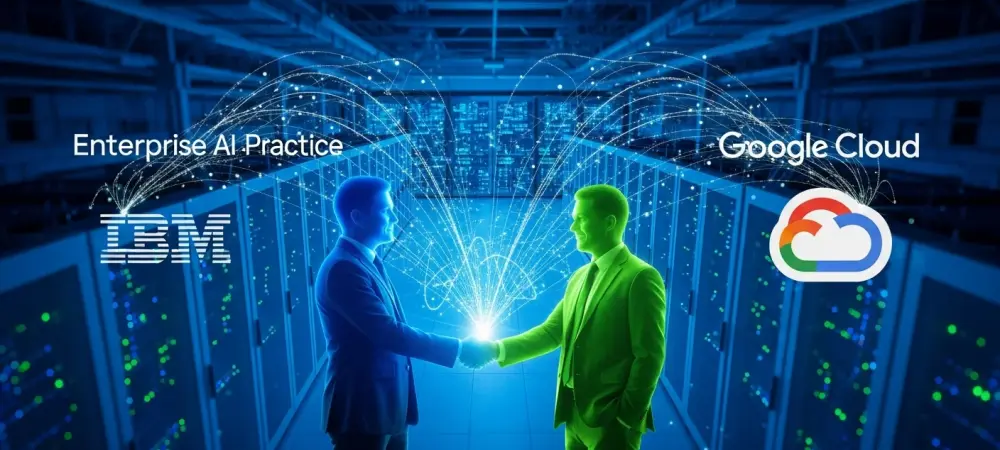
Dominic Jainy, a seasoned IT strategist with extensive mastery in machine learning and blockchain, offers a deep dive into the massive collaboration between IBM and Google Cloud. This partnership marks a pivotal moment in the enterprise technology landscape, moving past the era of isolated AI experiments into a phase of large-scale production. In this discussion, we explore the complexities of integrating cutting-edge AI models with fragmented legacy systems and the critical role of human capital in this multi-billion-dollar opportunity. The conversation covers the strategic deployment of industry-specific AI agents, the success factors behind rapid large-scale modernization projects like the one seen at Airbus, and the governance frameworks necessary for operating in highly regulated sectors such as banking and healthcare.
How do organizations effectively bridge the gap between cutting-edge AI models and the reality of fragmented, legacy data systems without needing to rebuild their entire infrastructure?
Bridging the gap between the new and the old requires an architectural philosophy that is both open and flexible, rather than a rigid “rip and replace” mentality. We are seeing a strategic shift where tools like Google Cloud’s Gemini are being integrated with robust data platforms like watsonx.data to create a unified flow of information. By developing specific interface patterns, enterprises can connect their siloed internal data directly into AI environments, allowing legacy systems to feed modern intelligence engines. This approach is particularly vital for regulated industries that must maintain hybrid cloud estates, keeping sensitive workloads on-premises while leveraging the elastic power of the public cloud. It creates a seamless bridge where older technology acts as a reliable foundation for a high-speed AI nervous system, ensuring that modernization is an evolution rather than a disruption.
With the deployment of thousands of Google Cloud-certified consultants, how does this massive influx of human capital shift the landscape for businesses currently stuck in the pilot phase of AI adoption?
The availability of thousands of certified engineers and consultants transforms a daunting digital overhaul into a series of predictable, high-impact milestones. These professionals bring more than just technical skill; they provide a library of pre-built assets and reusable agents that allow a company to design and govern AI directly within their existing environment. This level of expertise is essential for navigating what Mohamad Ali calls one of the most complex modernization cycles in decades, where moving beyond a pilot requires a deep understanding of agentic infrastructure. By having these experts on the ground, organizations can skip the trial-and-error phase and move straight into building production-grade solutions that are tailored to their specific operational needs. It essentially democratizes access to elite implementation frameworks, allowing companies to scale AI with a level of confidence and reliability that was previously unattainable.
Could you elaborate on the practical impact of industry-specific AI agents in sectors that face extreme regulatory scrutiny, such as banking or government?
In highly regulated environments, generic AI solutions often fall short because they lack the nuance required for complex workflow automation and decision-making. We are building a targeted portfolio of agents for Gemini Enterprise that are purpose-built for the unique demands of sectors like banking, government, and life sciences. These agents are not just processing data; they are integrated into the core governance frameworks of the business, utilizing tools like watsonx Orchestrate to ensure every action is compliant and auditable. For instance, in the telecommunications or energy sectors, these agents can handle real-time data streaming through software like Confluent to provide operational oversight that is both fast and strictly regulated. The goal is to provide a “clearer and more reliable path” to automation where the AI acts as a specialized worker that understands the legal and technical constraints of its specific industry.
Reflecting on the work with Airbus, what were the defining factors that allowed for the modernization of over a hundred systems in such a remarkably tight timeframe?
The Airbus modernization is a powerful example of how deep industry expertise and proven delivery frameworks can accelerate even the most massive digital transitions. Transitioning two independent aerospace businesses in under 18 months by updating more than 100 critical systems is a feat that requires meticulous coordination across engineering, manufacturing, and customer service. Success in such high-pressure environments depends on using sophisticated monitoring and performance management software, like HashiCorp and Apptio, to maintain a total view of the hybrid estate. This project proved that legacy manufacturing operations can be modernized with minimal downtime, provided there is a structured method for connecting enterprise data into new cloud platforms. It is incredibly rewarding to see a historical industry giant adopt modern agility, transforming its operations into a more flexible and independent digital entity.
As enterprises transition from AI experimentation to full-scale production, what are the primary challenges they face in ensuring these models provide measurable operational impact?
The shift to production-grade AI is primarily a challenge of governance and measurable integration across the entire cloud environment. Organizations must ensure that their AI agents are not just performing tasks in a vacuum but are actually streamlining workflows and improving decision-making speeds. This involves a move toward “agentic infrastructure” where the AI is fully integrated into the company’s data services and cybersecurity tools. As Kevin Ichhpurani noted, the demand is surging for frameworks that ensure these agents can be governed and deployed at scale while maintaining operational integrity. It requires a mindset shift where AI is treated as a core component of the business strategy, with its performance tracked through concrete metrics like cost savings, speed of service, and compliance accuracy.
What is your forecast for the future of AI-driven enterprise modernization?
My forecast is that the boundary between traditional business operations and AI-driven automation will eventually vanish, leading to the rise of the “autonomous enterprise.” Within the next few years, the multi-billion-dollar investments we see today will result in a standard architecture where data flows seamlessly from legacy on-premises servers to cloud-based AI agents with zero friction. We will see a consolidation of tools where compliance, security, and performance are handled automatically by the infrastructure itself, allowing human teams to focus entirely on high-level strategy. Industries like healthcare and financial services will lead this charge, using real-time data streaming to provide services that are personalized, proactive, and perfectly governed. Ultimately, the successful companies of the future will be those that have turned their fragmented data into a cohesive asset, powered by thousands of specialized agents working in perfect harmony across a hybrid cloud.