

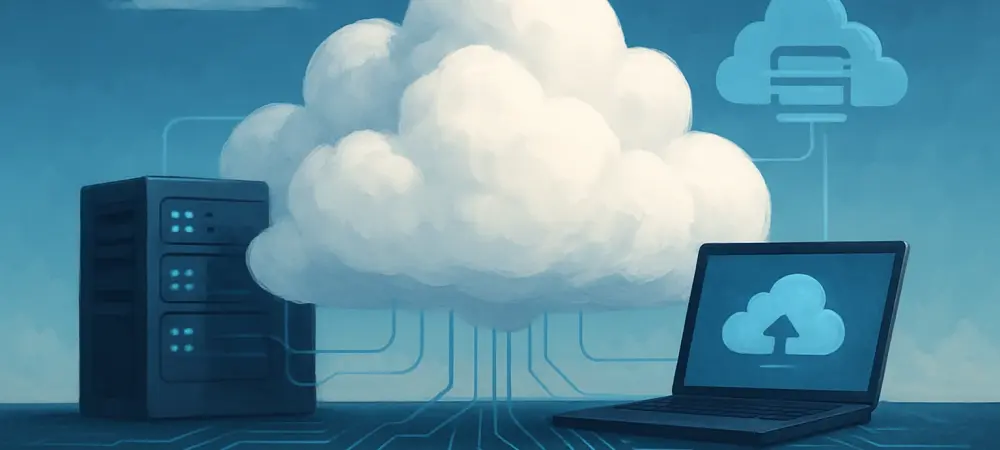
In today’s rapidly evolving digital landscape, enterprises face an unprecedented challenge: balancing the insatiable demand for scalability and innovation with the stringent requirements of security and compliance. A staggering 84% of global IT leaders now rely on multiple cloud platforms to navigate this tightrope, reflecting a seismic shift in how businesses architect their IT infrastructure. Hybrid cloud technology, blending public and private environments with on-premises systems, has emerged as a linchpin in this transformation, promising flexibility and control amid rising pressures from artificial intelligence (AI) adoption and data sovereignty regulations. This review delves into the intricacies of hybrid cloud models, assessing their core features, real-world impact, and the hurdles that still lie ahead.
Core Components and Features
Interoperability and Multi-Cloud Integration
Hybrid cloud technology stands out for its ability to facilitate seamless interaction across diverse cloud platforms and traditional on-premises infrastructure. This interoperability allows organizations to distribute workloads dynamically, ensuring optimal performance while minimizing costs by leveraging the strengths of each environment. For instance, routine operations can run on cost-effective public clouds, while sensitive data remains secured in private setups.
The significance of this multi-cloud integration cannot be overstated, as it empowers businesses to avoid vendor lock-in and tailor solutions to specific needs. With 84% of IT leaders adopting multiple platforms to balance operational demands, the trend underscores a strategic move toward flexibility in workload management, enabling companies to adapt swiftly to market changes or technological advancements.
Workload Repatriation and Control
A notable shift in cloud strategy involves repatriating workloads from public clouds back to private or on-premises servers, driven by the need for greater oversight. Over 40% of organizations globally, including a similar proportion in Australia, have embraced this approach to ensure tighter control over critical applications and data. This trend reflects a growing recognition of the limitations of public cloud environments for certain use cases.
Technically, workload repatriation involves sophisticated management tools to migrate and monitor applications across environments without disrupting operations. Strategically, it addresses pressing concerns around data sovereignty, ensuring compliance with local regulations by keeping sensitive information within defined geographic boundaries, thus mitigating risks associated with global data hosting.
Recent Trends in Adoption
The momentum behind hybrid cloud adoption is evident in the significant uptick in cloud investments, with a 30% increase globally and a 31% rise in Australia over the past year. Despite this growth, many organizations have historically approached cloud architecture reactively rather than through deliberate, long-term planning, often leading to fragmented systems. This surge in spending highlights the critical role of cloud infrastructure in modern IT strategies.
Hybrid models are increasingly viewed as a competitive edge, particularly in enabling secure scaling and AI integration. Experts emphasize that trust and agility are foundational to these setups, allowing businesses to innovate without compromising on security. This strategic pivot is reshaping how enterprises position themselves in a landscape defined by rapid technological change and regulatory scrutiny.
Real-World Applications and Use Cases
Across industries such as finance, healthcare, and technology, hybrid cloud technology is proving instrumental in managing diverse workloads. Financial institutions, for example, leverage public clouds for customer-facing applications while securing transactional data in private environments. Similarly, healthcare providers use hybrid setups to balance patient data privacy with the need for scalable analytics.
A compelling application lies in AI adoption, where 89% of IT leaders report that cloud migration has streamlined integration of AI tools. Hybrid environments provide the computational power and flexibility needed for AI workloads, often through specialized setups like GPU-powered ‘neoclouds’ designed for intensive processing. These implementations showcase the adaptability of hybrid models to niche demands.
Unique deployments, such as private AI environments, further illustrate the technology’s versatility. These setups allow organizations to harness AI capabilities while maintaining strict control over proprietary data, addressing both innovation and security needs. Such use cases highlight how hybrid cloud is becoming a cornerstone for forward-thinking enterprises.
Challenges and Limitations
Despite its advantages, hybrid cloud deployment is not without significant hurdles, particularly the lack of strategic foresight in implementation. A concerning 70% of executives admit to building cloud environments through reactive decisions, resulting in disjointed systems that are difficult to manage. This ad-hoc approach often undermines the potential benefits of hybrid models.
Integration challenges, especially with AI, pose another barrier, as 35% of organizations struggle to embed AI functionalities into existing frameworks. Additionally, security remains a critical concern, with over 75% of Australian enterprises experiencing cyber-related outages in the past year. Data sovereignty issues also weigh heavily, affecting 75% of global leaders who worry about the implications of hosting data across borders.
Efforts to address these challenges are underway, with many organizations prioritizing investments in security and compliance. Enhanced integration tools and cross-departmental collaboration are also being pursued to streamline operations. However, these initiatives require sustained commitment to overcome the inherent complexities of hybrid environments.
Future Outlook
Hybrid cloud models are poised to become the de facto standard for enterprise IT, propelled by the dual forces of AI-driven innovation and escalating regulatory demands. As businesses increasingly rely on data-intensive applications, the need for environments that balance scalability with control will only grow. This trajectory suggests a continued dominance of hybrid strategies in shaping digital ecosystems.
Potential advancements in AI-enabled cybersecurity tools offer hope for addressing current security shortcomings, promising more robust defenses against evolving threats. Similarly, innovations in data management practices could simplify compliance with diverse regulations, reducing the burden on IT teams. These developments are critical to unlocking the full potential of hybrid cloud technology.
Looking ahead, the long-term impact of hybrid cloud lies in its capacity to foster resilience and innovation. By providing a framework that adapts to both technological and geopolitical shifts, it equips organizations to navigate an increasingly complex landscape. The evolution of this technology will likely redefine how enterprises build sustainable, future-ready IT strategies.
Final Thoughts
Reflecting on the comprehensive evaluation of hybrid cloud technology, it is evident that this approach has carved a vital niche in enterprise IT by adeptly balancing the agility of public clouds with the security of private systems. Its role in facilitating AI integration and addressing compliance needs has proven transformative across industries, despite initial setbacks in planning and execution. Moving forward, organizations should prioritize deliberate, long-term strategies to mitigate the fragmentation seen in earlier adoptions, focusing on robust integration frameworks to support emerging technologies like AI. Investing in advanced security measures and compliance tools will be essential to safeguard against cyber risks and data sovereignty challenges. By aligning these efforts, businesses can harness hybrid cloud technology to drive sustained innovation and resilience in an ever-shifting digital terrain.