

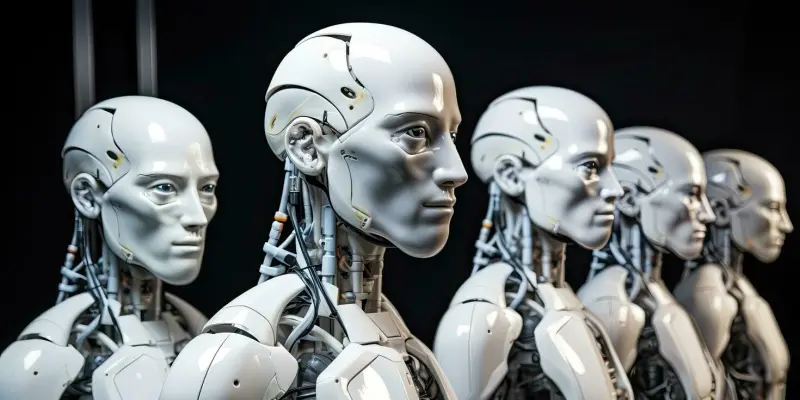
The advent of robotics, specifically humanoid robots, is dramatically reshaping industries and altering how businesses operate and individuals interact with technology. This transformation, fueled by rapid advancements in artificial intelligence (AI) and robotics technology, is becoming increasingly influential in multiple sectors. As these technologies continue to evolve, their integration not only improves efficiency and productivity but also addresses challenges such as labor shortages and cost pressures. As a result, robotics is expected to play an ever more significant role, impacting economic structures and setting the stage for a new era of industrial and societal paradigms.
Industrial Robotics: The Backbone of Modern Manufacturing
Evolution and Technological Enhancements
Industrial robotics has seen significant evolution since its inception in the 1950s, when simple-function machines were primarily used for tasks like printing and welding. Over the decades, the introduction of sophisticated microchips and advanced software has transformed these machines from fixed entities into highly precise and programmable systems. Industrial robots today are hybrid systems built with cutting-edge technologies, such as AI algorithms, improved sensors, and efficient actuators, which allow them to perform complex tasks with unparalleled precision. This transformation enables industries to drive productivity and maintain a competitive edge amid rising global pressures and challenges. By combining these technologies, industries can efficiently address varied challenges like labor scarcity and heightened demand for precision. Growth in the deployment of industrial robots has been substantial, with an impressive 4.3 million units installed globally by 2025. Such growth, particularly in regions like North America, highlights the impact of reshoring initiatives, where manufacturers seek to counterbalance rising labor expenses by investing in advanced robotics. For instance, with U.S. manufacturing wages rising by 4% in recent years, the market’s projected escalation of 35% by 2030 necessitates the adoption of cutting-edge robotic technology. By investing in precision-heavy manufacturing, such as the electronics and automotive industries, companies can ensure quality standards and maintain cost parity, preparing to meet future demands efficiently.
Economic Dynamics and Cost Reduction
Technological innovations have steadily decreased the deployment costs of industrial robots, making them accessible to an increasing number of enterprises. A reduction of approximately 25% in robotic costs over the last decade illustrates this trend, facilitating broader adoption by small and medium-sized businesses that previously found such investments prohibitive. This dramatic shift signifies a larger economic transformation, positioning robotics at the core of global manufacturing and industrial narratives. Robotics’ integration has the potential to reshape economies, diminishing dependence on manual labor and encouraging further automation across varied sectors. In addition, this shift towards automation is mirrored in the strategic realignments observed in North America, as manufacturers adopt robotic technologies to enhance production efficiency and lower operational costs. Furthermore, as organizations navigate supply chain complexities and workforce availability issues, leveraging robots becomes a critical strategy. Ongoing advancements highlight the indispensable role of robotics in manufacturing landscapes, fostering an era of unparalleled economic and industrial transformation with the potential to redefine traditional business paradigms.
Service Robotics: Transforming Human Environments
Versatility and Acceptance Challenges
Unlike their industrial counterparts, service robots are designed to operate in dynamic environments among humans, presenting distinct challenges of adaptability and safety. The necessity for high acceptance and intricate engineering demands that service robotics rise to meet diverse needs across sectors like retail, entertainment, healthcare, and logistics. Recent advancements have mitigated these challenges by enhancing the engineering versatility and capability of service robots. This adaptability allows seamless integration into human settings while ensuring safety and reliability—key factors driving their acceptance and expanded use cases. Developers aim to perfect these systems for optimal interaction, heralding a future where functionality and human-centric design converge seamlessly.
In healthcare, service robotics have markedly improved precision and reliability in surgical procedures, as exemplified by Intuitive Surgical’s da Vinci systems. From facilitating minimally invasive surgeries to providing surgical assistance, robotic systems are revolutionizing healthcare, with 2.2 million surgeries conducted in 2025—a notable increase from the previous year. Robotics in the logistics and transportation sectors are rapidly growing, driven by the rise of e-commerce giants like Amazon, which employs approximately 750,000 robots to counter high turnover rates. Companies across industries recognize the untapped potential, paving the way for efficient, tech-driven operational models.
Expanding Horizons Across Sectors
The potential for service robotics extends beyond current utilization, reflecting untapped opportunities in sectors like the restaurant industry. Despite being underrepresented in service robot deployment, these environments offer fertile ground for growth, with only one service robot per 1,500 restaurants in 2022. This statistic speaks to the vast opportunities awaiting the realization of robotics’ full potential. Inspired initiatives aim to bridge this gap by fostering increased integration and acceptance in the service sector, underscoring the transformative impact of robotics.
However, challenges like safety and effective human-robot collaboration continue to influence the adoption curve for service robotics. Despite these hurdles, ongoing technological advancements and steady expansion projections are encouraging broader acceptance of service robots throughout this decade. Developers and organizations remain committed to overcoming obstacles, with efforts toward fostering a culture of innovation and integration that underscores the overarching theme of automation and connectivity in human environments.
Humanoid Robotics: The Future Frontier
Interacting in Human Environments
Humanoid robots represent the next transformative frontier in the robotics landscape, shaped to function seamlessly alongside humans while blending into existing environments. Their design aims to reflect human attributes, facilitating enhanced social acceptance for domestic and professional use. This unique feature allows humanoid robots to perform diverse tasks, from caregiving to domestic chores, revolutionizing daily life and impacting industries in unforeseen ways. As humanoid technology continues to advance, the potential for sophisticated interactions in human environments grows, driven by AI’s capacity to emulate human behavior.
Technological advancements pivotal to humanoid development include AI-driven platforms enabling seamless human-robot interactions. Large-language models, for instance, allow humanoid robots to communicate more effectively, fostering user engagement and promoting proactive assistance. In 2025, increased private sector investment in humanoid technology attests to its burgeoning interest. This development signals the growing recognition of humanoids as valuable assets capable of revolutionizing industries and social interactions. Support for humanoid technology is expected to surge, paving the way for cutting-edge, human-centric robotic solutions.
Market Projections and Economic Impact
By 2036, market projections indicate humanoid robot sales could reach nearly 100 million cumulative units. This surge aligns with expectations of a booming market poised to address a demand exceeding $4.8 trillion by 2035—evoking comparisons to the incredible growth experienced during the automobile industry’s nascent stages. This rapid expansion not only signals a profound technological shift but also highlights the critical role humanoids will play as they achieve a tipping point. The integration of humanoid robotics into societal frameworks may redefine economic structures, reshape labor markets, and alter traditional business models. Humanoid robots signify a strategic inflection point in the ongoing robotics revolution, set to revolutionize human-technology interaction and enhance business capabilities. Emphasizing advanced adaptability and seamless integration, humanoids emerge as harbingers of an interconnected world where technology aligns symbiotically with human needs. This anticipative transformation underscores the dynamic trajectory leading to new opportunities for forward-thinking investors pursuing the latest innovations. Humanoid robots are expected to contribute prominently to global economic growth, standing as exemplary models of a sustainable, tech-driven future.
Paving the Path Toward a Robotic Future
The rise of robotics, especially humanoid robots, is fundamentally transforming industries by reshaping business operations and changing how people engage with technology. This shift is driven by significant advancements in artificial intelligence (AI) and robotics, which are increasingly influencing many sectors. As these technologies advance, their integration boosts efficiency and productivity while also tackling issues like labor shortages and cost pressures. Consequently, robotics is expected to take on a more pivotal role in our economies, altering economic structures and ushering in a new era of industrial and societal paradigms. The impact of these technologies is not confined to the present; they’re setting the stage for the future by redefining work and societal norms. As businesses harness these tools, they’re often required to adapt their strategies and infrastructures. This evolution is crucial as industries strive to stay competitive in a rapidly changing landscape, where robots not only augment human capabilities but redefine them.