

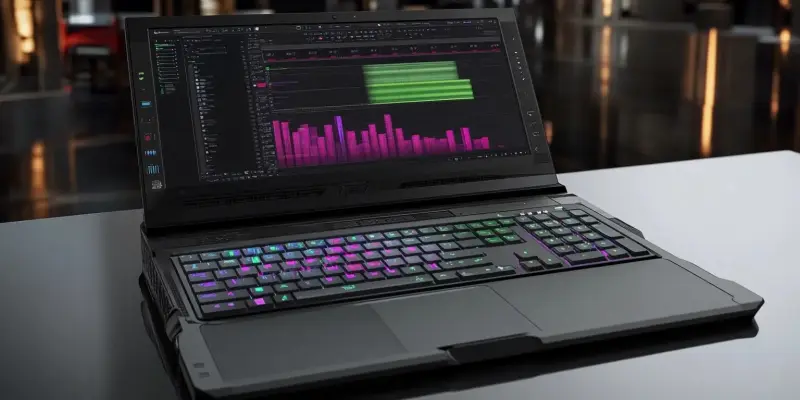
HP has recently unveiled its new ZBook Ultra 14 series of mobile workstations, which are garnering attention for their powerful configurations and hefty price tags. These professional-grade laptops are built to handle demanding workloads with the latest AMD Ryzen AI Max Pro processors and integrated Radeon GPUs. Starting at $4,296, these models target professionals who require top-tier computing capabilities for tasks such as design, engineering, and data processing. The flagship model, which boasts superior performance specifications, is priced at an eye-watering $8,250, underscoring the premium for high-end features.
Power-Packed Performance for Professionals
The Processing Power of AMD Ryzen AI Max Pro Processors
The HP ZBook Ultra 14 series features a range of processors from the AMD Ryzen AI Max Pro lineup, designed to deliver robust performance for professional applications. The series begins with the 8-core/16-thread Ryzen AI Max Pro 385 and extends to the formidable 16-core/32-thread Ryzen AI Max Pro 395, the latter providing unparalleled computing power for intensive tasks. The choice of these processors indicates HP’s commitment to catering to professionals who demand efficiency and speed in their devices.
One of the standout features is the high-performance integrated GPU (iGPU) that comes with these processors. While the absence of a dedicated GPU, like those found in some gaming laptops, might initially seem like a disadvantage, the integrated GPU in the Ryzen AI Max Pro series offers significant graphical capabilities suitable for many professional needs. These iGPUs can support complex graphical workloads, making the ZBook Ultra 14 a versatile option for various professional applications.
High Costs for High Specs
The price variation within the ZBook Ultra 14 lineup is primarily driven by the memory and storage configurations. The base model, which starts at $4,296, includes moderate hardware specs suitable for general professional use. However, the cost escalates significantly with upgrades to RAM and SSD. For instance, a configuration featuring the Ryzen AI Max Pro 395 processor, 64 GB of RAM, and a 1 TB SSD is priced at $5,660. Opting for the highest-end model with 128 GB of RAM and a 4 TB SSD pushes the price to $8,250.
Such steep pricing underscores the premium associated with high-performance specifications. The substantial cost of additional memory and storage reflects their importance in professional workflows that require large data handling and swift processing speeds. This pricing strategy caters to professionals willing to invest in top-tier configurations to maximize their productivity and efficiency.
Consistency and Variability in Specifications
Uniform Display and Battery Specifications
Regardless of the specific configuration, all models in the ZBook Ultra 14 series offer uniform display and battery specifications. The display choices range from WUXGA to 2.8K OLED touchscreens, providing users with options that suit their visual and functional preferences. This ensures that regardless of the chosen configuration, professionals have access to high-quality displays conducive to tasks that require precise visual clarity, such as graphic design and video editing.
The battery specifications also remain consistent across the series, with a 74.5 Wh polymer battery standard in all models. This uniformity ensures reliable battery performance, allowing users to focus on their work without frequent interruptions for recharging. The cohesive approach to display and battery life across the series reflects HP’s understanding of the importance of these features in professional-grade mobile workstations.
Connectivity and Camera Features
In terms of connectivity and camera features, the ZBook Ultra 14 models show minimal variation, suggesting that HP has prioritized other aspects such as processing power, memory, and storage as chief differentiators. This consistency in auxiliary features ensures that all users, irrespective of the model they purchase, receive a similar experience regarding connectivity options and camera quality, which are essential for virtual meetings and remote work.
One notable anomaly in the product lineup is the model B90JPUA, listed at $4,049 despite sporting similar high-end specifications. This discrepancy hints at either a pricing error or a special offer, presenting a unique opportunity for professionals seeking premium specifications at a comparatively lower price. Such anomalies can influence purchasing decisions significantly, offering value-conscious professionals a chance to acquire high-performing machines at reduced costs.
Market Reception and Future Considerations
Premium Pricing and Market Reactions
The ZBook Ultra 14 series has sparked discussions regarding the appropriateness of its pricing, especially for configurations lacking dedicated GPUs. While the processors and iGPUs offer commendable performance, the market consensus indicates that the high prices may deter some potential buyers. Comparatively, gaming laptops with dedicated GPUs, such as those from the RTX 50 series, offer similar or superior graphical performance at often lower prices. This has posed a challenge for HP in justifying the cost of the ZBook Ultra 14’s high-end models.
However, for those who prioritize processing power and memory over dedicated graphics performance, the ZBook Ultra 14 provides an attractive option. The premium pricing aligns with the professional-grade performance it promises, making it a suitable investment for users in fields requiring substantial computational abilities, such as data scientists, engineers, and multimedia professionals.
Future Trajectory and Product Evolution
Looking ahead, the evolution of the ZBook Ultra 14 series will likely hinge on balancing performance enhancements with cost-effectiveness. As technology advances, HP may explore integrating dedicated GPUs alongside the powerful Ryzen AI Max Pro processors, addressing current market critiques while enhancing graphical capabilities. Additionally, offering more flexible pricing structures or limited-time promotions, similar to the possible anomaly of model B90JPUA, could attract a broader audience.
The market’s reception has underscored the importance of balancing high performance with accessible pricing. Future iterations of the ZBook Ultra series will need to reflect these market dynamics, ensuring that HP remains competitive while continuing to meet the needs of professional users.
Conclusion
HP has recently launched its new ZBook Ultra 14 series of mobile workstations, which are turning heads for their impressive specifications and steep prices. These professional-grade laptops are designed to manage intense workloads, featuring the latest AMD Ryzen AI Max Pro processors paired with integrated Radeon GPUs. Priced starting at $4,296, these laptops are specifically aimed at professionals who need top-notch computing power for tasks like design, engineering, and data processing.
The flagship model is particularly noteworthy, coming with outstanding performance features and carrying a formidable price tag of $8,250. This makes it clear that investing in these high-end features comes at a significant cost. The ZBook Ultra 14 series exemplifies HP’s commitment to providing state-of-the-art tools for professionals who demand the best in computing technology. With its robust performance capabilities, the series is well-equipped to handle the most demanding professional tasks, offering a reliable solution for those in need of cutting-edge mobile workstations.