

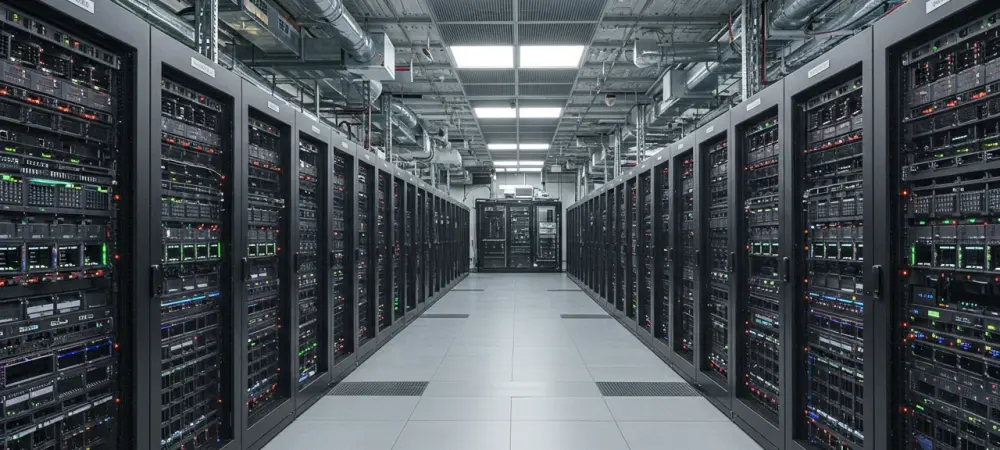
Hewlett Packard Enterprise (HPE) and KDDI recently announced a strategic collaboration aimed at bolstering AI capabilities in Japan with the establishment of a data center in Osaka, set to open in early 2026. This advanced facility intends to house Nvidia GPU clusters, leveraging Nvidia’s cutting-edge GB200 NVL72 platform built on the formidable Blackwell architecture. By harnessing such powerful technological infrastructure, the Osaka Sakai data center is poised to significantly enhance training for large language models (LLMs), thereby supporting the burgeoning AI landscape. This initiative showcases a concerted effort to cater to both startups and established enterprises by providing an unparalleled high-performance GPU environment. The facility’s innovative hybrid cooling technology, which blends air and direct liquid cooling, further underscores a commitment to efficiency and sustainability in operations.
Strategic Partnership for AI Innovation
Recognizing HPE’s expertise in supercomputing and advanced cooling systems, KDDI’s CEO Hiromichi Matsuda expressed enthusiasm over this collaboration, highlighting its potential to shape a sustainable future in conjunction with AI advancements. Matsuda’s vision aligns with the revolutionary capabilities promised by such technological integration, paving the way for smarter solutions that seamlessly blend performance with environmental consciousness. HPE CEO Antonio Neri echoed these sentiments, emphasizing the partnership’s role in augmenting AI innovation in Japan while prioritizing sustainability and productivity. The infusion of advanced Nvidia technology into data centers exemplifies a broader industry trend dedicated to enhancing AI capabilities. This strategic move is poised to redefine the role of data centers by making them central hubs for computational excellence in AI, contributing to technological leadership on a global scale.
Impact on Technological Leadership
This collaboration represents an ambitious alignment between HPE and KDDI’s vision for propelling technological leadership, as they both strive to deliver impactful and intelligent solutions. Through this venture, the companies commit to nurturing AI advancements in a way that acknowledges the importance of sustainability. As the data center is slated to commence operations in 2026, its influence is anticipated to be profoundly felt in Japan’s technological ecosystem. These efforts are not only advancing AI infrastructure but are also setting a precedent for sustainable operational practices, blending the drive for innovation with environmental stewardship. As industries increasingly rely on AI for diverse applications, the establishment of such a sophisticated data center exemplifies a forward-thinking approach, ensuring continuity in technological evolution while addressing modern-day challenges of efficiency and environmental impact.