

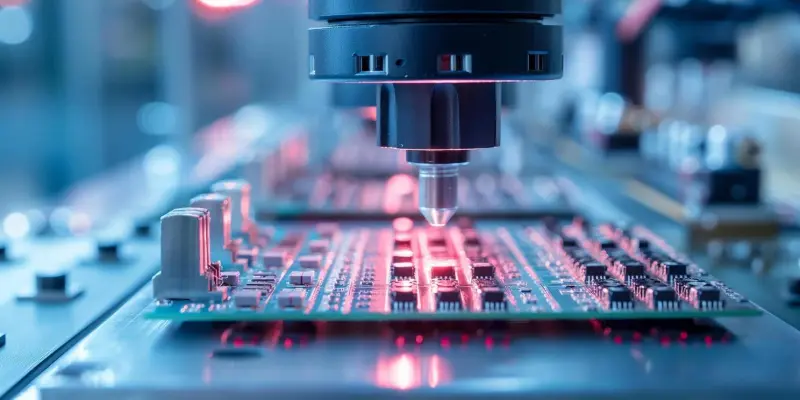
TSMC’s announcement of a considerable $165 billion expansion in the United States reflects a significant shift in the global semiconductor industry. With plans to increase production capacity at its Arizona manufacturing campus, Fab 21, this development has far-reaching implications. Initially, the company intended to establish three fabrication plants, but the new blueprint includes six state-of-the-art facilities. This decision aligns with rising demand and the growing need for regionalized manufacturing. Specifically, TSMC aims to produce 30% of its 2nm and sub-2nm chips on American soil, a notable jump from its original projections.
Strategic Importance for the US Market
The expanded US-based manufacturing capacity is of substantial importance to American customers such as AMD, Apple, and Nvidia. These companies experience ongoing pressure from the US government to localize their manufacturing processes. This shift not only fulfills government directives but also mitigates risks associated with geopolitical tensions. The first fab at the Arizona site will focus on producing 4nm chips, while the second will handle 3nm products. Additionally, the third and fourth fabs are earmarked for N2 and A16 chip production. These fabs will introduce TSMC’s advanced 2nm and sub-2nm processes to the US market, thereby addressing the demand for high-performance computing and AI applications.
C.C. Wei, CEO of TSMC, highlighted that the strategic expansion is driven by sustained multi-year customer demand. By incorporating advanced packaging facilities within the US, TSMC aims to bypass logistical hurdles and added expenses associated with shipping partially manufactured chips to Taiwan for packaging. This move is increasingly relevant given potential tariff complications. The inclusion of advanced packaging capabilities among the new facilities underscores the company’s commitment to providing comprehensive solutions to its clients.
Construction Timeline and Coordination with US Officials
The construction of TSMC’s third and fourth fabs at the Arizona campus is set to commence this year. The timeline for the fifth and sixth fabs, however, will be adjusted based on market demand projections. In line with this development, TSMC is actively engaging with US officials to secure the necessary permits. The current administration’s focus on enhancing domestic manufacturing capabilities likely facilitates this coordination process. The expansion plans also include three new wafer manufacturing fabs, two advanced packaging fabs, and a significant R&D center. These facilities represent a substantial leap in TSMC’s presence in the US semiconductor landscape.
Furthermore, TSMC’s investment in cutting-edge research and development facilities is positioned to enhance innovation in the sector. A robust R&D presence in the US can lead to more collaborative efforts with American technology firms and educational institutions. This collaboration has the potential to foster innovation and leadership in semiconductor technology, ensuring that both TSMC and its clients remain ahead in a fiercely competitive market. The commitment to R&D aligns with TSMC’s broader strategy of maintaining a technological edge while meeting the evolving demands of its diverse customer base.
Broader Implications for Global Semiconductor Industry
TSMC’s announcement of a significant $165 billion expansion in the United States marks a major transformation in the global semiconductor industry. The company plans to enhance its production capacity at the Arizona manufacturing campus, known as Fab 21. Initially, TSMC intended to build just three fabrication plants, but the updated plan now includes six advanced facilities, reflecting the company’s response to rising demand and the growing need for domestic manufacturing.
This strategic decision aims to cater to the increasing necessity for regionalized production, a trend driven by supply chain concerns and national security interests. Specifically, TSMC’s initiative to produce 30% of its 2nm and sub-2nm chips in the United States is a significant increase from the company’s original forecasts. This move not only bolsters the U.S. semiconductor industry’s capabilities but also positions TSMC as a key player in meeting the global demand for cutting-edge chip technology, further solidifying its role in the industry.