

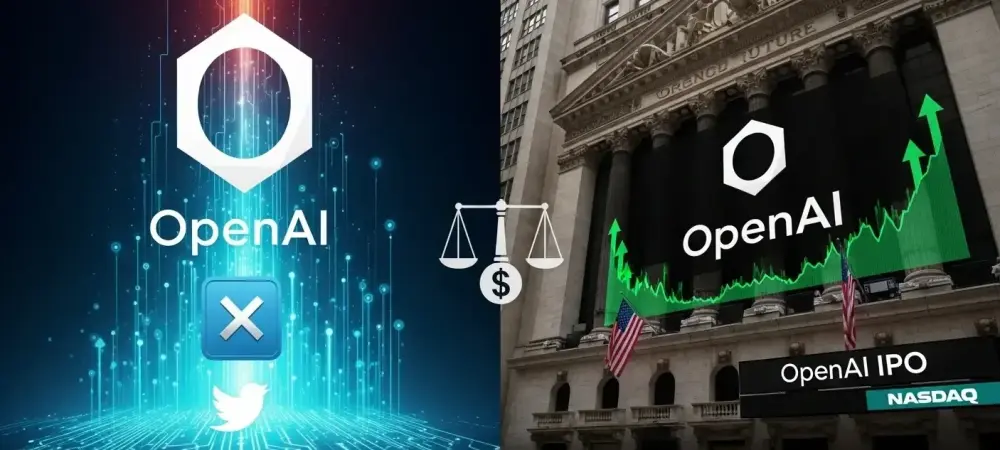
The courtroom doors in Oakland, California, recently swung shut on a legal saga that has captivated the global technology sector and redefined the power dynamics of the artificial intelligence industry for years to come. In May 2026, OpenAI emerged as the definitive victor in its protracted legal battle against former co-founder Elon Musk, a resolution that carries implications far beyond a simple corporate dispute over contract law. This high-stakes confrontation served as a proxy war for the soul of artificial intelligence, pitting the original altruistic, nonprofit vision of the company against its current reality as a commercial juggernaut valued at approximately $852 billion. By successfully navigating this challenge, OpenAI has effectively cleared the most significant obstacle standing in the way of its highly anticipated initial public offering (IPO), which is now poised to become one of the most transformative financial events in modern history. The verdict not only solidifies Sam Altman’s leadership but also signals a fundamental shift in how the market values the bridge between academic research and massive commercial scalability in the AGI sector.
The core of this conflict rested on Elon Musk’s assertion that the organization he helped found had fundamentally strayed from its founding principles to serve the interests of its primary backers, most notably Microsoft. Musk’s legal team argued that the transition to a “capped-profit” model and the closed-source nature of later GPT iterations constituted a breach of a “founding agreement” to keep AI technology open and accessible for the benefit of all humanity. In stark contrast, OpenAI’s defense successfully framed the lawsuit as an opportunistic attempt at sabotage by a competitor who had fallen behind in the race to develop generative intelligence. By painting Musk as a disgruntled former partner seeking to bolster his own ventures, such as xAI, through legal interference, OpenAI was able to move the conversation from moral philosophy to corporate pragmatism. This narrative resonance with the jury proved critical, as it highlighted the complexities of maintaining a nonprofit ethos in an industry that requires tens of billions of dollars in compute resources to remain competitive.
Impact of Testimony and Character Revelations
While the final ruling favored OpenAI, the three weeks of testimony pulled back the curtain on the often opaque world of Silicon Valley’s elite, revealing a culture of intense rivalry and guarded communication. During the proceedings, internal emails and private correspondences were entered into the public record, providing a rare and sometimes unflattering look at the leadership styles of Sam Altman and Greg Brockman. Some witnesses and former associates described Altman in terms that challenged his public persona, using words like “dishonest” and “manipulative” to characterize his strategic maneuvers during the company’s transition phases. These revelations have created a complex legacy for the CEO; while he is undeniably the architect of the company’s current success, the “character tax” paid during this trial may lead to increased skepticism from federal regulators and transparency advocates as the company prepares for the intense scrutiny of a public listing. Investors must now weigh the company’s technological dominance against these newly aired concerns regarding the governance and internal culture of its highest executive offices.
Beyond the personal reputations involved, the trial underscored a profound concentration of power within a remarkably small circle of individuals who are currently dictating the technological future of the planet. This legal battle exposed what many observers describe as a “Silicon Valley bubble,” where the personal grievances and competitive egos of a few billionaires can influence the trajectory of global innovation. The disconnect between these visionary creators and the billions of people who will eventually integrate these AI systems into their daily lives was palpable throughout the trial. As OpenAI moves toward its IPO, this exposure of centralized authority has sparked a broader conversation about whether a single private entity should hold such a massive lead in a technology that has the potential to redefine the global economy. This shift in public perception could result in more rigorous oversight or new legislative frameworks designed to ensure that the “intelligence of the future” is not entirely subject to the whims of a handful of tech titans who appear to be fighting personal wars in public forums.
The Technicality That Secured the Verdict
The resolution of this monumental case did not come from a grand philosophical ruling on the ethics of AI, but rather from the cold application of procedural law regarding the “statutory deadline.” The nine-person federal jury reached their decision in less than two hours, concluding that Elon Musk had waited too long to file his grievances after the alleged breaches of the company’s mission had occurred. Judge Yvonne Gonzalez Rogers played a pivotal role by strictly narrowing the scope of the trial, preventing it from devolving into a speculative debate about the existential risks of artificial general intelligence or the moral obligations of nonprofit entities. By focusing on the timeline of the filings rather than the merit of the ethical claims, the court provided OpenAI with a total legal victory that bypasses the need for structural reforms or leadership changes. This outcome allows the company to maintain its current trajectory without being forced to revert to its original open-source or purely nonprofit roots, effectively validating the “capped-profit” structure in the eyes of the law.
Elon Musk’s reaction to the verdict was characteristically vocal and defiant, as he utilized his platform, X, to condemn the decision and the judicial process itself. He labeled the ruling a “license to loot charities,” arguing that it sets a dangerous precedent where corporate leaders can abandon altruistic missions as long as they manage the timing of their transitions carefully enough to escape legal recourse. This loss marks a significant setback for Musk’s personal and professional influence within the AI sphere, representing his second major courtroom defeat in a relatively short window of time. However, for OpenAI, the “technicality” of the win is irrelevant compared to its practical effect; it has removed a multi-billion dollar liability from its balance sheet and silenced a powerful internal critic who had the standing to challenge its corporate evolution. With this hurdle removed, the company is no longer required to defend its shift in mission as a legal liability, allowing it to present a unified and stable front to the global investment community as it enters the next phase of its financial growth.
Market Implications and the IPO Path
The immediate aftermath of the court’s decision has cleared a direct path for what many analysts expect to be a record-breaking IPO in the near future. Now that the litigation is no longer clouding the company’s long-term viability, OpenAI can proceed with the complex financial disclosures and regulatory filings required by the Securities and Exchange Commission (SEC). At its current valuation of $852 billion, the company is entering the public market not as a speculative startup, but as a titan that rivals the market capitalization of legacy giants like Microsoft and Apple. This public debut will likely serve as the definitive benchmark for the entire AI sector, establishing a “gold standard” for how generative intelligence companies are priced relative to their compute costs and subscription revenue. For early investors and long-term employees, the resolution of the Musk lawsuit is the final green light that transforms theoretical paper wealth into liquid assets, potentially creating a new class of millionaires and billionaires overnight who will further fuel the tech ecosystem.
However, the road to the stock market is not entirely without social friction, as the trial highlighted a growing divide between the company’s corporate success and the public’s apprehension regarding AI’s societal impact. While the legal victory was absolute, the protests staged outside the Oakland courthouse by labor groups and mental health advocates served as a reminder of the real-world anxieties surrounding job displacement and the rapid automation of human cognition. These groups expressed concerns that the “move fast and break things” mentality that powered OpenAI’s rise might overlook the systemic risks of deploying powerful AGI models without sufficient public guardrails. This tension suggests that while the financial markets may be eager for an OpenAI IPO, the company will face continued pressure to demonstrate corporate social responsibility and safety transparency. The success of the public offering will therefore depend not just on the strength of the company’s algorithms or its revenue growth, but on its ability to convince a skeptical public that its commercial dominance will not come at the expense of human well-being.
Defining a New Era of AI Governance
The conclusion of this landmark case marks a decisive turning point in the history of technology governance, signaling that the era of idealistic, nonprofit-driven AI development has largely been superseded by the realities of high-stakes capitalism. It has demonstrated with startling clarity that the original altruistic missions of foundational tech companies can be eclipsed by the sheer pressure of capital requirements and the allure of massive market valuations. This shift suggests that the “founding mission” of a tech startup is often a temporary state that survives only until the cost of innovation exceeds the limits of traditional philanthropy. As OpenAI prepares for its public debut, the industry is witnessing the birth of a new corporate model where the boundaries between public benefit and private profit are increasingly blurred. This evolution will likely prompt other AI developers to rethink their own organizational structures, potentially favoring more traditional corporate frameworks from the outset to avoid the legal entanglements that nearly derailed the most valuable startup in the world.
As the tech industry moves forward from this verdict, the focus must shift toward creating more robust and permanent frameworks for AI accountability that do not rely on the personal integrity of a few leaders. The trial in Oakland revealed that the current legal system is often more comfortable dealing with procedural technicalities than with the profound ethical dilemmas posed by autonomous systems and concentrated digital power. Future considerations should include the development of third-party auditing standards and international regulatory bodies that can provide a check on AGI development regardless of a company’s corporate status. For the public and for future innovators, the takeaway from the OpenAI victory is that while legal challenges can be won through procedural rigor, the deeper questions regarding the equitable distribution of AI benefits remain unanswered. The next decade will likely be defined by how the global community addresses these gaps, ensuring that the unprecedented wealth and power generated by the AI revolution are governed by transparent, democratically informed principles rather than just the tactical successes of the courtroom.