

The global financial landscape is no longer tethered to a single semiconductor giant, as the artificial intelligence boom has matured into a multi-faceted ecosystem of infrastructure, specialized hardware, and vertical integration. This fundamental shift marks a departure from the frantic speculative phase characterized by a singular reliance on general-purpose processors that dominated the earlier part of the decade. Instead, the current market prioritizes a synchronized infrastructure where custom silicon, massive memory capacity, and sophisticated thermal management systems serve as the primary drivers of long-term value. Investors have begun to recognize that the intelligence of an algorithm is only as effective as the physical and logical layers supporting it, leading to a significant broadening of the capital allocation pool across various sectors of the economy.
Moving Past the GPU Gold Rush Toward a Mature Technological Value Chain
Industry observers note that the initial obsession with securing hardware at any cost has finally given way to a more disciplined approach centered on long-term scalability and operational efficiency. While the early phase of the boom was defined by the meteoric rise of a few key hardware designers, the current landscape benefits from a wider distribution of capital across the entire supply chain. This shift reflects a deepening understanding among institutional investors that the computational “brain” of AI requires a robust and well-maintained “body” of supporting components to function effectively in a demanding enterprise environment. The transition from a supply-constrained market to a performance-optimized one has allowed for a more nuanced valuation of companies that were previously overshadowed by the primary chipmakers.
Moreover, the narrative of a monolithic market has been replaced by a diverse range of specialized alternatives that cater to specific industrial needs. Market participants are increasingly looking beyond traditional semiconductor leaders to find value in companies that provide the niche technologies necessary for specific applications, such as autonomous systems or real-time linguistic translation. This maturation of the value chain suggests that the era of the “one-size-fits-all” solution has effectively ended, making room for a more competitive and resilient technological foundation. This evolution is not merely about raw power but about the strategic integration of hardware and software to solve complex, real-world problems at a global scale.
Mapping the New Frontiers of the Decentralized AI Economy
The decentralized nature of the current economy is a direct result of the global race for technological sovereignty and supply chain security. Nations and corporations alike are investing heavily in domestic capabilities to ensure that they are not beholden to a single geographic region or a handful of dominant vendors. This movement has sparked a wave of innovation in how data is processed, stored, and transported across massive networks, leading to a significant expansion of the physical footprint required to maintain these advanced systems. As a result, the investment landscape has expanded to include regional infrastructure providers and local energy solutions that were once considered peripheral to the tech sector.
Furthermore, the transition toward a decentralized model has encouraged a proliferation of cloud-native and edge-based solutions that distribute intelligence closer to the end-user. By moving computation away from centralized mega-hubs and toward the “edge” of the network, organizations are significantly reducing latency and increasing the efficiency of real-time digital intelligence. This strategic decentralization is creating new opportunities for companies involved in advanced networking and compact hardware, further diluting the influence of the centralized giants. The focus has moved from building the largest possible models to building the most accessible and responsive ones, requiring a total rethink of how digital resources are allocated.
The Ascent of Specialized Silicon: How ASICs and Alternative Accelerators Challenge Market Dominance
As artificial intelligence models grow more specialized and complex, the demand for custom chip designs has surged to unprecedented levels. Application-Specific Integrated Circuits, or ASICs, are increasingly becoming the preferred choice for hyperscalers who require hardware optimized for specific internal tasks rather than general-purpose flexibility. By focusing on extreme efficiency and high throughput for targeted workloads, these specialized chips offer a performance-per-watt advantage that traditional accelerators struggle to match in a cost-effective manner. This trend has allowed a new generation of chip architects to capture a significant portion of the enterprise market.
Market analysts highlight that this shift toward specialization is opening the doors for secondary players to secure long-term contracts with the world’s largest service providers. Companies that partner with these giants to develop bespoke logic solutions are seeing substantial revenue growth as they provide the custom hardware that enables more efficient scaling of proprietary models. This shift signifies a broader move toward “logic optimization,” where the internal architecture of the chip is just as critical as its raw transistor count. Consequently, the hardware ecosystem is becoming more fragmented but also more tailored to the specific needs of different industries.
The Critical Infrastructure Bottleneck: Manufacturing Capacity and the Memory Supercycle
The rapid expansion of processing capabilities has revealed a significant bottleneck in the global manufacturing capacity required to sustain this growth. Even the most advanced and innovative chip designs are essentially useless without access to the high-end fabrication facilities needed to produce them at scale. As a result, the companies that control the lithography and assembly processes have become the indispensable gatekeepers of the entire technological world. Their financial health and production schedules are now viewed as the ultimate indicators of the sector’s overall vitality, as they must balance the intense demand with the physical limits of precision engineering.
In tandem with these manufacturing challenges, the industry is currently navigating a massive memory supercycle that has redefined the importance of data storage. Modern intelligence models require staggering amounts of high-bandwidth memory to process information at the speeds necessary for real-time inference and decision-making. This has elevated memory providers from their traditional roles as commodity hardware suppliers to core strategic partners in the AI stack. The scarcity of these critical components has forced a total rethink of procurement strategies, with many technology firms entering into multi-year agreements to ensure a steady supply of high-performance memory modules.
The Hyperscaler Pivot: Why Tech Giants Are Trading Vendor Dependence for Vertical Integration
The world’s largest technology firms are undergoing a profound strategic pivot by moving toward total vertical integration of their computing resources. Rather than remaining passive customers of external hardware vendors, these hyperscalers are investing billions of dollars in developing their own internal chip ecosystems and software frameworks. By owning the silicon that runs their proprietary models, these companies can fine-tune every aspect of the processing cycle for maximum efficiency and speed. This move is primarily driven by a desire to reduce operational costs, improve energy efficiency, and gain a competitive edge through tighter software-hardware synergy.
This vertical integration also serves as a critical defensive measure against global supply chain volatility and market monopolies. By internalizing the design and optimization of their core infrastructure, tech giants can insulate themselves from the price fluctuations and component shortages that plagued the market in earlier cycles. This self-sufficiency allows them to offer more stable and scalable services to their enterprise clients, reinforcing their market dominance while simultaneously disrupting the traditional relationship between hardware vendors and software providers. The result is a more consolidated but highly efficient service model that rewards those with the capital to build from the ground up.
Hard Assets and Heat Management: The Unsung Heroes of Data Center Expansion
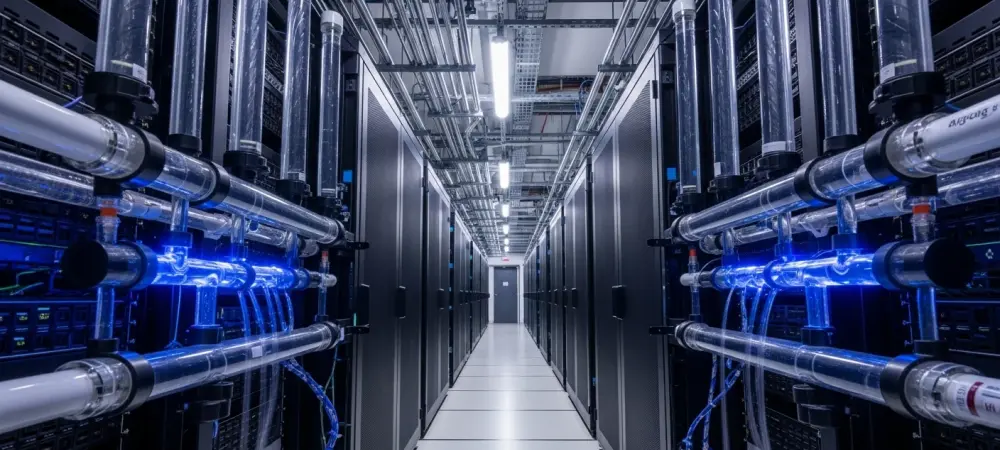
As processing units become more powerful and densely packed, the physical environment in which they operate has become a primary concern for engineers and investors alike. The massive amount of heat generated by high-performance computing clusters requires advanced cooling solutions that go far beyond the capabilities of traditional air-based systems. Liquid cooling technology has transitioned from a niche solution for enthusiasts to a standard requirement for any modern data center operation. This has created a booming market for equipment specialists who can design, install, and maintain the complex thermal management systems necessary to prevent hardware failure.
In addition to cooling, the broader physical infrastructure—ranging from power delivery systems to the specialized structural racks that house thousands of servers—is seeing a surge in demand. Investors are increasingly focusing on these “hard asset” companies that provide the tangible, physical backbone for the digital revolution. Without these unsung heroes of the data center, even the most advanced and sophisticated algorithms would remain purely theoretical, unable to operate at the scale required for global deployment. This focus on physical assets highlights the growing realization that the digital future is firmly rooted in the physical world and its resource constraints.
Capitalizing on the AI Stack: Strategic Frameworks for Modern Investors
The complexity of the modern technological ecosystem requires a much more sophisticated investment framework than the simple hardware-focused strategies of the past. Success in the current environment involves identifying value at every layer of the “AI Stack,” from the raw materials and precision manufacturing equipment at the base to the enterprise-grade applications at the top. This holistic view allows for a more balanced and resilient portfolio that can withstand the cyclical nature of individual hardware components while still benefiting from the overarching growth of the sector. By diversifying across the stack, investors can mitigate the risks associated with rapid technological obsolescence.
Strategy experts suggest that the most resilient opportunities are currently found in the enabling technologies that support the entire industry regardless of which specific model becomes the standard. By focusing on companies that provide essential infrastructure—such as power management, specialized software frameworks, and precision manufacturing tools—investors can hedge against the volatility of individual chip designers. This approach recognizes that while the specific winners of the hardware wars may change over time, the foundational requirements for advanced computing will only continue to expand and become more complex. Therefore, the strategic investor focuses on the “infrastructure of intelligence” rather than just the intelligence itself.
The Future of Global Intelligence: A Synchronized Infrastructure Beyond 2026
Looking past the current landscape, the trajectory of global intelligence points toward a highly synchronized and interconnected infrastructure that operates seamlessly across borders. The focus is shifting from building isolated models to creating vast, integrated networks where intelligence is distributed across the cloud, the network edge, and local devices. This future state requires a level of coordination between hardware and software that is only now beginning to be realized through the integration of custom silicon and advanced networking protocols. The goal is to create a digital environment that is as ubiquitous and reliable as the electrical grid, supporting every facet of modern life.
The concept of “technological sovereignty” will likely remain a dominant theme as nations continue to build their own independent ecosystems to protect their economic interests. This will lead to a more fragmented but ultimately more robust global market, where multiple regional hubs contribute to the overall innovation of the industry. The resulting infrastructure will not just be faster and more powerful, but also more resilient and adaptable to the changing needs of a society that is becoming increasingly dependent on artificial intelligence for its daily operations. Ultimately, the synchronization of these global resources will define the next phase of human productivity and economic growth.
The transition toward a diversified and mature investment landscape represented a fundamental shift in how the world valued technological progress. Analysts observed that the market successfully moved beyond the initial hardware bottlenecks to embrace a more holistic model of infrastructure expansion. By prioritizing vertical integration and specialized silicon, the largest tech entities secured their positions while fostering a competitive environment for specialized equipment providers. Ultimately, the synchronization of global computing resources created a foundation that supported the wide-scale deployment of intelligence across every sector of the global economy, ensuring that the benefits of the revolution were felt far beyond the confines of the semiconductor industry.