

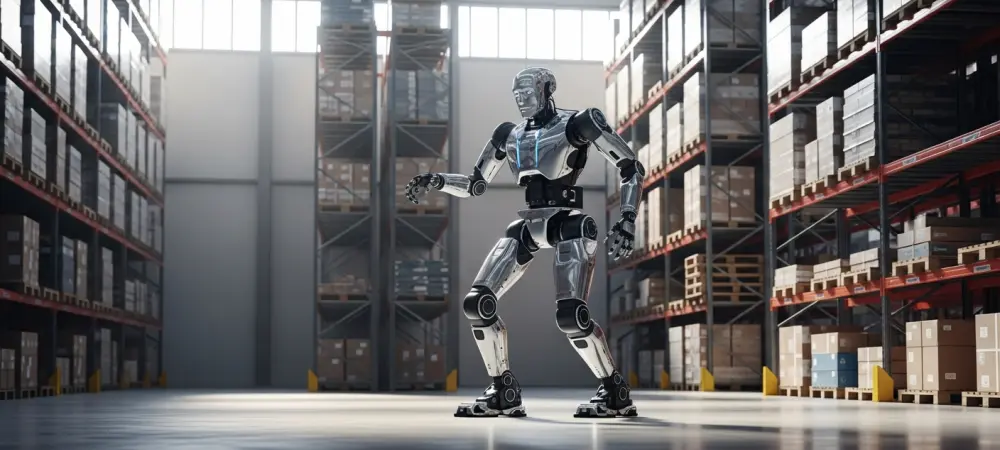
The distinction between a machine that performs a single task with absolute precision and one that can learn to navigate a messy human world defines the greatest technological divergence of the current decade. For nearly a century, the automation sector relied on specialized, stationary hardware that excelled in vacuum-sealed environments, yet the modern landscape has shifted dramatically toward general-purpose physical AI. This transition is not merely a change in form but a fundamental reimagining of how machines interact with human-centric infrastructure. Today, the focus has moved beyond the “caged” efficiency of traditional factory arms to embrace the versatility of humanoid platforms, which are designed to solve global labor shortages and take over roles categorized as dirty, dull, or dangerous.
The current market environment features a diverse array of heavyweights and nimble innovators, each betting on different architectures to bridge the gap between digital intelligence and physical labor. Major industrial players like Agility Robotics with its Digit platform and Figure AI with the Figure 02 are establishing deep roots in logistics and automotive manufacturing. Simultaneously, the Chinese robotics ecosystem has surged with companies like AgiBot, Unitree Robotics, and UBTech Robotics deploying thousands of units at aggressive price points. Even automotive and tech giants like Tesla, Samsung, and Toyota have entered the fray, treating the humanoid form as the ultimate peripheral for their advanced artificial intelligence models. This collective effort suggests that the specialized automation of the past is slowly giving way to a more flexible, mobile, and intelligent generation of machinery.
The Evolution of Physical AI and the Modern Robotics Landscape
Historically, the industrial robotics sector was defined by its rigidity, where a robot was bolted to the floor and programmed to repeat a singular motion millions of times. These machines required structured environments where every variable, from the lighting to the placement of a bolt, was controlled with mathematical certainty. However, the emergence of humanoid robotics has introduced a facility-first philosophy, where the robot is expected to adapt to the building rather than the building being redesigned for the robot. This shift is primarily driven by the need for scalable automation that can operate within existing warehouses, hospitals, and assembly lines without the prohibitive cost of structural overhauls.
The landscape is currently split between Western innovators and an exceptionally fast-moving Chinese manufacturing base. In the United States, startups like Figure AI and Sanctuary AI are focusing on the “brain” of the machine, leveraging massive computing power from partners like Nvidia and Microsoft to create robots that can generalize tasks. In contrast, the Chinese ecosystem, led by firms such as AgiBot and Unitree, has prioritized manufacturing volume and cost reduction. AgiBot, for instance, has already delivered 10,000 units of its Yuanzheng A2 series, demonstrating that mass production is no longer a distant goal but a present reality. These companies are supported by a robust supply chain that allows for rapid iteration and deployment across a variety of industrial sectors.
Strategic interests from the automotive sector have further accelerated this evolution, as companies like Tesla and Mercedes-Benz view humanoids as the missing link in their production lines. Tesla’s Optimus project benefits from the company’s internal expertise in battery tech and AI inference, while Mercedes-Benz has partnered with Apptronik to pilot the Apollo robot for repetitive assembly tasks. This convergence of automotive engineering and robotic dexterity is creating a new class of “Physical AI” that can walk, lift, and even sense its surroundings with high fidelity. As these technologies mature, the barrier between specialized industrial tools and general-purpose workers continues to blur, creating a competitive environment where versatility is the most valuable currency.
Comparative Performance: Hardware, Intelligence, and Dexterity
Operational Versatility and Environment Integration
Standard industrial robots function as high-performance specialists, meaning they are exceptionally good at one thing but fundamentally incapable of switching roles without significant downtime and reprogramming. If a traditional robotic arm is tasked with picking up a box, it remains at that station until it is physically moved or decommissioned. Humanoid robots, however, offer a level of mobility and environment integration that allows them to navigate spaces exactly as a human worker would. Models like Agility Robotics’ Digit are currently undergoing rigorous testing in Amazon fulfillment centers, where they move between different areas to handle varied logistics tasks, proving that a single machine can function as a multi-role asset.
The integration process for these new machines is designed to be “facility-first,” meaning they can walk through doors, climb stairs, and operate in aisles built for people. Apptronik’s Apollo and Figure AI’s Figure 02 are being piloted in automotive plants belonging to Mercedes-Benz and BMW, where they perform tasks that involve moving between different workstations. Unlike the fixed-position arms of the past, these robots can pick up a component at one end of a factory and deliver it to an assembly line at the other, all while avoiding obstacles and human coworkers. This ability to pivot between diverse roles without requiring custom infrastructure represents a significant leap in operational flexibility for modern enterprises.
Hardware Engineering and Technical Resilience
When comparing hardware, industrial robots are built for high-speed precision and heavy lifting within protected zones, often sacrificing mobility for raw power. Humanoid hardware, conversely, prioritizes endurance, human interaction, and mechanical resilience. Apptronik’s Apollo features hot-swappable batteries to ensure high uptime, which is a critical requirement for 24/7 industrial operations. In a different approach to thermal management, Xiaomi has integrated liquid cooling systems into its CyberOne model, allowing it to maintain performance on high-intensity EV production lines. These engineering choices reflect a shift toward making robots that are as reliable as their stationary predecessors while being far more mobile.
Collaborative safety and tactile sensitivity have also become primary engineering benchmarks for the humanoid class. Neura Robotics’ 4NE1 model features a synthetic skin that allows the robot to feel touch, ensuring it can work safely alongside humans without the need for safety cages. Similarly, Toyota’s Punyo utilizes “soft robotics” principles, employing squishy materials to ensure gentle interaction in caregiving or domestic settings. Perhaps the most disruptive technical metric is pricing, with Unitree’s G1 and # models entering the market at approximately $16,000. This low cost-of-entry is forcing the industry to reconsider the value proposition of bespoke industrial solutions in favor of affordable, mass-produced humanoid platforms.
Data Strategy and the Scaling of Physical Intelligence
The most profound difference between these two categories of robotics lies in how they learn and process information. Traditional industrial robots rely on rigid, deterministic programming where every movement is mapped out in advance by a human engineer. Humanoid robotics, however, utilizes “Physical AI” and massive datasets to learn how to perform tasks through observation and trial. UBTech Robotics has been at the forefront of this trend, building one of the world’s largest datasets of humanoid industrial activity by deploying its machines directly into automotive factories to record and analyze real-world interactions. This data-driven approach allows the machines to handle “edge cases” that would normally cause a standard robot to fail.
Tesla and Sanctuary AI are also pushing the boundaries of what these machines can perceive and execute. Tesla leverages its expertise in AI inference—honed through years of autonomous driving research—to train Optimus, while Sanctuary AI’s Phoenix robot focuses on high-fidelity dexterity for intricate sub-assembly tasks. This strategy involves training a “vision-action” model, such as the 4.7-billion-parameter system used by Xiaomi, which allows the robot to understand its environment and react to changes in real-time. By moving away from fixed programming toward generalized intelligence, humanoid robots are becoming capable of non-repetitive tasks that were previously thought to be the exclusive domain of human workers.
Deployment Challenges and Practical Constraints
Navigating unpredictable and “messy” environments remains the primary hurdle for humanoid deployment, even as the technology advances. While industrial robots thrive in structured, well-lit settings where every variable is known, humanoids are often expected to function in homes, hospitals, and dynamic warehouses where human behavior is erratic. A stray pallet, a sudden change in lighting, or a person walking across the robot’s path can present complex navigational challenges. Even high-end models like the 1X Technologies’ Neo or the Boston Dynamics’ Atlas must continually process a flood of sensory data to maintain balance and path accuracy, a feat that requires immense computational power and energy.
Reliability and the cost of maintenance represent another set of practical constraints that organizations must weigh. Established industrial arms have a proven track record of high “mean time between failures,” often running for years with minimal intervention. In contrast, the mechanical complexity of a humanoid—with its dozens of joints and sensitive sensors—makes it more prone to wear and tear. Companies like Noble Machines are attempting to address this by focusing on high-risk industrial roles where the trade-off for higher maintenance is justified by the reduction in human danger. Nevertheless, the logistics of maintaining a fleet of mobile humanoids at scale is a framework that is still maturing compared to the decades-old infrastructure supporting traditional automation.
Safety and regulatory compliance also demand a new approach when transitioning from “caged” robots to collaborative machines. Moving a machine that weighs 100 kilograms around human staff requires rigorous engineering to ensure that any collision is detected and mitigated instantly. The Fourier GR series, for instance, uses cushioned exteriors and advanced force-feedback loops to ensure it is perceived as safe and approachable. Regulatory bodies are still catching up to this shift, as existing safety protocols for industrial machinery do not always apply to mobile, autonomous humanoids. Ensuring these machines can be trusted in close proximity to the public is a prerequisite for their eventual move into domestic and service settings.
Strategic Guidance for Implementing Robotic Solutions
Current trends indicate that industrial deployment is winning the humanoid race, with logistics and automotive manufacturing serving as the primary proving grounds for these new technologies. The United States continues to lead in the development of sophisticated AI integration and high-fidelity manipulation, represented by the work of Figure AI and 1X Technologies. Meanwhile, China’s AgiBot and Unitree are setting the pace for manufacturing speed and cost reduction, making the technology accessible to a wider range of businesses. Organizations looking to integrate these solutions must decide whether they prioritize the deep intelligence and dexterity of Western models or the cost-effective scalability of Chinese hardware.
For organizations managing high-volume, highly repetitive, and heavy-duty tasks where the environment is strictly controlled, traditional industrial robotics remains the superior choice for maximizing immediate efficiency. Humanoid robotics is the recommended path for dynamic environments that require versatility, such as multi-task logistics or assembly lines where robots must work alongside humans. If a facility requires a robot to use existing manual tools or move between different workstations throughout a shift, a humanoid form factor provides a level of adaptability that a fixed arm cannot match. Decisions should be based on the specific level of environmental structure available and the required frequency of task switching.
When selecting a specific partner, companies should look at the “mean time between failure” and the ease of integration with existing software stacks. For those prioritizing immediate return on investment and a lower entry price, Unitree or Agility Robotics offer the most practical starting points. For enterprises focused on long-term AI generalization and the ability to perform complex, fine-motor tasks, solutions from Tesla or Sanctuary AI are more appropriate. The choice ultimately depends on whether a business needs a specialized tool for today’s production line or a flexible platform that can grow and learn as its operational needs evolve.
The comparative analysis of these two robotic philosophies revealed a clear shift toward general-purpose machines that prioritized adaptability over specialized rigidity. Stakeholders observed that while traditional industrial arms maintained their dominance in high-speed, repetitive manufacturing, the humanoid form factor successfully carved out a niche in dynamic environments where “facility-first” integration was required. The evaluation of market leaders like Agility Robotics, Figure AI, and Unitree demonstrated that the gap between laboratory prototypes and commercial workers narrowed significantly. Analysts concluded that the successful deployment of these machines depended less on the hardware’s appearance and more on the quality of the “Physical AI” datasets driving their movements. Future considerations must focus on the standardization of safety protocols for mobile machines and the development of a global maintenance infrastructure to support these complex systems at scale. Strategic planning moved toward a hybrid model where specialized industrial tools and versatile humanoid workers complemented each other to optimize the global supply chain.