

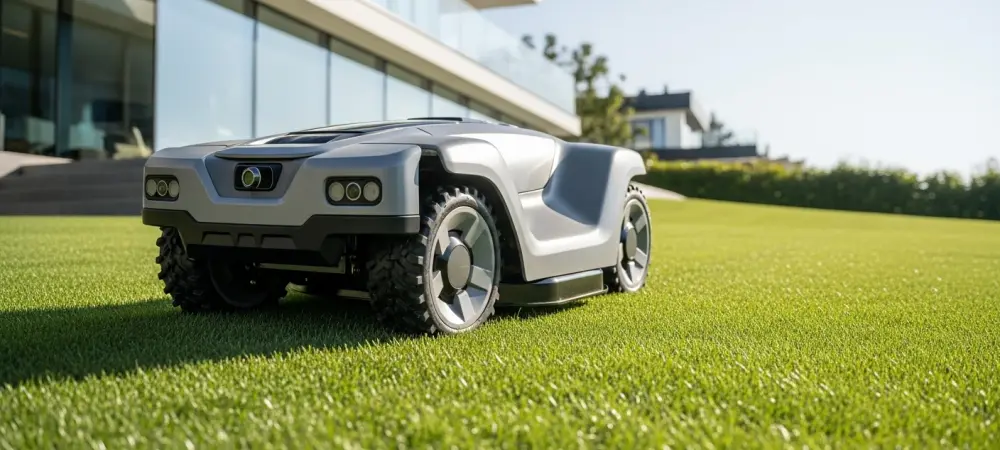
The rhythmic, deafening vibration of a two-stroke internal combustion engine no longer serves as the definitive alarm clock for suburban dwellers across the modern landscape. Instead, a new era of acoustic tranquility has arrived, defined by the nearly silent whir of electric motors and the precision of autonomous navigation. This shift represents more than just a change in equipment; it is a fundamental restructuring of how residential properties are maintained. The era of the weekend chore, involving heavy lifting and the storage of volatile fuels, is rapidly becoming a relic of a noisier past.
As of the current year, the transition toward autonomous lawn care has moved past the stage of early adoption into a phase of widespread household integration. Homeowners have recognized that the value of these machines lies not merely in the aesthetic results they produce, but in the reclamation of thousands of collective hours previously spent on repetitive labor. The convergence of artificial intelligence, high-density battery technology, and satellite-grade positioning has created a market where reliability is now the standard, rather than the exception.
This transformation is driven by a necessity for efficiency and a cultural push toward quieter, more sustainable living environments. In most high-end residential communities, the presence of a robot mower is now as common as a smart thermostat or a home security system. However, the complexity of these devices requires a nuanced understanding of how different technologies interact with the unique topography of a yard. Understanding the current hardware and software landscape is essential for any property owner looking to modernize their maintenance strategy effectively.
The Saturday Morning Silence: Why the Roar of the Gas Engine Is Vanishing From Modern Neighborhoods
The primary driver behind the mass adoption of robotic mowers is the undeniable shift in neighborhood atmosphere and environmental standards. For decades, the local soundscape was dominated by the aggressive roar of gas-powered engines, contributing to both noise pollution and localized emissions. Today, the transition to battery-electric autonomous systems has fostered a quiet environment where property maintenance can occur at any hour of the day or night without disturbing the peace. This silence has allowed homeowners to reclaim their weekends, as the machines work discreetly in the background, maintaining a consistent grass height that traditional weekly mowing could never achieve.
Beyond the reduction in noise, the move away from gas engines is fueled by a desire for reduced mechanical complexity. Internal combustion mowers require consistent oil changes, spark plug replacements, and the frequent procurement of fuel, all of which represent points of failure and inconvenience. In contrast, the current generation of robotic mowers utilizes brushless motors and high-capacity lithium-ion cells, which demand significantly less maintenance over their operational lifespan. This shift toward “clean” maintenance has also resonated with homeowners who prioritize reducing their carbon footprint without sacrificing the quality of their lawn’s appearance.
Furthermore, the consistency provided by autonomous systems has changed the health of the turf itself. Unlike traditional mowers that remove a large portion of the grass blade once a week, robots perform frequent, micro-cuts that leave tiny clippings on the soil. These clippings decompose rapidly, acting as a natural fertilizer and promoting a denser, greener lawn. This biological advantage, combined with the convenience of automated scheduling, has made the gas-powered alternative seem increasingly archaic to the modern property manager.
Cutting the Cord: Understanding the 2026 Shift to Wire-Free Satellite and Laser-Guided Precision
The most significant technological breakthrough in recent years is the abandonment of the buried perimeter wire. For a long time, the primary hurdle for robotic adoption was the labor-intensive installation process and the fragility of physical boundaries. If a wire was severed by a shovel or a rodent, the entire system would fail. Today, the industry has standardized wire-free navigation through three primary pillars: Real-Time Kinematic (RTK) satellite positioning, Light Detection and Ranging (LiDAR), and Visual Simultaneous Localization and Mapping (VSLAM). These technologies allow a mower to understand its position within a fraction of an inch without any physical constraints. RTK technology remains the backbone for properties with wide-open spaces and clear views of the sky. By utilizing a fixed base station that communicates with satellites, systems like NetRTK can guide a mower with incredible precision, ensuring that no patch of grass is missed and no garden bed is accidentally encroached upon. For properties with dense tree canopies or tall architectural structures that block satellite signals, LiDAR and vision-based systems have become the preferred solution. These mowers use lasers and cameras to build a three-dimensional map of the yard in real time, allowing them to navigate safely under porches and thick foliage where GPS-only systems would often lose their way.
The integration of these navigation suites has also simplified the “mapping” process for the average user. Instead of digging trenches, owners now simply drive the mower around the perimeter using a smartphone application, much like a remote-controlled car. The software records the boundaries and creates a digital map that can be edited at any time to include “no-go zones” for seasonal flower beds or temporary obstacles like trampolines. This flexibility has turned what used to be a weekend-long installation project into a twenty-minute digital setup, lowering the barrier to entry for even the least tech-savvy individuals.
The Hardware Hierarchy: Evaluating High-Torque AWD Systems and Intelligent Terrain Navigators
As navigation has matured, the physical capabilities of the mowers have also seen a dramatic upgrade to handle more diverse landscapes. Modern hardware is no longer limited to flat, manicured suburban patches; instead, high-torque All-Wheel Drive (AWD) systems have become the industry standard for challenging terrains. Manufacturers have introduced models that can climb inclines of up to 80 percent, a feat that would be dangerous for a human operator on a traditional riding mower. These machines utilize specialized tire treads and weight distribution to maintain traction on wet grass and loose soil, ensuring they do not get stuck in the middle of a task.
Intelligent terrain navigation goes beyond just climbing hills; it involves a sophisticated level of obstacle detection and avoidance. Advanced vision systems, such as VisionFence technology, allow mowers to identify and react to unexpected objects in their path, such as forgotten toys, garden hoses, or pets. Rather than simply bumping into an object and turning around, these mowers can calculate a new path in real time, maintaining efficiency while ensuring safety. This level of situational awareness is particularly important in households where the yard is a multi-use space shared by children and animals.
Different manufacturers have specialized in various aspects of this hardware hierarchy to cater to specific market segments. Some focus on heavy-duty construction with dual-cutting discs for large rural estates, while others prioritize compact designs and high-speed mapping for small urban lots. The diversity of the current market means that there is a mechanical solution for almost every yard configuration, from steep hillsides to intricate gardens with narrow passages. This mechanical robustness ensures that the robot is a reliable worker, capable of operating in weather conditions that would normally delay human-led maintenance.
The Professional Synthesis: Implementing Yard-Centric Logic to Avoid Costly Automation Mistakes
Success in autonomous lawn care depends heavily on matching the specific machine to the unique characteristics of the environment. A common mistake is selecting a mower based solely on brand reputation or price without considering factors like canopy density, acreage, and the complexity of the landscape. For instance, a high-end satellite-based model may be perfect for a two-acre clearing but will perform poorly in a yard heavily shaded by ancient oak trees. In those cases, a hybrid system that combines LiDAR with vision-based navigation is the only logical choice to prevent constant navigation errors and “stuck” notifications.
Acreage also dictates the necessary battery capacity and cutting width of the chosen fleet. A mower designed for a quarter-acre lot will struggle to keep up with the growth on a full acre, as it will spend more time traveling back to the charging station than actually cutting grass. For larger estates, property managers often deploy a fleet of smaller units or a single high-capacity machine with a wide deck to ensure the entire area is covered within a reasonable timeframe. Implementing this yard-centric logic involves a thorough audit of the property to identify potential “dead zones” where signals might drop or where narrow paths might restrict movement.
Furthermore, the economic synthesis of this technology involves viewing the mower as a long-term investment rather than a disposable gadget. While the upfront costs can be significant, ranging from several hundred to several thousand dollars, the reduction in labor costs and fuel expenses typically leads to a break-even point within a few seasons. Property owners who approached the transition with a strategic plan—identifying the right navigation tech and mechanical specs for their specific dirt—avoided the frustrations of early-stage automation. The goal is to create a “set-it-and-forget-it” system that operates autonomously for the majority of the growing season.
Beyond the Unboxing: A Practical Strategy for Maintaining Your Autonomous Fleet and Handling the Last Mile
The integration of these systems represented a fundamental shift in residential labor, yet homeowners soon realized that automation did not equate to a total absence of maintenance. While the machines handled the bulk of the mowing, a human element remained necessary to manage the “last mile” of landscaping. Tasks such as trimming tight corners, edging along fences, and clearing debris after heavy storms stayed within the domain of manual tools. Owners who established a routine for these small tasks found that their properties maintained a professional, golf-course aesthetic throughout the year.
Mechanical upkeep also demanded a proactive approach to ensure the longevity of the autonomous fleet. Owners learned that the blades required replacement every few weeks to keep the cuts clean and prevent grass disease, while sensors needed occasional cleaning to maintain navigation accuracy. The transition from operator to fleet manager meant that individuals spent less time pushing a mower and more time performing high-level maintenance. This shift proved to be a more efficient use of time, as it focused human effort on the details that machines could not yet master.
The evolution of the mower from a simple tool to a modular digital asset eventually redefined property care entirely. Innovative systems began incorporating interchangeable attachments for tasks like snow removal and leaf blowing, turning the lawn mower into a year-round utility vehicle. Property owners discovered that the initial investment provided more than just a mown lawn; it restored personal time and elevated the standards of their living environment. By the time the technology became a standard feature of every modern home, the era of the gas-powered weekend had officially become a memory.