

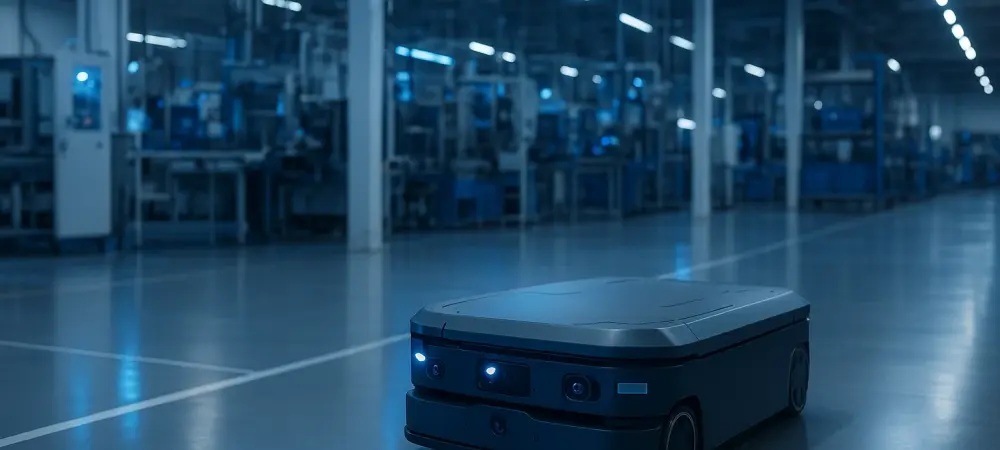
Across the sprawling industrial corridors of Germany and the high-tech logistics hubs of the Netherlands, a silent transformation is unfolding as machines begin to think rather than just move. This shift marks a departure from the traditional mechanical automation of the past, signaling the arrival of an era where digital intelligence is the primary driver of production. European manufacturing is currently experiencing its most profound evolution since the introduction of the assembly line, but the modern factory floor is no longer defined by the clanging of heavy iron. Instead, it is characterized by the quiet hum of sensors and the invisible flow of data through interconnected networks. The current landscape of European industry is being rewritten by the integration of artificial intelligence and advanced robotics, creating what many call a digital nervous system for the continent. It is no longer an optional upgrade for the largest automotive players; rather, it is a fundamental requirement for any enterprise wishing to remain relevant in a globalized market. As human labor becomes the most precious and scarce resource on the continent, the speed at which companies can integrate these “key technologies” will determine the winners and losers of the next industrial decade. This transition represents a wholesale reimagining of what it means to build, move, and manage products within the European Union.
The Silent Revolution: Artificial Intelligence in the Heart of Europe’s Factories
The traditional image of robotics—large, orange arms bolted to the floor behind heavy safety cages—is rapidly becoming a relic of the past. Today, the revolution is defined by machines that are untethered, observant, and capable of making autonomous decisions in real-time. This metamorphosis is not merely about replacing human hands with mechanical ones; it is about embedding high-level cognition into the physical world. In 2026, the focus has shifted toward creating a seamless interface between digital instruction and physical execution, where a robot is not just a tool but an intelligent participant in the manufacturing process. This shift is visible in the way European factories are being designed from the ground up to be “robot-native.” Instead of fitting robots into existing human workflows, engineers are creating environments where machines can communicate with every other piece of equipment on the floor. This interconnectivity allows for a level of flexibility that was previously unimaginable. For instance, a production line can now pivot from manufacturing heavy machinery parts to delicate electronics in a matter of minutes, guided entirely by software updates rather than physical retooling. This agility is the true hallmark of the current industrial era, allowing firms to meet the demands of a market that prizes customization over mass production.
Furthermore, the integration of artificial intelligence means that these systems are constantly learning from their surroundings. By analyzing millions of data points from their own sensors, robots can identify microscopic defects or suggest ways to shave seconds off a cycle time. This “bottom-up” intelligence creates a feedback loop where the factory becomes more efficient every single day. The result is a manufacturing environment that is more resilient, less wasteful, and capable of producing higher-quality goods with fewer resources, cementing Europe’s reputation as a global leader in high-precision engineering.
The Necessity of Automation: Why the European Robotics Pivot Is a Matter of Survival
The push toward advanced robotics is not driven by a simple desire for modernization; it is a calculated response to a series of systemic pressures that threaten the European industrial core. Perhaps the most pressing of these is the “demographic cliff.” As the workforce ages and fewer young people enter the manual labor market, the pool of available human workers is shrinking at an alarming rate. Automation has therefore moved from being a cost-cutting measure to a fundamental necessity for maintaining industrial capacity. Without these robotic systems, many European firms would simply find themselves unable to fulfill orders, leading to a permanent loss of market share.
Beyond the internal labor shortage, the mandate for industrial resilience has taken center stage. Recent global disruptions have highlighted the danger of over-reliance on long, fragile supply chains. In response, many European firms are “re-shoring” their production facilities, bringing manufacturing back to the continent to ensure greater control over their operations. However, to remain competitive with lower-cost markets abroad, these local factories must achieve levels of efficiency that only advanced robotics can provide. Automation acts as the great equalizer, allowing high-wage European economies to compete on a global scale by maximizing productivity and minimizing downtime.
The European Commission has officially recognized this shift by designating robotics as a vital component of digital sovereignty. By investing in a homegrown robotics ecosystem, the EU aims to protect its industrial base from external shocks and ensure that the continent remains a pioneer in the technologies of the future. This strategic alignment between government policy and private investment is creating a powerful momentum. It ensures that the transition to automation is not just about short-term profit, but about the long-term survival and stability of the European economic model in an increasingly volatile global environment.
Technological Convergence: From Isolated Hardware to Integrated Digital Ecosystems
Modern robotics is breaking free from its “black box” origins to become a sophisticated, data-driven layer of the broader industrial landscape. This evolution is powered by the convergence of several high-tech fields, most notably the marriage of artificial intelligence and machine vision. Robots are no longer blind machines following a fixed coordinate path; they are now equipped with advanced optical sensors and learning algorithms that allow them to “see” and interpret their environment. This allows them to perform tasks that were once thought to be purely human, such as sorting irregular items, performing delicate quality inspections, or navigating through busy warehouse floors without human intervention.
Another pillar of this digital ecosystem is the use of “digital twins”—virtual replicas of the entire shop floor that exist in a simulated digital space. European firms are increasingly using these models to test every aspect of their operations before a single machine is moved. By simulating production runs, companies can identify potential bottlenecks, predict equipment failures, and optimize the flow of materials with pinpoint accuracy. This ability to “predict the future” significantly reduces the risks and costs associated with scaling up production or introducing new product lines, making the industrial process more predictable and manageable.
The backbone of this connectivity is edge computing, which allows data to be processed directly on the robot or in a local server rather than being sent to a distant cloud. This ensures instantaneous communication between machines, which is critical for safety and efficiency. In the logistics sector, this technology has birthed a new generation of Autonomous Mobile Robots (AMRs) that can coordinate their movements like a choreographed dance, ensuring that materials are always where they need to be. Meanwhile, in professional services, robotic-assisted surgery is becoming a standard, where the robot acts as an ultra-precise extension of the surgeon’s hand, illustrating the diverse and profound impact of these integrated systems.
Economic Projections: Expert Perspectives on the €90 Billion Horizon
The trajectory of the European robotics market is pointing toward an unprecedented level of growth, with analysts suggesting the market could exceed a valuation of €90 billion by 2030. This growth is not just a reflection of more robots being sold, but a fundamental shift in where the value lies within the industry. Experts note that while the mechanical hardware is becoming a commodity, the true value and competitive advantage now reside in the “intelligence” of the system. Software, coordination logic, and AI integration are the new frontiers of profitability, as companies pay for the ability of their machines to solve complex problems rather than just move parts.
There is a growing consensus among industrial researchers that the future of the factory floor belongs to collaborative robots, or “cobots.” Unlike their predecessors, cobots are designed to work safely alongside humans, removing the need for physical barriers and safety cages. These systems focus on enhancing human capability rather than replacing it, using intuitive interfaces that allow a worker to “teach” a robot a new task in a matter of minutes. This democratization of robotics is particularly important for small and medium-sized enterprises (SMEs), which may not have the resources for large-scale automation but can benefit immensely from flexible, easy-to-use collaborative systems.
Furthermore, the rise of generative AI is expected to lower the barrier to entry even further. In the coming years, from 2026 to 2030, the ability to use natural language to command and program industrial robots will likely become a standard feature. This will allow workers without advanced coding skills to manage complex robotic fleets, effectively turning factory laborers into “robot supervisors.” European Commission findings highlight that this shift will be essential for maintaining a high-wage economy, as it allows workers to move away from repetitive, low-value tasks and toward higher-level management and troubleshooting roles that require human creativity and problem-solving.
Implementation Frameworks: Strategies for Successful Robotic Integration
For European businesses, the transition to a robotic-centric model requires a strategic framework that goes beyond simply purchasing the latest equipment. One of the most critical factors for success is ensuring interoperability between new robotic systems and existing software infrastructures. A robot that cannot communicate with the company’s Warehouse Management System (WMS) or Enterprise Resource Planning (ERP) software is a liability rather than an asset. Therefore, savvy executives are prioritizing open architectures and standardized protocols that allow different machines and software platforms to “talk” to one another, ensuring a seamless flow of information from the office to the factory floor.
The focus must also extend to the human element of the equation. Successful integration depends on a workforce evolution that prepares employees for a world where their primary job is to oversee and maintain automated systems. This requires significant investment in training programs that upskill the current labor force, transforming traditional machine operators into technical specialists. By framing automation as a tool for human empowerment rather than a threat to job security, companies can foster a culture of innovation that is essential for long-term operational stability and employee retention.
Finally, firms are finding success by adopting a scalable pilot model rather than attempting a full-scale overhaul of their entire operation at once. By starting with high-friction areas—such as repetitive sorting or internal logistics—companies can prove the value of robotics in a controlled environment before expanding the technology to more complex processes. This phased approach allows for the discovery of unforeseen challenges and the refinement of workflows without risking a total production shutdown. By leveraging the uniquely European approach to automation—which emphasizes high safety standards and human-centric design—businesses can build a resilient industrial foundation that is ready for the challenges of the coming decade.
The organizations that thrived during this period of rapid change recognized that the path to robotic mastery was paved with more than just mechanical upgrades. They identified that the true strength of an automated system resided in its ability to augment human skill, rather than simply replace it. Decision-makers looked back at the early hurdles of integration and realized that the most valuable investments were those made in software flexibility and employee retraining. By prioritizing ethical standards and high-precision interoperability, European industry successfully maintained its global edge. Those who moved decisively toward this integrated future ultimately secured a position of strength, ensuring that the continent remained a vibrant center of production long after the initial gears of the revolution began to turn.