

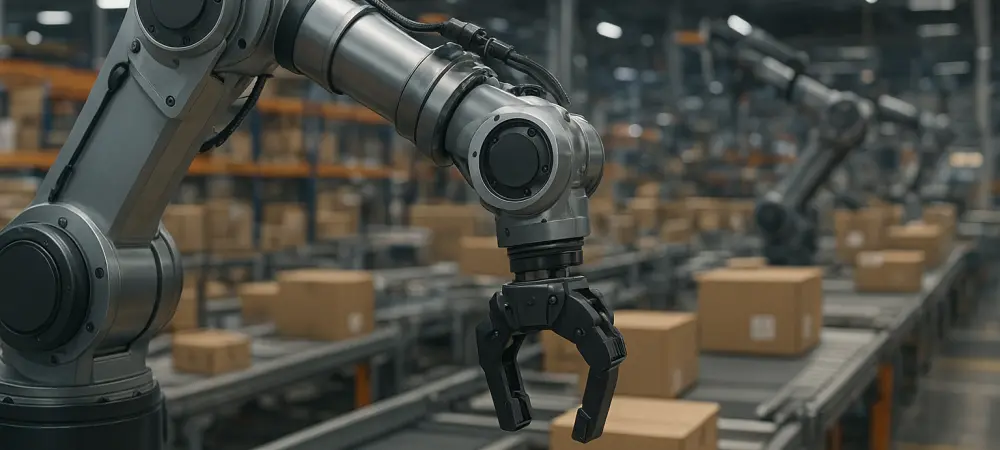
Specialized Western firms are finding new opportunities in high-performance components as the robotics market begins to diversify away from Chinese dominance. The industrial automation landscape is undergoing a profound structural transformation driven by the decoupling of hardware manufacturing and software intelligence. For decades, the robotics industry operated on a vertically integrated model where manufacturers developed every motor, gear, and sensor in-house. However, the current surge in humanoid development has fundamentally disrupted this paradigm. Companies are now pivoting toward the concept of Physical AI, focusing their internal engineering talent on the complex algorithms and machine learning required for spatial reasoning and real-world interaction. This strategic reallocation of resources has transformed humanoid developers into high-volume customers for cobot suppliers. By treating arms and actuators as modular components, these innovators can bypass years of mechanical research, accelerating the global deployment of mobile systems.
Strategic Outsourcing: The Catalyst for Hardware Standardization
The current market environment is witnessing an unprecedented acceleration in procurement cycles, with humanoid original equipment manufacturers aggressively sourcing seven-axis arms and high-torque actuators to meet aggressive production timelines. Market analysts indicate that shipments of these collaborative components are on a trajectory to increase eightfold within a very short window. For instance, while the sector saw a demand for roughly 5,000 units in 2025, that figure is ascending to over 43,000 units by the end of 2026. This volume spike is a reflection of the industry’s transition from experimental prototyping to pilot-scale deployment in logistics and manufacturing environments. This shift allows manufacturers to capitalize on the mechanical reliability achieved by established cobot vendors. By utilizing standardized hardware that has undergone thousands of hours of testing, humanoid firms can ensure platforms remain operational while they refine real-time motion planning.
Global supply chain dynamics are simultaneously being rewritten as the geographical concentration of robotics manufacturing faces new pressures. Currently, China serves as a dominant hub for this hardware surge due to its dense ecosystem of specialized component suppliers and low-cost assembly facilities. This proximity allows for rapid feedback loops and iterative designs that are difficult to replicate elsewhere. However, increasing geopolitical tensions and trade regulations are forcing a necessary diversification of the supply base. Many humanoid developers are now seeking secondary suppliers in North America and Europe to mitigate risks associated with regional dependency. Specialized Western firms are successfully carving out niches by providing high-performance actuators that cater to regulated markets, ensuring a more resilient and geographically distributed manufacturing landscape for new robots.
Integrating Intelligence: The Convergence of Functional Forms
As the demand for humanoid platforms matures, the underlying collaborative robot market is being reshaped into a tiered structure that serves distinct industrial needs. Projections suggest that by 2030, humanoid-related applications will account for nearly 30% of total revenues for major cobot vendors, effectively splitting the market into specialized and general-purpose segments. The high-performance tier is increasingly focused on developing sophisticated, dexterous limbs designed specifically for humanoid integration, characterized by integrated force-torque sensors and streamlined form factors. Meanwhile, the traditional market for stationary cobots in assembly lines continues to evolve toward higher payload capacities. This bifurcation is creating an environment where hardware vendors must decide between mass-producing tools or engaging in technical partnerships with AI-centric firms. The resulting capital infusion is driving innovation in materials science, leading to lighter joints that improve the battery life of mobile units.
Technological convergence is fundamentally blurring the distinctions between once-separate robotic categories, as the conceptual framework of what constitutes a robot shifts toward modularity. Experts in the field increasingly argue that a humanoid is not a single entity but rather a complex assembly of collaborative robot limbs mounted onto a sophisticated mobile platform. This perspective is dismantling the historical divide between industrial robots, which were often fast but isolated, and collaborative robots, which were safe but limited in speed. Today, the priority is creating unified systems that possess the agility of a human worker while maintaining absolute safety in human-shared spaces. This drive for high-speed collaboration is fueling significant advancements in multi-modal sensor technology. As these technologies are integrated into humanoid forms, they simultaneously trickle down into traditional cobot designs, enhancing their ability to perform delicate tasks. This synergy ensures that the growth of one sector directly accelerates the technical sophistication of the other.
Scaling Operations: Future-Proofing the Robotic Infrastructure
The emergence of Physical AI as the primary differentiator in the robotics sector is placing renewed emphasis on the integration of hardware and software at the edge. Advanced humanoid platforms now require actuators that do not just follow commands but also provide high-fidelity data feedback to the central processing unit. This need for real-time telemetry is pushing the limits of current communication protocols and motor controller designs. To meet these demands, component manufacturers are developing smarter servos that include onboard processing for localized motion control, reducing the latency between perception and action. Such innovations are critical for humanoids tasked with navigating unpredictable environments where millisecond delays can lead to balance failure. Furthermore, the push for greater dexterity is leading to the adoption of sophisticated tendon-driven systems in specialized cobot limbs. These mechanical advancements, designed for the requirements of locomotion, are proving invaluable for industrial applications that require high power density.
Navigating the complexities of this evolving market required organizations to adopt a strategic approach to hardware acquisition and supply chain resilience. Decision-makers prioritized the procurement of modular components from vendors who offered open-architecture software interfaces, allowing for seamless integration with proprietary AI models. It became essential to evaluate potential suppliers not just on cost, but on their ability to provide long-term technical support and adherence to global safety standards. Forward-thinking firms invested in building hybrid supply chains that utilized both high-volume manufacturing and specialized precision engineering. By diversifying their hardware sources, these companies mitigated geopolitical risks and ensured a steady flow of parts during periods of rapid scaling. The focus shifted from building proprietary skeletons to mastering the software layers that provided true value. Ultimately, the industry found that the most effective path to commercializing humanoid technology involved leveraging the reliability of the cobot sector.