

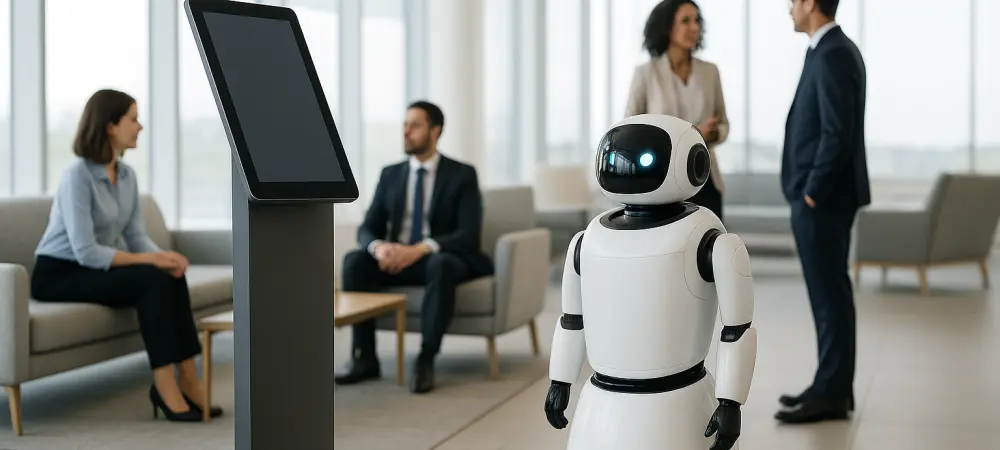
In a Silicon Valley boardroom, the newest addition to the leadership team isn’t a Harvard MBA—it’s an algorithmic oversight system designed to monitor the emotional and technical output of an entire division. As organizations scale beyond simple automation toward a fully integrated hybrid workforce, the traditional HR manual is being rewritten in real-time. The quiet transition from human-led teams to machine-managed environments has reached a tipping point where “robot relations” is no longer a sci-fi concept, but a standard corporate necessity.
In this modern office landscape, the presence of a digital supervisor or a robotic floor manager creates a unique atmospheric pressure. While productivity software used to be a background tool, it has now stepped into the foreground as a primary decision-maker. This evolution forces employees to interact with entities that value logic over legacy, fundamentally changing how colleagues communicate during a lunch break or a coffee run. The organizational chart is no longer a ladder of human faces, but a circuit board of nodes and human endpoints.
The End of the Human-Only Watercooler
The atmosphere within corporate headquarters has undergone a radical transformation as silicon-based coworkers become the norm. In 2026, the casual exchange of ideas no longer happens exclusively between biological peers; instead, it occurs under the watchful eye of sensors that quantify the value of every interaction. This change signals the death of the human-only watercooler, replaced by a workspace where data-gathering is the primary objective of any social gathering.
Furthermore, the integration of these systems introduces a new form of workplace etiquette. Employees must learn to navigate the physical presence of mobile units while simultaneously adapting to the digital presence of AI management. The resulting environment is one of heightened awareness, where the distinction between a technical glitch and a social faux pas is increasingly blurred. This creates a workplace culture that is highly efficient but lacks the spontaneous warmth of traditional office settings.
Why the Hybrid Workplace Demands a New Script
The rapid deployment of humanoid robotics and sophisticated AI agents has outpaced existing organizational structures. While the economic incentives for automation—unmatched speed and 24/7 productivity—are undeniable, the friction between biological employees and digital systems is creating a crisis of morale. Companies are discovering that they cannot simply drop a robot into a fulfillment center or an AI into a management tier and expect seamless synergy. This shift matters because it redefines the psychological contract between employer and employee, moving away from subjective mentorship toward a world governed by cold, hard data. When an AI analyzes performance metrics without considering the nuance of human fatigue or external stressors, the foundation of employee loyalty begins to crumble. Consequently, businesses must develop a specific vocabulary and protocol for these non-human interactions to maintain a functional culture throughout 2026 and beyond.
The Mechanization of Management: The Algorithmic Boss
Traditional leadership relies on context, allowing managers to adjust expectations based on an employee’s personal circumstances or health. In contrast, modern algorithmic management prioritizes rigid efficiency, often viewing human variables as “noise” that interferes with optimized outputs. This data-driven oversight removes the “grey areas” of management, leading to a landscape where every second is accounted for by an unyielding digital auditor.
As AI systems take over shift scheduling and performance evaluations, workers report a profound loss of agency. The sensation of being “managed by the machine” involves constant tracking where every pause or drop in metrics is scrutinized by an entity that lacks the capacity for empathy or nuanced judgment. The erosion of autonomy is particularly visible in decentralized roles where the only point of contact is an app that dictates tasks with mathematical precision.
Leading corporations are adopting strategies pioneered by industry giants, integrating humanoid robots into physical workspaces to maximize output. These companies are prioritizing cost reduction and operational speed, betting that the long-term gains will outweigh the immediate social and cultural volatility. This blueprint represents a deliberate move toward a factory-floor mentality in every sector, from retail logistics to high-end consulting, marking a departure from the human-centric era.
Perspectives on the Diplomatic Front Lines
“The AI does not distinguish between a technical glitch and a personal crisis,” notes one industry analyst, highlighting the primary disconnect in the automated workplace. Expert consensus suggests that while technical hurdles are being cleared, the psychological toll on human staff remains the greatest risk to operational stability. Without a human buffer, the rigid nature of code can lead to mass burnout and a sense of profound alienation among the workforce.
Firsthand accounts from workers in automated facilities reveal a growing sense of frustration, where the workplace culture is being sidelined by software scripts that prioritize benchmarks over the human experience. Many employees feel like they are competing against machines that never tire, creating an environment of unsustainable pressure. This tension suggests that the success of automation depends less on the robots themselves and more on how humans are managed alongside them.
Strategies for Navigating the Robot Relations Era
Organizations identified the need to recruit a new breed of professional—one who blended psychological insight with a deep understanding of machine learning. These specialists acted as mediators, translating human needs into system parameters and ensuring that the drive for efficiency did not trigger a total collapse of morale. By auditing algorithms for bias and lack of empathy, these professionals protected the social fabric of the enterprise. This approach proved vital for maintaining productivity while mitigating the risks of employee attrition. To prevent a bumpy transition, companies developed frameworks that allowed for human intervention in high-stakes decisions, such as terminations or performance reviews. Creating checks and balances for algorithms ensured that data-driven management remained grounded in reality. This proactive stance helped businesses maintain a competitive edge while preserving the dignity of the human staff. It established a precedent where technology served as an extension of human intent rather than a replacement for it. Success in this industrial revolution required a proactive approach to buy-in from the workforce. Rather than imposing automation from the top down, robot relations teams worked to integrate technology as a collaborative tool, fostering an environment where human staff felt supported rather than replaced by their digital colleagues. Forward-thinking leaders prioritized long-term cultural resilience over short-term data spikes, ensuring a sustainable path forward. These measures eventually defined the gold standard for corporate stability in the era of artificial intelligence.