

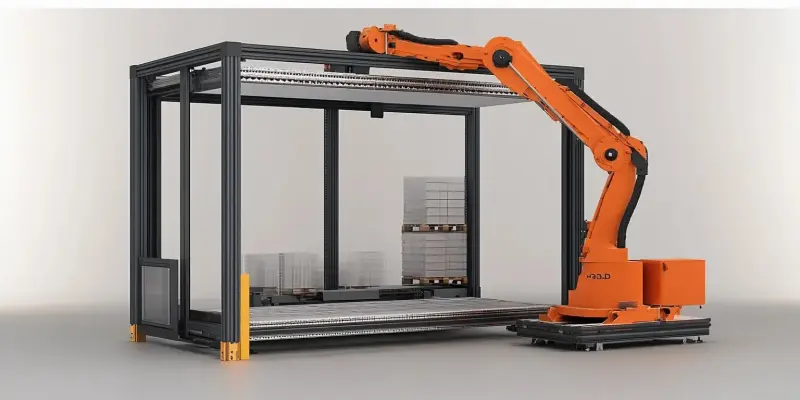
On March 6, 2025, Photoneo, a global innovator in 3D vision technology and a subsidiary of Zebra Technologies, captivated the industry with an announcement that promises to redefine the landscape of warehouse automation. By engaging in a strategic partnership with Jacobi Robotics, a leader in AI-powered robotic automation, Photoneo aims to leverage its high-precision 3D vision systems with Jacobi’s AI-enhanced robotics software. The collaboration is not just a simple technological merger but a forward-looking initiative to streamline warehouse workflows, reduce labor costs, and significantly boost operational efficiency. The combined strengths of these two powerhouses ensure that a new era of smarter, more adaptive, and highly efficient warehouse operations is on the horizon, fundamentally changing how human resources and automation interlace in the logistics sector.
A Partnership to Revolutionize Warehouse Operations
The collaboration between Photoneo and Jacobi Robotics marks a significant milestone in the automation of warehouse operations, aiming to resolve some of the industry’s most complex challenges. This partnership capitalizes on Photoneo’s advanced 3D vision technology, renowned for its precision and reliability, and Jacobi Robotics’ sophisticated motion planning software that is enhanced by artificial intelligence. Together, these technologies are designed to address intricate tasks such as palletizing and depalletizing single and mixed Stock Keeping Units (SKUs), tasks that have traditionally posed significant hurdles to automation. By merging these cutting-edge technologies, the partnership aims to bring about a profound transformation in warehouse operations.
The impact of this alliance extends beyond mere technological improvements. It presents a holistic approach to smarter and more adaptable warehouse operations. Yahav Avigal, the Co-Founder and Chief Technology Officer (CTO) of Jacobi Robotics, emphasized the significance of their integrated systems. He highlighted how these systems are engineered to adapt to the dynamic demands of modern logistics, thereby enhancing both efficiency and operational flexibility. The collaboration is set to redefine warehouse operations, making them not just faster, but also more resilient in the face of changing logistical requirements.
Live Demonstration at ProMat 2025
The ProMat 2025 exhibition in Chicago will serve as the stage for the debut of this pioneering technology. Scheduled from March 17-20, the event will feature a live demonstration at Booth #E11505, where visitors can experience firsthand the innovative mixed palletizing solution born out of the Photoneo-Jacobi partnership. This demonstration will showcase how Photoneo’s state-of-the-art PhoXi 3D Scanners, working in conjunction with Jacobi’s AI-driven robotic platform, can create a seamless, fully automated system. The live setup aims to illustrate the seamless integration and impressive functionality of this groundbreaking technology.
During the demonstration, attendees will observe cases entering the system through standard warehouse workflows such as manual picking or cross-docking. These cases will then traverse through a compact robotic buffer designed to dynamically sequence them for optimal pallet construction. Once sequenced, Jacobi’s advanced AI software will coordinate industrial robot arms to swiftly build stable mixed pallets. This process not only demonstrates substantial throughput rates but also significantly reduces the reliance on manual labor. The demonstration is poised to highlight how the integration of Photoneo’s and Jacobi’s technologies can revolutionize the automation of many previously challenging warehouse tasks.
Advantages of the Photoneo-Jacobi Solution
The union of Photoneo’s and Jacobi’s innovative technologies heralds a new era of advantages for warehouse operations. One of the most significant benefits is the dramatic increase in throughput, with the system capable of handling up to 1,000 cases per hour. This remarkable acceleration is poised to substantially enhance the speed of outbound shipments, directly impacting warehouse productivity. Increased throughput is just the beginning, as the integration also promises enhanced order accuracy. The combined improvements in object recognition and optimized stacking patterns ensure fewer errors in pallet construction, leading to a reduction in costly returns and improved pallet stability.
Furthermore, the enhanced safety and ergonomics of the workspace play a critical role in the overall efficacy of the solution. By automating labor-intensive tasks, the risk of worker injury is substantially minimized. This allows employees to be reassigned to roles that add higher value to the operation, thereby not only improving safety but also boosting job satisfaction and productivity. Operational flexibility is another cornerstone of this solution. The system is designed with seamless integration into existing workflows in mind, providing scalability in tandem with business growth. With quick setup times and simple reconfiguration processes, downtime is kept to a minimum, ensuring that warehouse operations consistently run at peak efficiency.
Showcasing Transformative Technology
The partnership between Photoneo and Jacobi Robotics represents a significant advancement in automating warehouse operations, addressing some of the industry’s most complex challenges. This collaboration leverages Photoneo’s advanced 3D vision technology, known for its accuracy and dependability, alongside Jacobi Robotics’ refined motion planning software enhanced by artificial intelligence. These combined technologies aim to tackle complex tasks such as palletizing and depalletizing both single and mixed Stock Keeping Units (SKUs), tasks that have historically been difficult to automate. By integrating these state-of-the-art technologies, the partnership seeks to revolutionize warehouse operations.
The influence of this collaboration goes beyond mere tech upgrades, offering a comprehensive approach to smarter and more adaptable warehouse practices. Yahav Avigal, Co-Founder and Chief Technology Officer (CTO) of Jacobi Robotics, emphasized the importance of their integrated systems. These systems are designed to meet the evolving demands of modern logistics, boosting both efficiency and flexibility. This partnership is poised to redefine warehouse operations, making them not only faster but also more robust in the face of changing logistical needs.