

I’m thrilled to sit down with Dominic Jainy, a seasoned IT professional whose deep expertise in artificial intelligence, machine learning, and blockchain has made him a go-to voice on cutting-edge tech trends. With a passion for exploring how these technologies transform industries, Dominic offers unique insights into the evolving AI landscape. Today, we’ll dive into a groundbreaking partnership in the AI world, discussing its implications for compute power, market competition, and long-term strategies, as well as the broader impact on innovation and financial dynamics in the sector.
How did the recent partnership between OpenAI and AMD come about, and what are the standout elements of this deal?
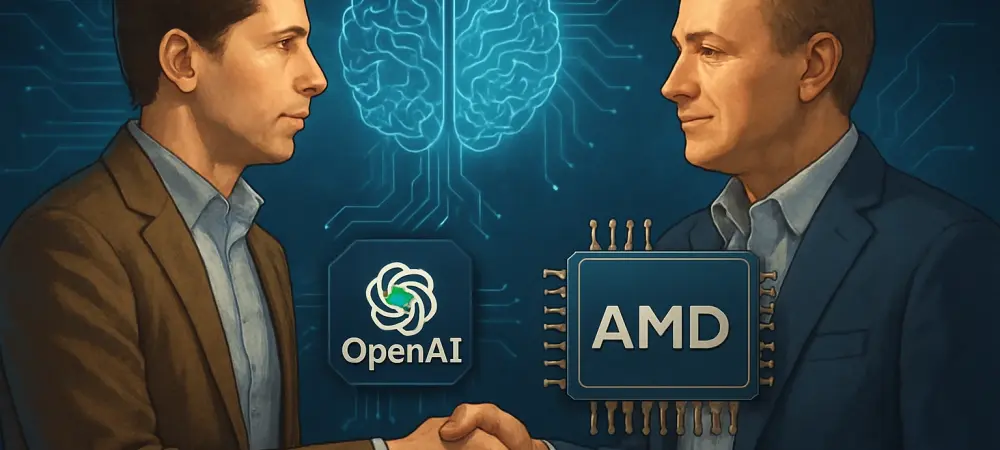
This partnership is a significant step forward for both companies. OpenAI and AMD have agreed to a multi-billion-dollar deal where AMD will provide six gigawatts of compute power to support OpenAI’s generative AI models. A key highlight is the deployment of the first gigawatt of AMD’s Instinct MI450 GPUs, which is slated for the second half of 2026. It’s a massive commitment that underscores the growing demand for high-performance computing in AI development.
What does this collaboration mean for OpenAI in terms of ownership and future ties with AMD?
Beyond just compute power, OpenAI stands to gain a progressive equity stake in AMD. They’ve been offered warrants for up to 160 million shares of AMD common stock, contingent on meeting specific performance goals over the next five years. This kind of arrangement signals a deep, long-term alignment, where OpenAI isn’t just a customer but a stakeholder in AMD’s growth, which could shape their collaboration in fascinating ways.
How has the financial world responded to this announcement, and what might be driving that reaction?
Wall Street has reacted very positively, with AMD’s stock price jumping over 34% after the news broke. I think this surge reflects investor confidence in AMD’s positioning as a serious contender in the AI hardware space. It’s not just about the revenue potential; it’s also about the validation of AMD as a key player in a market that’s hungry for alternatives to dominant forces. This deal paints AMD as a credible partner for cutting-edge AI innovation.
Can you walk us through how this partnership fits into OpenAI’s broader approach to working with hardware providers?
OpenAI is clearly playing a strategic game by diversifying its infrastructure partnerships. Beyond AMD, they’ve recently inked major deals, like a $100 billion contract with Nvidia for 10 gigawatts of compute power and a $300 billion agreement with Oracle extending through 2030. This multi-partner approach ensures they’re not overly reliant on a single provider, which mitigates risks like supply shortages or pricing gouges and gives them leverage to push for better technology and terms.
What specific advantages does this deal bring to AMD in the competitive AI hardware market?
For AMD, this is a game-changer. It solidifies their standing as a viable alternative to market leaders like Nvidia, who currently dominate with over 70% of the GPU market for generative AI. This partnership not only boosts AMD’s credibility but also secures a steady, long-term revenue stream. It’s a signal to investors and potential customers that AMD is a serious player in AI infrastructure, which could open doors to more high-profile collaborations.
How might this partnership influence competition and pricing dynamics in the AI hardware sector?
Increased competition between heavyweights like AMD and Nvidia is likely to benefit AI vendors looking for infrastructure. When you’ve got multiple players vying for business, it keeps pricing in check—vendors can’t charge exorbitant rates without risking losing clients to a competitor. This deal could drive more favorable terms across the board, though it might also tighten supply for other AI companies, creating a rush to lock in compute capacity before it’s all spoken for.
What potential challenges or risks does this kind of partnership pose for OpenAI, especially financially?
OpenAI is investing heavily in these partnerships, which is a double-edged sword given their reported annual losses in the billions. They’re betting big on future growth, but without stable revenue streams in the enterprise AI market, that’s a risky move. If the AI market hits a downturn or a bubble bursts, the financial strain could ripple through OpenAI and its partners, potentially impacting their ability to sustain these massive commitments.
What is your forecast for the future of AI hardware partnerships and their impact on the industry?
I see these partnerships becoming even more critical as AI models grow in complexity and demand for compute power skyrockets. We’re likely to witness a wave of strategic alliances, not just between AI companies and hardware providers but across the tech ecosystem. The competition will drive innovation, but it could also lead to supply bottlenecks and higher stakes for smaller players. Ultimately, I think we’re heading toward a more interconnected industry where collaboration and diversification are key to staying ahead of the curve.