

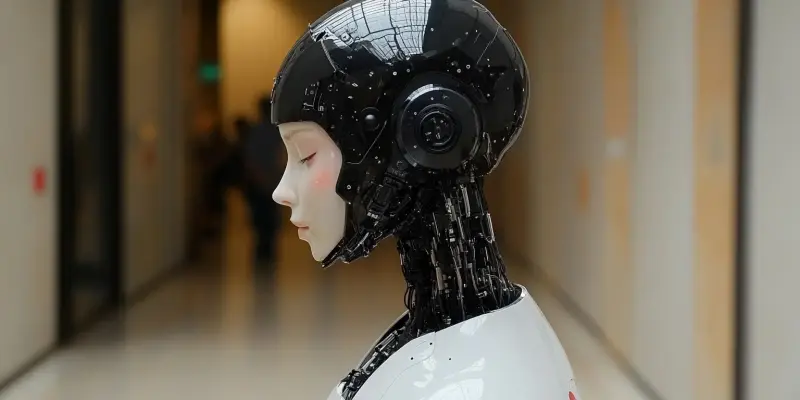
The field of humanoid robotics has just taken a significant leap forward with Nvidia’s introduction of the Nvidia Isaac GR00T N1, a foundation model designed to enhance the development of humanoid robots. This innovative software, introduced at Nvidia’s latest developer conference, employs a dual-system architecture inspired by human cognitive processes. The aim is to make robots more adaptable and skillful, reflecting a new era in the development of intelligent machines.
Dual-System Architecture: A Breakthrough in Robot Intelligence
One of the most groundbreaking aspects of the GR00T N1 is its dual-system architecture, which mimics human cognition. System 1 manages quick, reflexive actions, enabling robots to respond rapidly to immediate stimuli. This is particularly important for tasks requiring fast decision-making and real-time responses. On the other hand, System 2 is designed for more deliberate decision-making. Utilizing a vision language model, it allows robots to process and analyze visual information to make more informed, deliberate choices. This architecture not only enhances the robots’ reasoning abilities but also their overall skill set, making them much more versatile in various applications.
The flexibility of GR00T N1 is further augmented by its support for post-training with both real and synthetic data. This feature allows developers to fine-tune the pre-trained models for specific tasks, thereby accelerating research and development in the field of humanoid robotics. By providing a robust platform, Nvidia has set the stage for creating robots that can adapt to various environments and perform a wide range of functions efficiently.
Unleashing Practical Applications: Domestic Tasks and Beyond
The practical applications of GR00T N1 were vividly demonstrated during its unveiling, where the model was showcased with 1X Technologies’ humanoid robot. This robot performed domestic tasks autonomously, illustrating the potential for household robots that can assist in daily chores. The collaboration between Nvidia and robotics developers such as Agility Robotics, Boston Dynamics, Mentee Robotics, and Neura Robotics further highlights the broad spectrum of possibilities that this technology brings to the table.
Nvidia’s CEO, Jensen Huang, emphasized that these advancements signify a new era in generalist robotics, where rapid action models are seamlessly integrated with sophisticated reasoning systems. This amalgamation opens new frontiers in artificial intelligence, making it possible to create robots that serve not just as tools but as meaningful companions to humans. The aim is to develop robots that can think and act autonomously, enhancing their usefulness in a variety of settings, from homes to industrial environments.
A New Era in Robotics: The Road Ahead
The field of humanoid robotics has taken a monumental step forward with Nvidia’s unveiling of the Nvidia Isaac GR00T N1, an advanced foundation model aimed at revolutionizing how humanoid robots are developed. This groundbreaking software, revealed at Nvidia’s most recent developer conference, leverages a dual-system architecture inspired by human cognitive processes. The innovative design seeks to make robots more adaptable, skillful, and capable of complex tasks, ushering in a new era for intelligent machines. The Nvidia Isaac GR00T N1 sets new standards for what humanoid robots can achieve, both in terms of functionality and sophistication. By mimicking the human brain’s architecture, this model promises to significantly enhance the robots’ performance, making them more efficient and versatile in various applications, from industrial use to personal assistance. This development marks a pivotal moment in robotics, reflecting Nvidia’s commitment to pushing the boundaries of technology and accelerating the advancement of intelligent, adaptive machines.