

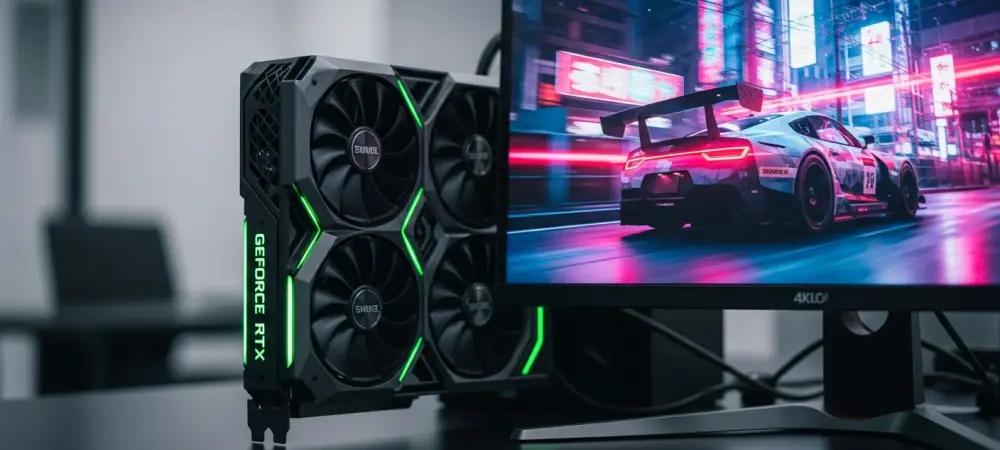
The release of the NVIDIA GeForce Game Ready 595.97 WHQL driver signifies a major milestone in the quest for perfect visual fidelity by providing the necessary software foundation for the next generation of artificial intelligence-driven rendering. As the gaming landscape continues to push the boundaries of realism, the demand for sophisticated upscaling solutions has never been higher, leading to the rapid adoption of DLSS 4 across the industry. This latest software package is specifically designed to bridge the gap between high-end hardware capabilities and the immense processing requirements of modern titles. By optimizing the interaction between the GPU and the game engine, NVIDIA ensures that users with RTX series cards can experience fluid motion and crisp textures without compromising on complex lighting effects. This driver update serves as a critical bridge for enthusiasts looking to leverage advanced features like Multi-Frame Generation and real-time global illumination in the most demanding environments available.
Immersive Racing: Technical Breakthroughs in Forza Horizon 6
Forza Horizon 6 represents the pinnacle of virtual automotive exploration, moving the series to the vibrant and diverse landscapes of Japan where players can navigate neon-lit city streets and winding mountain passes. With a massive roster of over 550 meticulously detailed cars, the title pushes graphical boundaries by incorporating 4K HDR support and sophisticated ray-traced reflections that react dynamically to the surrounding environment. The inclusion of global illumination further enhances the sense of presence, casting realistic light across the asphalt and vehicle surfaces to create a truly lifelike experience. However, these advanced graphical features require immense computational power, making the optimization provided by the 595.97 driver essential for maintaining high frame rates at maximum settings. This synergy between software and hardware allows the game to maintain its visual splendor during high-speed races, ensuring that the intricate details of the Japanese scenery remain sharp and fluid for every driver on the virtual road.
To manage the heavy load of these visual enhancements, the integration of DLSS 4 with Multi-Frame Generation at launch provides a transformative boost to the overall gameplay experience for GeForce RTX users. This technology uses sophisticated AI models to generate additional frames, effectively smoothing out motion and reducing the perceived latency that often accompanies high-resolution rendering and ray tracing. By offloading a significant portion of the rendering workload to specialized Tensor Cores, the system can achieve a level of performance that was previously unreachable with traditional rasterization methods alone. The early access period starting on May 15 offers a first look at how these optimizations stabilize performance during intense racing sequences, while the full launch on May 19 will bring these benefits to the wider gaming community. This implementation highlights the importance of driver-level support in unlocking the full potential of modern game engines, allowing players to focus on the thrill of the race rather than technical limitations.
Beyond Racing: Expanding the Upscaling Ecosystem and Stability
The expansion of the DLSS 4 ecosystem extends well beyond the racing genre, as evidenced by the upcoming releases of the futuristic racer Screamer and the psychological horror title Subliminal. Screamer, arriving on March 26, utilizes these new upscaling techniques to maintain extreme speeds and complex particle effects without stuttering, providing a seamless experience in its high-velocity environments. Meanwhile, Subliminal takes a different approach by using ray tracing to create intricate light-based puzzles that are central to its atmospheric storytelling and gameplay mechanics. In such a title, visual accuracy is not just an aesthetic choice but a fundamental part of the puzzle-solving process, requiring the precision that DLSS 4 delivers to ensure light behaves realistically. The 595.97 driver provides the necessary optimizations for these titles at launch, demonstrating a commitment to supporting a wide variety of gameplay styles and technical requirements through a unified and efficient software platform for all users.
To maximize the benefits of these latest advancements, users should perform a clean installation of the 595.97 driver before engaging with high-demand titles or newly updated classics like Alan Wake Remastered. The historical development of this driver branch demonstrated a clear shift toward prioritizing AI-driven frame reconstruction and lighting accuracy, which paved the way for more immersive virtual worlds. Gamers who utilized these features found that the reduction in hardware overhead allowed for higher graphical settings without the typical trade-offs in responsiveness. Looking ahead, the focus must remain on checking for compatibility updates within individual game launchers to ensure that specific DLSS 4.5 features are toggled correctly in the menus. Maintaining an updated software stack became a prerequisite for anyone seeking to utilize the full range of ray-tracing capabilities and HDR enhancements offered by modern display technology. This update effectively set a new standard for how software can prolong hardware life while pushing the boundaries of real-time rendering.