

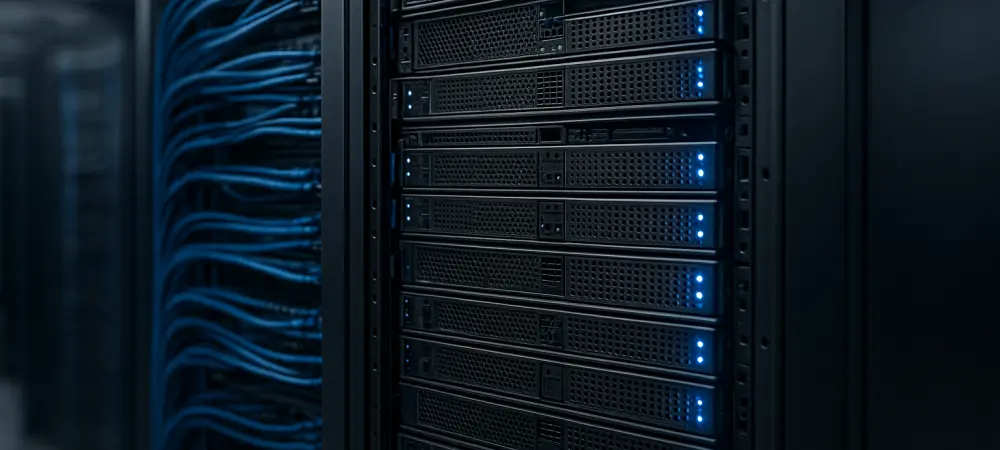
The exponential growth of data-intensive workloads has fundamentally transformed the storage layer from a static back-end utility into a high-velocity engine that dictates the success of modern artificial intelligence and real-time decision-making systems. In the current landscape of 2026, the efficiency of an algorithm is no longer the sole determinant of analytical success; rather, the underlying infrastructure must now support the massive throughput required for instantaneous data processing. This evolution requires a shift from passive data repositories to dynamic storage components that can sustain the hunger of high-performance compute clusters without introducing latency.
Establishing best practices in storage architecture is critical for eliminating the widening infrastructure gap between high-speed GPU compute and legacy data layers. As organizations deploy more sophisticated machine learning models, the inability of traditional hardware to feed these systems results in wasted resources and delayed insights. A modern framework must therefore address the physical limitations of media, the inefficiencies of older communication protocols, and the complexity of managing data lifecycles across distributed environments.
This guide outlines a strategic path for modernizing data environments, focusing on hardware transitions and intelligent management software. By moving toward a model that prioritizes low-latency protocols and automated tiering, enterprises can ensure that their data remains an active asset rather than a dormant liability. The ultimate goal is to create a seamless pipeline where information moves at the speed of thought, enabling hyper-automation and predictive accuracy across every facet of the business.
Why Modern Storage Architectures are Essential for Business Agility
The adoption of modern storage is essential to avoid the phenomenon of processor starvation, particularly in GPU-heavy AI workloads. High-performance computing units represent a significant financial investment, and their value diminishes every second they sit idle waiting for data packets to arrive from slow mechanical disks or congested networks. Modernizing the storage layer ensures that the compute engine is constantly saturated with information, maximizing the return on investment for hardware and personnel.
Furthermore, these architectures provide tangible benefits such as millisecond-response times and a drastic reduction in technical debt. By consolidating fragmented legacy systems into a unified, high-performance flash environment, organizations simplify their management overhead and reduce the physical footprint of their data centers. This streamlined approach leads to a lower Total Cost of Ownership because modern arrays consume less power and cooling while providing exponentially higher performance densities than older magnetic media.
A direct relationship exists between low-latency storage and the increased value of real-time business insights. In markets where conditions change in the blink of an eye, the ability to process incoming telemetry or market data instantly allows for more agile responses. Whether it involves adjusting supply chains or identifying emerging customer trends, a high-performance storage foundation serves as the bedrock for the kind of agility that defines market leadership.
Best Practices: Implementing High-Performance Storage
Transitioning from legacy systems to modern frameworks requires a methodical approach that focuses on the integration of hardware speed and software intelligence. It is not enough to simply replace drives; the entire data path must be optimized to handle the parallel nature of modern analytics. This involves a coordinated upgrade of physical media, transport protocols, and the logic that governs data movement.
Transitioning to All-Flash Arrays and NVMe Protocols
The first step in modernization involves moving away from magnetic media and toward All-Flash Arrays that utilize Non-Volatile Memory express protocols. Unlike older solid-state drives that relied on interfaces designed for spinning disks, NVMe is built specifically for flash, allowing for massive parallelism and significantly reduced protocol overhead. This transition eliminates the primary hardware bottleneck, providing the raw IOPS necessary for training large-scale language models and running complex simulations.
Beyond raw speed, the implementation of NVMe enables storage systems to handle thousands of simultaneous commands, a requirement for multi-tenant AI environments. This efficiency ensures that data access remains consistent even under the heavy, unpredictable loads typical of modern data science. By adopting flash-native protocols, organizations can achieve a level of responsiveness that was previously impossible with legacy SAS or SATA connections.
Practical examples of this transition are visible in the financial services sector, where real-time fraud detection has become a standard requirement. One banking institution utilized NVMe storage to analyze millions of transactions against complex risk models in microseconds. This allowed the system to flag and prevent fraudulent activity before a transaction was even cleared, illustrating how ultra-low latency translates directly into financial security and risk mitigation.
Optimizing Data Flow With PCIe 5.0 and NVMe-oF
Internal bandwidth must keep pace with drive speeds, which is why the implementation of PCIe 5.0 is a critical best practice. This interface provides a wider, faster highway for data to travel between the CPU, GPU, and storage devices, doubling the throughput of previous generations. For enterprises scaling their AI initiatives, PCIe 5.0 ensures that internal data transfers do not become a secondary bottleneck that restricts the overall performance of the cluster.
To maintain this performance across a distributed network, organizations should implement NVMe over Fabrics. This technology extends the low-latency benefits of NVMe to the entire data center fabric, allowing remote storage to be accessed with the same speed as locally attached drives. NVMe-oF is particularly effective in disaggregated architectures where compute and storage are scaled independently, providing the flexibility needed for modern, elastic cloud environments.
Manufacturing industries have leveraged these high-bandwidth interfaces to facilitate predictive maintenance via digital twins. By processing massive sensor streams from factory floors through high-speed interfaces, manufacturers can create perfect virtual replicas of their machinery. This allows them to predict equipment failure with extreme precision, avoiding costly downtime and ensuring that maintenance occurs only when truly necessary, thereby optimizing the entire production lifecycle.
Implementing Intelligent Data Tiering and Pipelines
High-performance storage is a premium resource, making the implementation of intelligent data tiering an economic and operational necessity. Automated pipelines should be configured to move hot data—information currently being used for active training or analytics—to the fastest NVMe tiers. Simultaneously, the system must identify cold data that is no longer in active use and migrate it to more cost-effective, high-capacity storage tiers or cloud archives.
This orchestration ensures that performance is available where it matters most without inflating the overall storage budget. Modern data management software uses machine learning to predict which datasets will be needed next, pre-fetching them into the high-performance tier before the compute engine even requests them. This proactive approach to data management creates a self-optimizing environment that balances raw performance with fiscal responsibility.
In the world of e-commerce, this type of intelligent tiering has been used to create highly personalized customer experiences. A major retailer synthesized inventory levels and real-time user behavior data to provide dynamic pricing and tailored offers. By keeping the most relevant behavioral data on high-performance tiers, the retailer delivered personalized recommendations in milliseconds, significantly increasing conversion rates and fostering deeper brand loyalty through instantaneous relevance.
Strategic Evaluation: Final Recommendations
The evaluation of storage success shifted from a simple cost-per-gigabyte calculation to a more nuanced understanding of value-per-insight. Enterprises that embraced the immediate adoption of these high-performance frameworks secured a significant lead in hyper-automation and real-time analytics. The move toward intelligent storage structures allowed for a more sustainable and secure data environment, where performance was matched precisely to the needs of the workload.
Actionable progress required a delicate balance between maximizing raw speed and ensuring long-term cyber resilience. Future-proofing the storage layer involved not only upgrading hardware but also integrating immutable snapshots and rapid recovery protocols to protect against evolving digital threats. Organizations that viewed storage as a strategic asset rather than a commodity found themselves better equipped to handle the explosive growth of unstructured data and the complexities of multi-cloud deployments.
The benefits of these modernization efforts were most pronounced in sectors requiring instantaneous data processing, such as healthcare and high-frequency finance. By following these best practices, leaders transformed their infrastructure into an agile foundation capable of supporting the next generation of machine learning. The transition proved that while compute power was the engine of the digital economy, modern storage was the fuel that determined how far and how fast an organization could actually go.