
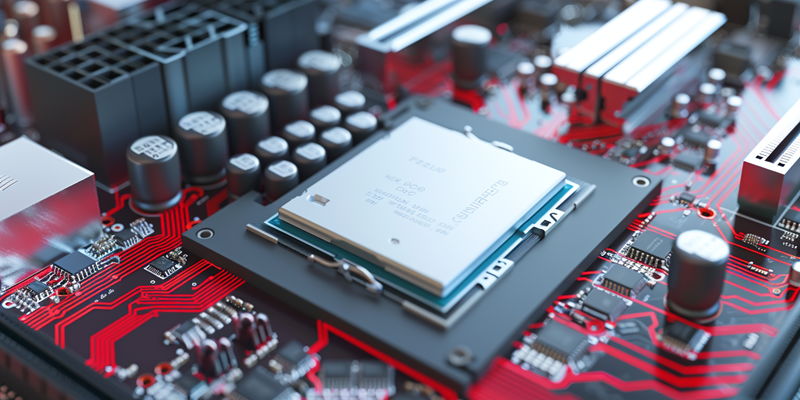
How Will Intel’s Core Ultra 200-Series Rebrand Impact CPUs?

Intel Corporation, a titan in the semiconductor industry, is no stranger to profound transformations. Their latest change-up involves a revamp of their central processing unit (CPU) branding, introducing what’s known as the Core Ultra 200-series. This move is intriguing, as it breaks away from the long-established ‘Core i’ dynasty.

For years, Intel’s familiar ‘Core i3’, ‘Core i5’, ‘Core i7’, and ‘Core i9’ conventions have helped consumers navigate the processor landscape. However, with the advent of the Core Ultra 200-series, Intel is streamlining its product nomenclature. This is not merely a superficial change; it signifies a strategic alteration in how Intel conveys the capabilities and offerings of its CPUs. Effectively, Intel is simplifying its portfolio, making it more straightforward for customers to understand the performance tier and generation of the processor at a glance.

Intel’s Product Evolution

Intel is undergoing a significant rebranding that aligns with the launch of its advanced Alder Lake architecture. The traditional ‘Core i’ label for high-end desktop CPUs is being replaced, possibly with names like Core Ultra 285, which mirrors the nomenclature of their mobile CPU line, ensuring a uniform brand image across platforms.

This rebrand is not just cosmetic. Intel is poised to implement major changes in its technology. The company is expected to harness TSMC’s cutting-edge 3nm process, indicative of a drive for top-tier performance and efficiency. Together with the introduction of the new LGA 1851 socket, these shifts suggest deep innovation within Intel’s approach to hardware.

The rebrand could represent Intel’s renewed promise to lead in a fiercely competitive industry. While it’s too early to gauge the reception of the rebranded CPUs or their impact on the market, the tech community eagerly anticipates this potential new benchmark in processing power.

Explore more

Mimesis Data Anonymization – Review

The relentless acceleration of data-driven decision-making has forced a critical confrontation between the demand for high-fidelity information and the absolute necessity of individual privacy. Within this friction point, Mimesis has emerged as a specialized open-source framework designed to bridge the gap between usability and compliance. Unlike traditional masking tools that merely obscure existing values, this library utilizes a provider-based architecture

The Future of Data Engineering: Key Trends and Challenges for 2026

The contemporary digital landscape has fundamentally rewritten the operational handbook for data professionals, shifting the focus from peripheral maintenance to the very core of organizational survival and innovation. Data engineering has underwent a radical transformation, maturing from a traditional back-end support function into a central pillar of corporate strategy and technological progress. In the current environment, the landscape is defined

Trend Analysis: Immersive E-commerce Solutions

The tactile world of home decor is undergoing a profound metamorphosis as high-definition digital interfaces replace the traditional showroom experience with startling precision. This shift signifies more than a mere move to online sales; it represents a fundamental merging of artisanal craftsmanship with the immediate accessibility of the digital age. By analyzing recent market shifts and the technological overhaul at

Trend Analysis: AI-Native 6G Network Innovation

The global telecommunications landscape is currently undergoing a radical metamorphosis as the industry pivots from the raw throughput of 5G toward the cognitive depth of an intelligent 6G fabric. This transition represents a departure from viewing connectivity as a mere utility, moving instead toward a sophisticated paradigm where the network itself acts as a sentient product. As the digital economy

Data Science Jobs Set to Surge as AI Redefines the Field

The contemporary labor market is witnessing a remarkable transformation as data science professionals secure their positions as the primary architects of the modern digital economy while commanding significant wage increases. Recent payroll analysis reveals that the median age within this specialized field sits at thirty-nine years, contrasting with the broader national workforce median of forty-two. This demographic reality indicates a