

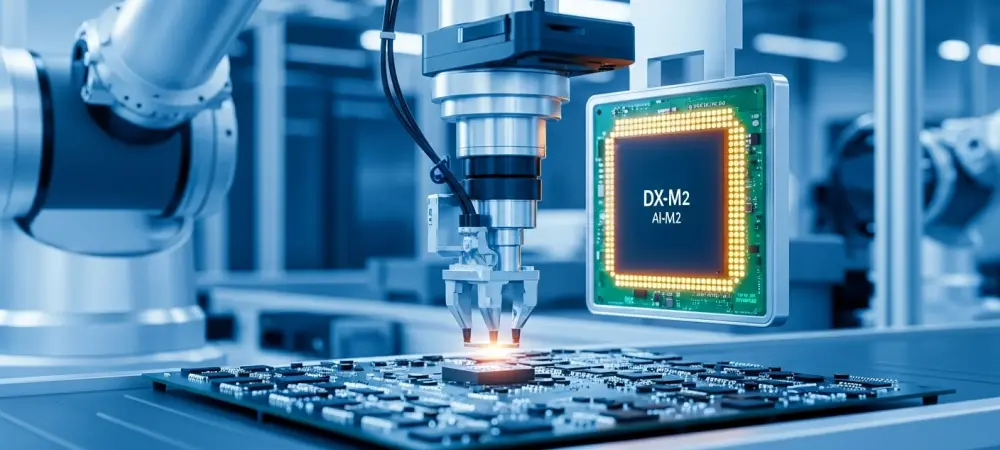
The seamless integration of intelligent machines into the fabric of everyday human life has long been hindered by the latency and energy demands associated with cloud-based processing systems. To overcome these barriers, Hyundai Motor Group’s Robotics Lab recently established a strategic partnership with DeepX to pioneer a specialized computing platform designed specifically for next-generation robotics. This collaboration revolves around the transformative concept of physical AI, a paradigm shift that moves intelligence from remote data centers directly into the physical hardware of autonomous machines. By prioritizing the integration of Vision-Language Models and Vision-Language-Action technologies, the partnership enables robots to interpret complex visual environments and execute intricate tasks through natural language commands. This development suggests a future where robots no longer function as programmed tools but as intuitive assistants capable of real-time reasoning and environmental adaptation without a constant tether to high-bandwidth internet connections.
Technical Synergy: Hardware and Software Integration
The technical foundation of this alliance rests upon a sophisticated four-pillar framework designed to optimize robotic performance across various industrial and domestic settings. Central to this effort is the implementation of DeepX’s DX-M2 chip, a high-performance semiconductor that facilitates on-device AI inference with remarkably low energy consumption. By processing data locally, robots can achieve instantaneous response times, which is a critical requirement for maintaining safety in dynamic environments where humans and machines coexist. This hardware is supported by a comprehensive software stack and dedicated application libraries that allow for the seamless translation of complex algorithms into physical movements. This localized approach to computing significantly reduces the operational costs associated with data transmission while ensuring that sensitive environmental information remains secure within the machine’s internal systems. Such a holistic integration of ultra-low-power architecture and specialized robotics hardware represents a departure from generic computing solutions, favoring instead a purpose-built ecosystem.
Market Evolution: The Road Toward a Massive Robotic Ecosystem
As the industry moves toward a more human-centric era of automation, the demand for hardware capable of supporting natural interactions has reached unprecedented levels. Industry analysts projected that the global demand for semiconductors specialized in robotic and humanoid systems would surge to approximately $123 billion by 2030, highlighting the massive economic scale of this technological transition. To stay ahead of this curve, stakeholders prioritized the creation of a unified ecosystem that bridged the gap between advanced AI research and practical, real-world mechanical application. Companies that invested in these proprietary software stacks early successfully positioned themselves as leaders in the autonomous systems market. This progression necessitated a shift in focus toward scalable production and the refinement of edge-computing capabilities to handle increasingly complex Vision-Language-Action tasks. Future initiatives focused on standardizing these physical AI protocols to ensure interoperability across different robotic platforms, thereby accelerating the adoption of intelligent machines in global logistics, healthcare, and manufacturing.