
How Will Colorful’s Anime-Themed RTX 4070 GPUs Perform?

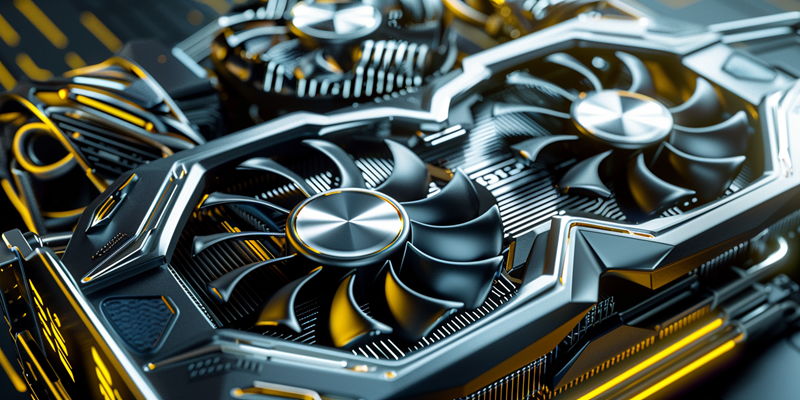
Colorful’s latest foray into themed graphics cards is a vivid homage to the anime “Fog Hill of Five Elements.” The newly introduced GeForce RTX 4070 Ti SUPER and RTX 4070 SUPER Vulcan models are a visual feast, steeped in a yellow and black color scheme that echoes the distinctive style of Samsara Animations. These are no ordinary GPUs; they are bold statements in design, featuring not just an eye-catching color palette but also an advanced cooling architecture. The Vulcan series, to which these cards belong, is known for its impeccable triple-slot and triple-fan setup. This is crucial, for a high-end graphics card’s performance is as good as its ability to dissipate heat.

The build is robust, with a comprehensive aluminum-fin array that stretches the entire length of the cards and a sophisticated backplate that’s adorned with anime-themed graphics. Moreover, the addition of a cutout on the backplate is not just for aesthetic purposes but serves to enhance air ventilation. The cards are engineered to handle overclocking without breaking a sweat, which in turn, can give gamers and content creators an edge in performance.

Performance Expectations

Colorful’s cutting-edge 4070 Ti SUPER and 4070 SUPER GPUs are set to impress with significant factory overclocks, clocking in at 2685 MHz and 2670 MHz, respectively. This increase translates to better gaming performance, with the 4070 Ti SUPER and 4070 SUPER outpacing their reference models by 80 MHz and 195 MHz. Gamers can look forward to enhanced visuals and smoother gameplay.

Beyond sheer performance, these GPUs offer a personal touch with customizable LCDs, allowing users to display unique graphics that reflect their style. This feature underscores the trend that gamers desire a blend of aesthetics and high functionality in their hardware.

The release in the Asia Pacific market on April 2nd has generated excitement, especially among gamers who value performance coupled with a flair for personal expression. Although pricing and global availability remain unannounced, there’s no denying the potential impact of these powerful GPUs on the gaming scene.

Explore more

Trend Analysis: AI in Real Estate

Navigating the real estate market has long been synonymous with staggering costs, opaque processes, and a reliance on commission-based intermediaries that can consume a significant portion of a property’s value. This traditional framework is now facing a profound disruption from artificial intelligence, a technological force empowering consumers with unprecedented levels of control, transparency, and financial savings. As the industry stands

Insurtech Digital Platforms – Review

The silent drain on an insurer’s profitability often goes unnoticed, buried within the complex and aging architecture of legacy systems that impede growth and alienate a digitally native customer base. Insurtech digital platforms represent a significant advancement in the insurance sector, offering a clear path away from these outdated constraints. This review will explore the evolution of this technology from

Trend Analysis: Insurance Operational Control

The relentless pursuit of market share that has defined the insurance landscape for years has finally met its reckoning, forcing the industry to confront a new reality where operational discipline is the true measure of strength. After a prolonged period of chasing aggressive, unrestrained growth, 2025 has marked a fundamental pivot. The market is now shifting away from a “growth-at-all-costs”

AI Grading Tools Offer Both Promise and Peril

The familiar scrawl of a teacher’s red pen, once the definitive symbol of academic feedback, is steadily being replaced by the silent, instantaneous judgment of an algorithm. From the red-inked margins of yesteryear to the instant feedback of today, the landscape of academic assessment is undergoing a seismic shift. As educators grapple with growing class sizes and the demand for

Legacy Digital Twin vs. Industry 4.0 Digital Twin: A Comparative Analysis

The promise of a perfect digital replica—a tool that could mirror every gear turn and temperature fluctuation of a physical asset—is no longer a distant vision but a bifurcated reality with two distinct evolutionary paths. On one side stands the legacy digital twin, a powerful but often isolated marvel of engineering simulation. On the other is its successor, the Industry