

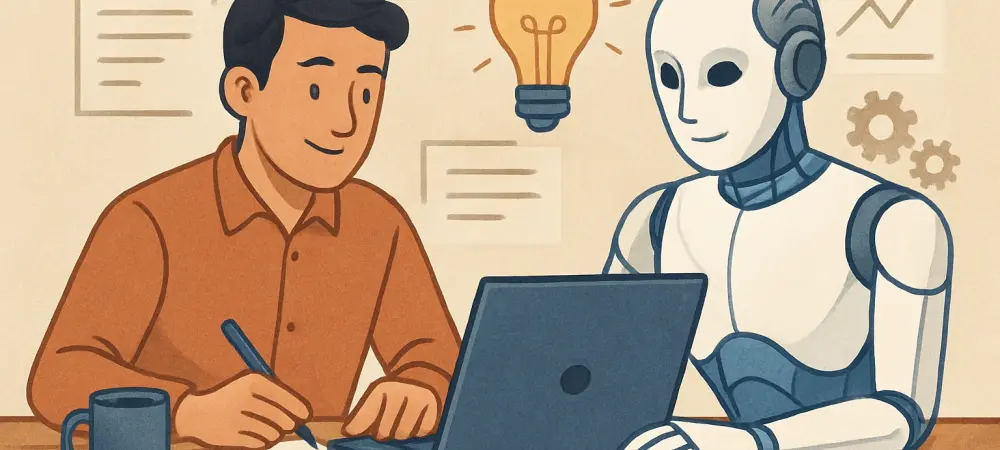
I’m thrilled to sit down with Dominic Jainy, a seasoned IT professional whose expertise in artificial intelligence, machine learning, and blockchain has positioned him as a thought leader in the evolving landscape of technology. With a passion for exploring how these innovations can transform industries, Dominic offers unique insights into the intersection of human creativity and AI. In this interview, we dive into the future of human-AI collaboration, the role of personalized AI agents in the workplace, the skills needed to thrive in this new era, and how organizations can reimagine their structures to harness the power of augmented intelligence. Let’s explore how we can partner with AI to unlock unparalleled potential.
How do you see AI shaping the way humans collaborate, rather than compete, in professional settings?
I believe AI is fundamentally a partner that extends our capabilities rather than a rival. It’s like having a brilliant teammate who can process vast amounts of data or generate ideas at lightning speed. For instance, in design or marketing, AI can churn out countless concepts, but it’s the human who picks the one that resonates emotionally or fits a cultural context. This collaboration lets us focus on what we do best—infusing purpose and meaning—while AI handles the heavy lifting of analysis or iteration. It’s a synergy that elevates both sides.
Can you share an example of a time or industry where AI and human creativity have combined to produce something truly remarkable?
Absolutely, take the field of healthcare. AI tools have been used to analyze medical imaging data with incredible precision, identifying patterns in X-rays or MRIs that might escape the human eye. But it’s the doctors and researchers who interpret those findings, considering patient history and emotional needs to decide on treatment. This partnership has led to faster diagnoses and more personalized care plans, saving lives in ways neither could achieve alone. It’s a powerful testament to what co-creation can accomplish.
In what ways does AI act as a cognitive enhancer for human ingenuity, especially in areas like problem-solving?
AI acts like a turbocharger for our brains. It can process and analyze data at a scale we can’t match, offering insights or solutions we might not have considered. For example, in business strategy, AI can simulate market scenarios or predict trends based on historical data, giving us a starting point for brainstorming. It frees up mental space for us to focus on creative leaps or nuanced problem-solving, like asking ‘why’ behind the data or imagining unconventional applications. It’s about amplifying our thinking, not replacing it.
How does human empathy or intuition complement AI’s capabilities when working together on solutions?
AI is fantastic at crunching numbers and spotting patterns, but it lacks the ability to understand emotional or cultural nuances. That’s where human empathy comes in. For instance, when designing a product, AI might optimize for efficiency or cost, but a human can ensure it feels intuitive or addresses a user’s unspoken needs. Intuition also helps us question AI outputs—knowing when something feels ‘off’ even if the data looks right. This balance ensures solutions aren’t just technically sound but also deeply human.
What does the concept of a ‘creative dance’ between humans and AI look like when applied to a real-world project?
I see it as a dynamic back-and-forth. Imagine a team working on an advertising campaign—AI might generate dozens of taglines or visual concepts based on market trends in seconds. Humans then step in to refine those ideas, picking ones that align with the brand’s voice or tweaking them to evoke a specific emotion. It’s a dance because AI provides raw material at scale, while humans shape it with context and intent. The result is a campaign that’s both data-driven and emotionally compelling, something neither could fully achieve alone.
What do you mean by ‘bring your own agent’ in the future of workplaces, and how might that change the way we work?
It’s an evolution from ‘bring your own device’ to a more personalized tech experience. In the future, employees might have custom AI agents—think of them as intelligent assistants tailored to their roles or preferences. These agents could handle routine tasks like scheduling or data analysis, or even draft creative content. This shifts how we work by freeing us to focus on strategic thinking or interpersonal collaboration, while the agent manages the mundane. It’s about making work more efficient and meaningful.
What are some of the biggest challenges businesses might face when integrating personalized AI agents into their operations?
One major challenge is ensuring these agents align with company goals and values. AI doesn’t inherently understand ethics or culture, so there’s a risk of outputs that conflict with organizational priorities if not properly guided. Another issue is data privacy—personalized agents need access to sensitive information, which raises security concerns. Lastly, there’s the human factor: employees might resist change or struggle to trust AI. Overcoming these requires clear training, robust policies, and a focus on transparency.
Why is curiosity such a vital skill for humans working alongside AI, particularly in shaping outcomes?
Curiosity is key because AI is only as good as the questions we ask it. If we don’t dig deeper or challenge its outputs, we might miss biases or settle for surface-level solutions. For example, when using AI for market analysis, curiosity drives us to ask ‘why’ behind a trend or ‘what if’ about an alternative scenario. It’s about probing the root of problems and refining prompts to get meaningful results. Without curiosity, we risk becoming passive users rather than active collaborators.
How can organizations shift from traditional hierarchies to more fluid, AI-enabled networks for better collaboration?
AI can break down silos by enabling real-time data sharing across teams, allowing decisions to emerge from collective insights rather than top-down directives. For instance, AI platforms can connect marketing, sales, and product teams with shared analytics, fostering cross-functional collaboration. Organizations need to encourage a culture of openness to this data-driven approach, train staff to interpret AI insights, and redesign workflows to prioritize agility over rigid structures. It’s about creating ecosystems where ideas flow freely.
What’s your forecast for the future of human-AI partnership in shaping organizational innovation over the next decade?
I’m optimistic that over the next ten years, human-AI partnerships will become the backbone of organizational innovation. We’ll see AI embedded not just in tools but in the very fabric of how businesses operate—from decision-making to creative processes. The focus will shift toward personalized, adaptive systems that learn alongside us, while humans will increasingly take on roles of visionaries and ethical stewards. Organizations that master this balance will lead the way, turning challenges into opportunities with a blend of precision and compassion.