

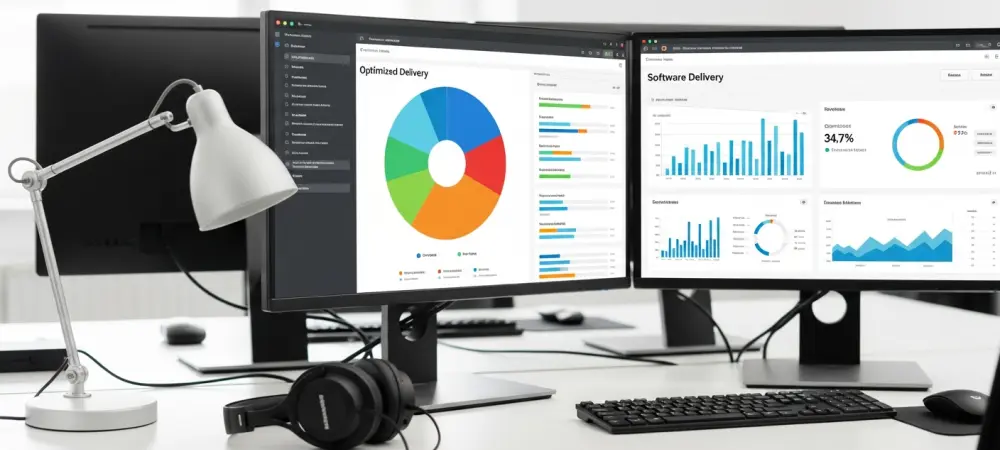
The rapid acceleration of software deployment cycles has transformed the continuous integration and delivery pipeline from a luxury into a high-stakes engine that powers modern digital infrastructure. Modern software engineering relies on the seamless flow of code from development to production, ensuring that every update adds value without introducing instability. However, as systems grow in complexity, these pipelines often transition from being enablers of speed to significant sources of technical debt and friction. This guide explores the critical importance of refining delivery systems by identifying core areas such as architectural modularity, resource management, and observability that determine the success of a DevOps culture.
The Strategic Value of Optimized CI/CD Workflows
Maintaining a high-performance pipeline is not merely a technical preference but a business necessity in an increasingly competitive landscape. By following established optimization patterns, organizations can achieve increased engineering velocity where faster feedback loops allow developers to iterate quickly and stay in a flow state. Enhanced security also becomes a reality as integrated automated scanning and secrets management reduce the risk of vulnerabilities reaching production before they can cause harm. Infrastructure cost savings and improved reliability represent the other half of the value proposition for leadership teams. Efficient resource utilization and intelligent caching minimize the compute power required for builds, directly impacting the bottom line. Consistent environments and resilient error handling reduce the frequency of flaky builds and manual interventions, ensuring that the path from commit to customer remains stable and predictable across the entire organization.
Actionable Strategies to Eliminate Pipeline Delays
Transitioning From Monolithic to Modular Pipeline Architectures
One of the most persistent obstacles in the delivery lifecycle is the adoption of a monolithic pipeline approach where every automated check is forced into a single sequence. By decoupling these tasks into specialized validation pipelines for code reviews and distinct release workflows for deployments, engineering teams ensure that minor errors do not block unrelated progress or consume unnecessary infrastructure resources.
A mid-sized SaaS company effectively addressed this issue by moving away from a forty-five-minute monolithic pipeline and adopting a five-minute validation stage for their developers. This strategic separation allowed the engineering team to identify syntax errors and basic logic flaws almost instantly, which reduced overall resource consumption by sixty percent. By focusing on fast-fail mechanisms, the organization minimized the time developers spent waiting for a full cycle to complete, thereby restoring the fluid pace of development.
Enhancing System Visibility Through Dedicated Pipeline Observability
The old adage that you cannot optimize what you do not measure remains particularly true for automated delivery systems. Many teams monitor their production applications with high precision but treat their CI/CD factory floor as a black box that either works or fails. Implementing observability involves tracking specific metrics such as Time to Feedback, Failure Frequency, and individual Stage Duration. This data-driven approach allows technical leads to pinpoint exactly which test suite or dependency download is causing the most significant delay in the release cycle.
An e-commerce engineering team implemented a pipeline dashboard that revealed a specific integration test suite was failing thirty percent of the time due to network latency issues. By visualizing this data, they moved from anecdotal complaints to a targeted fix that involved implementing retry logic and localizing test data. This change stabilized the build process and restored team trust in the automation. This shift proved that empirical evidence is the only reliable way to justify infrastructure investments and maintain long-term system health.
Boosting Velocity With Parallel Execution and Efficient Caching
Sequential execution is a relic of simpler development eras that no longer serves the needs of complex distributed systems. Modern pipelines should leverage concurrency by running independent tasks—such as microservice builds or different test layers—simultaneously across multiple runners. Furthermore, aggressive caching of dependencies and container layers prevents the silent killer of build speed: downloading the same libraries repeatedly from external registries.
A fintech startup reduced their total build duration from thirty minutes to eight minutes by enabling parallel test execution across multiple cloud runners. By combining this with a robust caching strategy for their Node.js modules and container layers, they eliminated redundant network calls and disk operations. This ensured that only modified code segments were processed during each run, maximizing the efficiency of every compute cycle and reducing the time developers spent waiting for green lights.
Implementing a Tiered Testing Strategy for Faster Feedback Loops
Running an exhaustive regression suite for every minor commit is a recipe for engineering stagnation and frustration. A tiered strategy prioritizes speed by running unit tests immediately, followed by integration tests during the merge process, and reserving full-scale regression and performance testing for the final release candidate. This ensures that the most frequent checks remain the fastest, providing developers with the validation they need without the overhead of unnecessary heavy-duty testing.
A gaming studio adopted a smoke test tier that ran in under three minutes for every push to the main repository. This allowed developers to catch critical regressions immediately before they could impact other team members or the broader codebase. The full, resource-intensive physics engine tests were moved to a nightly build, ensuring that development velocity remained high during business hours while maintaining high-level quality assurance overnight.
Securing the Factory Floor by Shifting Security Left
Security should not be a final gate that stops a deployment at the last minute and frustrates the entire engineering team. By integrating automated security scanning, secret detection, and vulnerability assessments directly into the early stages of the pipeline, teams can address risks as they are introduced. Centralized secrets management is also vital to prevent sensitive credentials from being exposed in logs or configuration files, which could lead to severe security breaches.
A healthcare provider replaced static API keys in their pipeline scripts with a dynamic secrets management tool that rotated credentials automatically. This not only closed a major security gap but also eliminated the frequent build breaks caused by expired manual passwords. This success demonstrated that security and efficiency can go hand-in-hand when protection is treated as a continuous process rather than a post-development hurdle.
Final Verdict: Building a Resilient Engineering Foundation
Optimizing a CI/CD pipeline was an ongoing process rather than a one-time fix. Organizations that treated their delivery infrastructure as a first-class product—investing in modularity, observability, and developer experience—consistently outperformed those that viewed it as a secondary utility. This approach proved most beneficial for growing engineering teams that experienced scaling pains, such as long wait times or frequent build instability. Before adopting these strategies, it was crucial to audit current pipeline metrics to ensure that optimizations targeted areas with the most significant impact. Ultimately, the goal shifted toward a transparent pipeline: a system so efficient and reliable that it became an invisible facilitator of innovation. By prioritizing these structural improvements, the delivery process was transformed into a competitive advantage that empowered developers to focus on building features instead of managing infrastructure. This evolution established a resilient foundation for future growth and technological excellence.