

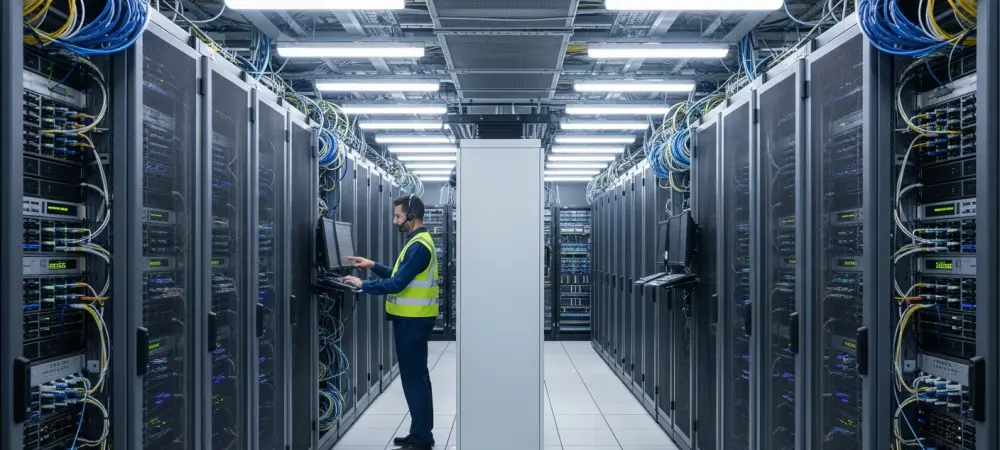
The relentless evolution of digital intelligence has transformed the humble data center from a mere storage locker for servers into a high-octane engine room that powers the modern economy. As organizations move beyond experimental pilot programs into the wide-scale deployment of generative models and complex neural networks, the physical environment housing this hardware has become a primary bottleneck for success. Selecting the wrong facility can lead to thermal shutdowns, excessive operational costs, or latency issues that render an otherwise brilliant algorithm useless. Consequently, identifying a site that can sustain the extreme power and thermal demands of artificial intelligence is no longer just a technical task; it is a fundamental business strategy.
This guide serves to navigate the complex intersection of infrastructure and innovation by addressing the most pressing questions facing modern technology leaders. The objective is to move past the superficial marketing terminology that often obscures the true capabilities of a facility. By exploring the nuances of power density, advanced cooling methodologies, and geographic positioning, this analysis provides a clear framework for selecting a partner that can support the high-density computing needs of the present and the future. Readers will gain a deep understanding of how to audit a data center for AI readiness, ensuring their investments in high-end hardware are protected by a resilient and scalable environment.
The Core Foundations: Infrastructure and Definitions
Does the “AI Data Center” Label Represent a Specific Technical Standard?
When touring modern facilities, one often encounters vibrant branding that identifies a site as an “AI-ready” or “AI-optimized” data center. However, no international regulatory body or standardized engineering board has established a formal definition for what constitutes an AI data center. In practice, this label is frequently a marketing designation used to signal that a facility has undergone upgrades to its power and cooling systems to accommodate higher-than-average rack densities. While these facilities are often better equipped for modern demands, it is vital to remember that any facility with sufficient power throughput and modernized thermal management can technically host AI hardware. The distinction between a standard enterprise facility and an AI-focused one typically comes down to the kilowatt-per-rack capacity. Traditional enterprise workloads might require only five to ten kilowatts per rack, whereas a high-intensity AI cluster often demands fifty to one hundred kilowatts within that same physical footprint. Because of this, organizations must look past the signage and request granular data on the facility’s power distribution and its ability to handle concentrated heat loads. Relying solely on a label without verifying the underlying mechanical and electrical infrastructure can lead to expensive over-provisioning or, conversely, a failure to meet the hardware manufacturer’s operational requirements.
Why is Power Capacity the Single Most Important Factor for AI Success?
Artificial intelligence workloads are notoriously energy-hungry, but the nature of that hunger varies significantly depending on the specific task being performed. For instance, the training phase of a large language model requires persistent, high-wattage electricity to keep thousands of GPUs running at peak capacity for weeks or months at a time. This sustained load places an immense strain on the local power grid and the facility’s internal electrical architecture. In contrast, the inference phase—where the model actually answers user queries—often involves fluctuating power demands that spike when usage increases and drop during off-peak hours.
To manage these demands, many forward-thinking data centers are moving toward “behind-the-meter” power strategies. This approach involves generating electricity on-site through natural gas turbines or dedicated renewable microgrids to ensure a stable supply that remains independent of the public utility grid. While this often results in a higher rental cost, it provides a level of reliability that is indispensable for mission-critical AI applications. Organizations must evaluate their specific workload profile to decide whether they need the brute force of a high-density training environment or the flexible, lower-latency power profile required for real-time inference.
Thermal Management and Networking Requirements
Is Traditional Air Cooling Sufficient for Modern AI Hardware?
The physics of high-performance computing dictates that every watt of electricity consumed by a server is eventually converted into heat. In a high-density AI environment, the amount of heat generated is so intense that traditional air-cooling methods, which rely on fans and chilled air, are often insufficient to prevent hardware throttling or failure. Air is a relatively poor conductor of heat, and pushing enough of it through a densely packed rack to maintain safe temperatures requires an enormous amount of energy and physical space. Consequently, many facilities are transitioning toward liquid-cooling solutions to maintain operational efficiency. Liquid cooling, whether through direct-to-chip heat exchangers or full immersion in dielectric fluid, has emerged as the gold standard for high-intensity AI clusters. These systems are vastly more efficient than air cooling because liquids can absorb and transport heat far more effectively than gas. Furthermore, as environmental regulations become more stringent, liquid cooling offers a more sustainable path by reducing the overall Power Usage Effectiveness (PUE) ratio and, in some cases, eliminating the need for massive water-evaporative towers. Organizations running top-tier GPUs should prioritize facilities that already have the plumbing and infrastructure in place to support these advanced liquid-cooling technologies.
How Does Network Latency and Bandwidth Affect AI Model Performance?
A data center may have infinite power and perfect cooling, but if its network connectivity is subpar, the AI applications hosted within will struggle to perform. The network requirements of AI are two-fold: internal and external. Internally, training clusters require massive bandwidth to move enormous datasets between storage units and compute nodes without creating a bottleneck. Externally, the location of the data center relative to the end-user is the primary driver of latency. If a chatbot or a fraud-detection system takes several seconds to process a request because of distance-related delays, the user experience is effectively ruined.
To mitigate these issues, many organizations are looking for data centers that offer high-speed interconnects and proximity to major internet exchange points. These facilities provide direct, low-latency paths to cloud providers and other critical pieces of the digital ecosystem. For inference tasks that require real-time responses, a distributed “edge” approach is often better than a single centralized hub. By placing smaller AI deployments in data centers closer to the end-users, companies can ensure that their models provide instantaneous feedback, which is particularly vital for sectors like autonomous transportation or high-frequency financial trading.
Strategic Selection and Operational Expertise
What Role Does Geographic Location Play in Regulatory Compliance?
The physical location of a data center is not just a matter of proximity; it is a matter of law. As governments around the world introduce stricter data sovereignty regulations, organizations must be increasingly careful about where they process their data. For AI workloads that handle sensitive personal information, such as medical records or financial histories, the data center must reside within a jurisdiction that complies with local privacy mandates. Moving data across international borders for processing can lead to significant legal liabilities and heavy fines if the host country does not meet the necessary regulatory standards.
Beyond legalities, the local climate and grid stability of a region also impact the strategic value of a location. For example, data centers located in cooler northern climates can leverage “free cooling” from the outside air for part of the year, reducing energy costs. Conversely, facilities in regions prone to natural disasters or those with unstable power grids require more investment in redundancy and backup systems. Selecting a site involves balancing the need for low-latency proximity with the need for a stable, legally compliant, and environmentally sustainable operating environment.
Should Organizations Manage Their Own AI Hardware or Outsource IT Operations?
Hosting AI workloads requires a specialized set of skills that differs from traditional server management. Because AI hardware is extremely expensive and sensitive to environmental changes, many organizations find themselves at a crossroads regarding operational support. Some choose a colocation model, where they own the hardware but rent the space, power, and cooling. In this scenario, the organization is responsible for its own maintenance, which often requires having highly skilled IT staff physically near the data center to handle “hands-on” tasks such as hardware swaps or complex troubleshooting.
Alternatively, many data center providers now offer Managed IT Services or Infrastructure as a Service (IaaS) models. These options allow companies to rent the computational power they need without the burden of owning or maintaining the physical machines. This is particularly advantageous for organizations that lack the specialized expertise required to manage liquid-cooled clusters or complex GPU fabrics. By leveraging the data center’s on-site experts, companies can focus on developing their algorithms rather than worrying about the mechanics of the server room. The choice between these models ultimately depends on the organization’s internal capabilities and its desire for total control over the underlying hardware.
Strategic Summary of Insights
The process of selecting a data center for AI workloads was found to be a multifaceted endeavor that demanded a move away from superficial marketing and toward deep technical auditing. A primary takeaway was the necessity of distinguishing between training and inference tasks, as each required vastly different power and network profiles. Training was identified as a power-intensive, long-term process that benefited from high-density, centralized facilities with dedicated power sources. In contrast, inference was more sensitive to latency, suggesting a need for facilities located closer to the end-user.
Furthermore, the transition from air cooling to liquid cooling was highlighted as an inevitable shift for any organization utilizing high-end AI accelerators. The environmental impact of these facilities also surfaced as a critical consideration, with sustainable practices such as water-free cooling and renewable energy integration becoming key differentiators for future-proofing operations. It was also determined that geographic location influenced not only performance but also legal standing, as data sovereignty laws continued to evolve across the globe. Ultimately, the most effective strategy involved matching the specific hardware and software needs of the AI application to the facility’s actual mechanical and electrical capacity.
Moving Forward with Infrastructure Strategy
The complexity of AI infrastructure meant that a one-size-fits-all approach was no longer viable in the competitive landscape. To stay ahead, organizations had to prioritize flexibility and scalability within their data center partnerships. This involved looking for facilities that not only met today’s power requirements but also possessed the structural headroom to support the even more demanding hardware generations currently in development. Planning for a three-to-five-year horizon was essential to avoid the costly process of migrating massive datasets and hardware clusters between facilities.
The final consideration for any technology leader was the human element of the data center. As AI hardware became more specialized, the value of the technical support staff at the facility increased exponentially. Choosing a partner with a deep understanding of high-performance computing allowed organizations to mitigate risks and maximize the uptime of their most valuable digital assets. By focusing on these core technical and strategic pillars, businesses were able to build a resilient foundation that turned physical infrastructure into a competitive advantage rather than a limiting factor.