

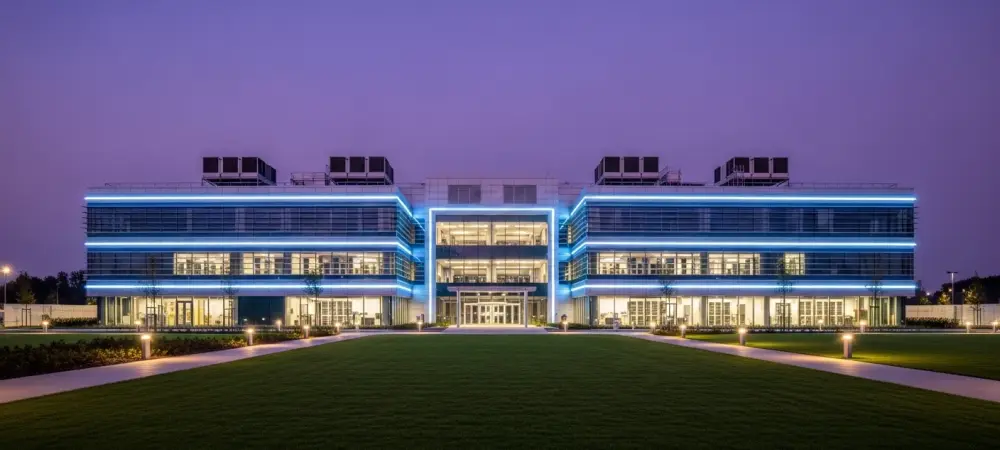
The rapid transformation of Nottinghamshire from a traditional industrial heartland into a sophisticated digital powerhouse represents one of the most significant shifts in the United Kingdom’s technological landscape. While the region was once defined by its massive coal-fired power stations and sprawling administrative offices, it is now becoming a primary destination for high-capacity data storage and processing facilities. This evolution is largely driven by the strategic reuse of brownfield sites, which offer the rare combination of existing high-voltage utility connections and substantial land parcels that are no longer suitable for old-world industry. By leveraging these assets, the county is successfully positioning itself as a credible and cost-effective alternative to the saturated markets of London and the M4 Corridor. Local authorities have recognized this potential, fostering a regulatory environment that encourages rapid deployment of digital infrastructure to support the national economy’s growing reliance on cloud services and artificial intelligence.
Revitalizing Sherwood Business Park Through Modern Infrastructure
The proposed redevelopment of a 1.3-hectare plot within the Sherwood Business Park in Annesley serves as a prime example of how former corporate sites are being adapted for the digital age. Port@l Limited has formally submitted plans to the Ashfield District Council to construct a 20MW data center on a site previously occupied by the energy giant Eon. This specific location once featured a three-story office complex and a smaller, legacy data facility that have since been demolished to make way for a modern, two-story structure spanning over 8,000 square meters. The design philosophy behind this project focuses on maximizing IT load density, with the facility intended to house four distinct 5MW data halls. This approach utilizes the existing commercial zoning and infrastructure of the business park, significantly reducing the hurdles often associated with greenfield developments while providing the high-speed connectivity required by modern enterprises.
Building on this foundation of local expertise, the Portal Group’s return to Sherwood Business Park highlights a consistent trend of long-term investment in the region’s technical capabilities. Having developed specialized facilities for major players like HP and Eon in the past, the firm is now scaling its ambitions to meet the contemporary demand for localized data processing. This project is not merely a replacement of old office space but a fundamental upgrade to the region’s economic utility, as it transitions from administrative functions to mission-critical digital operations. Local council officials have responded positively to these pre-application inquiries, noting that the reuse of a brownfield site for such high-tech purposes is acceptable in principle. This alignment between private developers and local governance is crucial, as it provides the certainty needed for large-scale capital investment in an increasingly competitive national market for data center space.
Repurposing the Ratcliffe-on-Soar Power Station
Perhaps the most culturally and economically symbolic project in the region involves the transformation of the Ratcliffe-on-Soar power station site. This massive 270-hectare area was home to the United Kingdom’s last operational coal plant, which ended its long service life in late 2024 to align with national decarbonization goals. Today, the site is managed by the energy company Uniper, which is spearheading a multi-year decommissioning and demolition process intended to conclude by 2030. The objective is to convert this former fossil-fuel giant into a cutting-edge data center campus that can tap into the colossal power infrastructure already in place. This transition from coal-fired generation to high-density digital processing serves as a definitive marker of the UK’s broader shift toward a carbon-conscious, service-oriented economy. By repurposing the heavy-duty electrical grid connections that once exported power, the site can now import the massive amounts of energy required to sustain modern server farms.
To ensure this transition remains competitive and timely, Uniper is currently working to modify existing planning regulations to accelerate the development of digital infrastructure on the property. While the original Local Development Order concentrated data center activity on the northern portion of the site, extensive demolition requirements there would have delayed construction for several years. Consequently, the focus has shifted to the southern portion of the land, which is less constrained by old structures and ready for immediate development. This strategic pivot allows the project to bypass significant technical bottlenecks and bring much-needed capacity online well before the end of the decade. By adjusting these regulatory frameworks, the local government is demonstrating a high degree of flexibility, prioritizing the rapid deployment of technology over rigid, outdated planning blueprints. This proactive stance ensures that the region remains at the forefront of the national digital strategy.
Shifting Trends in the UK Digital Geography
The emergence of Nottinghamshire as a focal point for technological investment reflects a broader geographical expansion of the United Kingdom’s digital footprint. Historically, data center development was concentrated in and around London due to proximity to financial markets and international fiber landing points. However, as land prices and power constraints in the capital have intensified, developers are looking toward the Midlands to provide the necessary scale for next-generation facilities. The projects in Nottinghamshire benefit from a unique combination of strategic central location and a legacy of industrial power capacity that few other regions can match. This trend is turning former mining towns and industrial zones into high-tech corridors, effectively diversifying the local economy and creating a new tier of regional tech hubs. The shift is not just about finding space; it is about finding the right kind of space where power availability is guaranteed and local resistance to industrial-scale projects is minimal.
As these large-scale digital projects move toward completion, the focus must shift from mere construction to the long-term integration of these facilities into the local and national grid. Stakeholders should prioritize the implementation of sustainable cooling technologies and waste-heat recovery systems to ensure that these massive energy consumers remain compatible with the UK’s net-zero ambitions. Furthermore, the success of the Nottinghamshire model suggests that other industrial regions should proactively audit their legacy power infrastructure to identify similar opportunities for digital conversion. For investors and site operators, the lesson is clear: the most viable path for future expansion lies in the intelligent repurposing of industrial heritage. By continuing to foster a flexible regulatory environment and investing in fiber-optic connectivity, Nottinghamshire was able to secure its place as a vital pillar of the digital economy, providing a blueprint for regional revitalization across the country.