

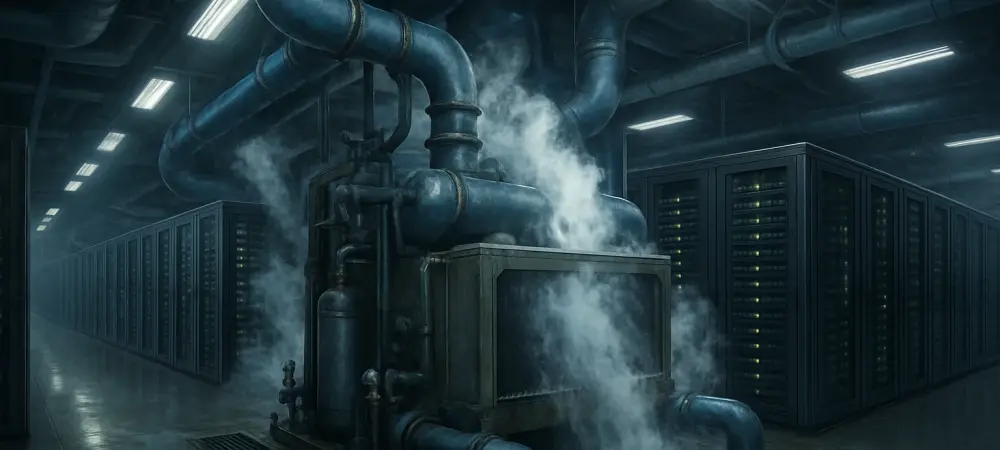
The exponential rise of artificial intelligence (AI) and high-performance computing (HPC) has placed unprecedented pressure on data centers, with heat densities soaring to levels traditional cooling systems can barely handle, while energy consumption in these facilities accounts for nearly 2% of global electricity usage. The urgent need for innovative cooling solutions has never been clearer. This roundup dives into how Vertiv, a prominent player in data center infrastructure, is addressing these challenges with cutting-edge technologies and strategic partnerships. By gathering perspectives from industry experts, operators, and analysts, this discussion aims to uncover diverse views on Vertiv’s role in revolutionizing cooling for an AI-driven era.
Unpacking the Challenges of AI-Driven Data Centers
The surge in AI workloads has transformed data centers into hotbeds of thermal challenges, pushing the boundaries of conventional air-cooling methods. Industry observers note that server racks now often exceed 50kW of power draw, a threshold that renders older systems inefficient and costly. This growing concern has sparked debates on how to balance performance with sustainability, with many pointing to the risk of operational downtime if heat isn’t managed effectively.
Beyond immediate performance issues, there’s a broader conversation about environmental impact. Data center operators frequently express frustration over rising energy bills and carbon footprints, urging the adoption of solutions that prioritize efficiency. Some analysts argue that without radical innovation, the industry could face regulatory backlash or public scrutiny over its ecological toll, making this a pivotal moment for change.
Vertiv has emerged as a key name in this dialogue, with its focus on advanced cooling technologies gaining traction among stakeholders. Experts are keen to evaluate whether the company’s approaches can set a new standard, prompting a deeper look into specific solutions and collaborations. This roundup seeks to capture those varied opinions, shedding light on what’s working and where gaps remain.
Vertiv’s Cutting-Edge Cooling Solutions: What Experts Are Saying
Immersion Cooling with CoolCenter: A Game-Changer?
Vertiv’s CoolCenter Immersion cooling system, which submerges servers in dielectric fluid to dissipate heat, has drawn significant attention for its efficiency. Many industry professionals highlight its impressive Power Usage Effectiveness (PUE) of 1.08, noting that it far surpasses traditional setups. They often emphasize the system’s capacity to handle power loads from 25kW to 240kW per pod, making it a viable option for high-density environments driven by AI applications.
However, not all feedback is unanimously positive. Some data center managers point out the high initial investment required for immersion cooling, alongside integration challenges with existing infrastructure. While long-term savings and scalability are acknowledged as benefits, a segment of experts cautions that smaller operators might struggle with upfront costs, suggesting a need for tailored financial models or phased adoption strategies.
A contrasting view comes from sustainability advocates who praise the technology’s potential to reduce energy waste. They argue that despite the hurdles, immersion cooling could redefine operational norms, especially in regions like Europe, the Middle East, and Africa where it’s already available. This diversity of opinion underscores a broader debate on whether such innovation is a niche luxury or a future necessity.
Strategic Partnerships: Building AI-Ready Infrastructure
Vertiv’s collaboration with Digital Realty in Italy for the 3MW ROM1 data center, slated for completion in 2027, has sparked discussions about the power of alliances in scaling AI infrastructure. Industry insiders commend the project’s focus on free-cooling and AI-optimized systems, viewing it as a blueprint for energy-efficient design. Many see Rome’s growing status as a digital hub as a strategic choice, amplifying the partnership’s regional impact.
On the flip side, some analysts raise concerns about market saturation in Europe’s data center landscape and potential regulatory obstacles. They question whether such concentrated investments might overlook emerging markets with untapped potential. Despite these reservations, successful past collaborations in cities like Paris and Madrid are often cited as evidence of Vertiv’s ability to deliver on complex projects, fueling optimism among supporters.
A third perspective focuses on the competitive advantage these partnerships offer. Market watchers suggest that aligning with established players like Digital Realty positions Vertiv ahead of rivals, especially in meeting the bespoke needs of AI workloads. This mix of enthusiasm and caution paints a nuanced picture of how strategic moves are perceived across the sector.
Global Expansion and Regional Dynamics
Vertiv’s global footprint, including projects like a 42MW facility in Nigeria with Nextra and upcoming initiatives in Saudi Arabia with Ezditek, has experts debating the adaptability of its cooling solutions across diverse climates and economies. Many applaud the company’s ambition to address varied regional demands, pointing to immersion cooling’s flexibility as a key strength. This adaptability is often seen as critical for tackling unique thermal challenges in hotter climates.
Conversely, some industry voices express skepticism about uniform adoption rates, noting that infrastructure readiness and local expertise vary widely. They argue that while EMEA markets might embrace these technologies swiftly, other regions could lag due to funding or skill gaps. This disparity prompts calls for customized training and support to ensure equitable access to such innovations.
A further angle comes from economic analysts who view these expansions as a litmus test for scalability. They stress that success in diverse markets could cement Vertiv’s leadership, but only if cultural and logistical nuances are addressed. This spectrum of insights highlights the complexity of global deployment in a field as dynamic as data center cooling.
Sustainability Meets Performance: A Dual Focus
The intersection of high performance and environmental responsibility in Vertiv’s offerings garners widespread discussion. Many sustainability experts celebrate the low-PUE designs as a step toward greener computing, suggesting that immersion cooling could significantly cut carbon emissions. This alignment with eco-conscious goals is often cited as a trust-building factor for customers under pressure to meet regulatory standards.
Yet, comparisons with industry peers reveal mixed assessments. Some observers note that while Vertiv’s solutions are innovative, competitors are also advancing liquid cooling and hybrid systems, creating a crowded field. They speculate that standing out might require even bolder commitments to renewable energy integration or waste reduction, pushing the boundaries of current designs.
A final viewpoint from data center clients emphasizes the practical appeal of balancing efficiency with reliability. They value technologies that don’t compromise uptime for sustainability, indicating that Vertiv’s dual focus resonates strongly with operational priorities. This blend of perspectives illustrates the tightrope walk between innovation and real-world application in an AI-centric landscape.
Key Takeaways from Vertiv’s Approach: Industry Consensus
Synthesizing the range of opinions, Vertiv’s CoolCenter system stands out for its efficiency metrics, with many agreeing that a PUE of 1.08 sets a high bar for cooling performance. The technology’s capacity to manage extreme heat loads is frequently highlighted as a critical asset for AI-driven data centers, though cost concerns temper universal endorsement among smaller operators.
Partnerships like the one with Digital Realty in Italy also receive significant nods for their strategic foresight. Experts often point to these collaborations as models for building scalable, AI-ready facilities, even as they acknowledge regional challenges that could complicate replication. The consensus leans toward viewing such alliances as essential for staying competitive in a rapidly evolving market.
A recurring theme is the need for broader education on immersion cooling benefits to accelerate adoption. Many in the industry advocate for operators to explore modular solutions or pilot projects as entry points, while keeping an eye on Vertiv’s global moves for potential collaboration opportunities. This collective input offers a roadmap for navigating the complexities of next-gen cooling.
Reflecting on Vertiv’s Journey and Looking Ahead
Looking back, the insights gathered paint a vivid picture of Vertiv’s influence on data center cooling through pioneering technologies and impactful partnerships. The discussions captured a spectrum of optimism and caution, reflecting the industry’s recognition of both the promise and the hurdles inherent in managing AI-driven thermal demands.
For those navigating this space, a practical next step involves assessing immersion cooling for high-density setups, weighing initial costs against long-term efficiency gains. Exploring strategic alliances akin to Vertiv’s model also emerged as a recommended path for scaling infrastructure sustainably.
Beyond immediate actions, the conversation points toward continuous monitoring of industry trends and innovations. Staying informed about advancements in green computing standards and regional market dynamics promises to equip stakeholders with the foresight needed to adapt. This focus on proactive engagement offers a fitting capstone to the diverse perspectives shared.