

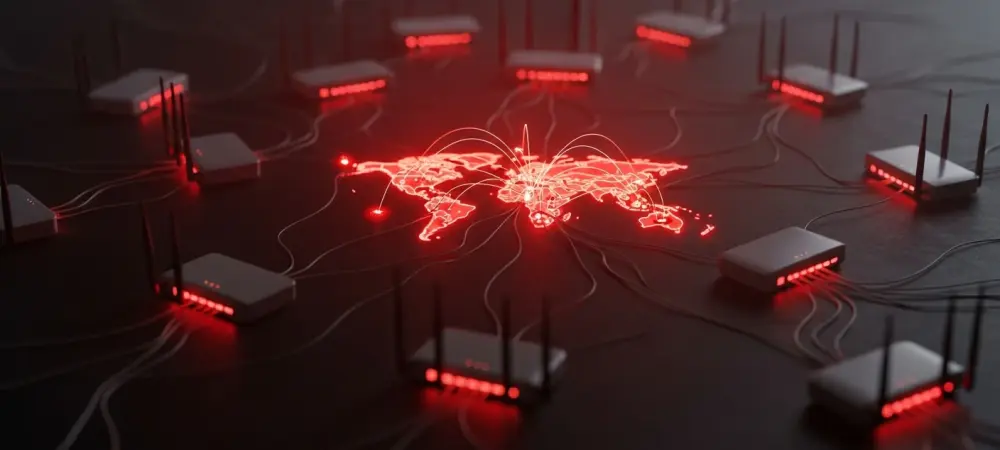
While traditional corporate firewalls remain formidable barriers, state-sponsored cyber operatives have discovered that the humblest pieces of hardware in a remote employee’s home often serve as the most effective backdoors into secure government and commercial networks. This realization has fueled a sophisticated campaign by APT28, a threat actor frequently identified as Fancy Bear or Forest Blizzard and closely associated with the Russian General Staff Main Intelligence Directorate. By shifting their focus away from hardened perimeter defenses and toward the ubiquitous small office and home office routers, these hackers have managed to create a shadow infrastructure that facilitates redirection of traffic and widespread credential theft. This strategy exploits the inherent trust that internal devices place in local network configurations, allowing the GRU to bypass modern security protocols without triggering the usual alarms. The persistence of these operations highlights a critical vulnerability in the global remote-work ecosystem, where consumer-grade technology is now a primary front in international cyber warfare.
Tactics and Techniques: Infrastructure Hijacking
Sophisticated Modification: Network Settings Manipulation
The technical core of this offensive involves the exploitation of specific vulnerabilities within consumer hardware, such as the TP-Link WR841N model, which has been targeted through known exploits like CVE-2023-50224. Once the attackers gain access to the administrative interface of these routers, they systematically modify the Dynamic Host Configuration Protocol and Domain Name System settings to redirect all outbound requests. By inserting IP addresses controlled by the threat actor, the hackers ensure that every downstream device, including company laptops and personal smartphones, inherits these malicious parameters automatically. This setup facilitates highly effective adversary-in-the-middle attacks, where the hackers can silently intercept browser sessions and email communications. The goal is the harvesting of sensitive data, such as login passwords and OAuth tokens, which provide persistent access to cloud services and corporate databases. Because these modifications occur at the router level, the user remains largely unaware that their digital traffic is being routed through a hostile intermediary.
Building upon this initial foothold, the threat actors have demonstrated a remarkable ability to maintain long-term presence within compromised environments by blending in with legitimate network traffic. The redirection of DNS requests allows the GRU to steer users toward cloned login pages or to transparently capture data while the victim accesses legitimate sites. This method is particularly dangerous because it bypasses many traditional endpoint security measures that assume the underlying network path is secure and trustworthy. Throughout 2025 and continuing into 2026, this infrastructure has been utilized to target various sectors, ranging from government agencies to non-governmental organizations. The use of actor-owned infrastructure to receive these hijacked requests provides the attackers with a centralized point for intelligence gathering and data exfiltration. By controlling the very gateways of the home office, APT28 has effectively turned the shift toward remote work into a strategic advantage for state-level espionage, transforming thousands of private residences into unwitting listening posts for the Russian intelligence services.
Global Reach: Targeting Ukraine and Beyond
In a parallel cluster of activity, the threat group has expanded its operations to include MikroTik and TP-Link devices, specifically focusing on network infrastructure within Ukraine and neighboring regions. These compromised routers serve as specialized forwarding points that send DNS queries directly to remote infrastructure owned by the attackers, allowing them to map out internal networks and identify high-value targets. This regional focus is not merely opportunistic but serves as a tactical component of broader geopolitical objectives, providing real-time visibility into the communications of strategic adversaries. The hackers use these devices as proxies to mask their origin, making it difficult for investigators to trace the malicious activity back to Moscow. By leveraging a diverse array of hardware, they ensure that their network is resilient against targeted takedowns. If one set of router vulnerabilities is patched, they simply pivot to another unpatched model within the same ecosystem, maintaining a constant flow of intelligence from the field.
The scale of this operation is amplified by the sheer volume of vulnerable hardware currently connected to the global internet. Many of these routers are rarely updated by their owners, and some have reached their end-of-life status, meaning they no longer receive security patches from manufacturers. APT28 exploits this neglect by using automated scanning tools to find and compromise these legacy systems en masse. Once a device is under their control, it becomes part of a vast, distributed network that can be activated for specific intelligence tasks or used as a launchpad for further lateral movement within a corporate network. This opportunistic approach allows the GRU to maintain a deep reservoir of compromised nodes, which they can filter for high-interest targets. For example, if a router belonging to a defense contractor or a senior government official is identified within the pool, the attackers can escalate their efforts from simple data harvesting to advanced persistent surveillance, all while using the same basic set of hijacked home office tools.
Strategic Implications: Defensive Countermeasures
Exploiting Tech: Consumer Hardware as a Proxy
The overarching trend in these reports reveals a fundamental shift in how state-level actors perceive consumer technology, moving from viewing it as a nuisance to seeing it as a primary tool for espionage. APT28 operates with an opportunistic mindset, casting an exceptionally wide net to compromise thousands of routers simultaneously. This “dragnet” approach allows them to gain visibility across a massive spectrum of users, after which they apply sophisticated filters to identify individuals and organizations of high intelligence value. By using common consumer hardware as a proxy, the GRU effectively hides its most sensitive operations behind the mundane traffic of everyday internet users. This makes the task of attribution and remediation significantly more complex for national security agencies. The infrastructure supporting these activities has been operational since 2024, with some segments remaining active well into the current year, proving that once these actors gain control of a network’s gateway, they are incredibly difficult to dislodge without a complete hardware replacement.
This strategy also highlights the limitations of traditional perimeter-based security in an era where the perimeter is now defined by the kitchen table or the home office. When a state-sponsored actor controls the router, they control the foundation of the user’s digital experience. This allows them to execute sophisticated man-in-the-middle attacks that can bypass encryption if the victim is successfully tricked into accepting rogue certificates or using unencrypted protocols. Furthermore, the collaboration between international security centers and private threat intelligence firms has confirmed that these tactics are being refined to target specific software stacks and cloud-based services. By focusing on the hardware that connects people to the internet, rather than the services themselves, the GRU has found a way to remain relevant and dangerous despite the widespread adoption of multi-factor authentication and other defensive technologies. The ability to monitor and redirect traffic at the source remains one of the most potent weapons in the Russian cyber arsenal, necessitating a new look at home network security.
Long-Term Resilience: Hardening Global Infrastructure
To counter these persistent threats, security experts emphasize that a defense-in-depth strategy is no longer optional for organizations with a remote workforce. One of the most effective methods for neutralizing the impact of router-based attacks is the implementation of a “browse-down” architecture, which isolates critical assets and ensures that sensitive data never touches the same network path as general internet browsing. Furthermore, maintaining rigorous patch management for all remote hardware is essential; if a router cannot be updated, it must be replaced with a modern, supported device. Enforcing multi-factor authentication across all external-facing services is also vital, as it serves as a final barrier when credentials have been stolen via hijacked DNS or DHCP settings. While MFA is not a silver bullet, it significantly raises the cost and complexity for attackers trying to use stolen tokens. Organizations must move toward a zero-trust model where no network, especially a home-based one, is considered safe regardless of the user’s identity or location.
Beyond hardware updates, the use of application allowlists and host-based intrusion detection systems provides an additional layer of visibility that can alert security teams when a device behaves unexpectedly. For instance, if a laptop suddenly begins sending DNS requests to an unknown IP address or attempts to establish unauthorized connections to foreign servers, these local tools can block the activity before data is exfiltrated. The unified assessment from global security agencies underscores that the threat to network integrity is both persistent and evolving, requiring proactive hygiene rather than reactive patching. Monitoring for unusual changes in network configuration at the endpoint level is now a requirement for any entity handling sensitive information. As cyber operations become more integrated into broader geopolitical strategies, the responsibility for securing the network must be shared between the manufacturer, the organization, and the end-user. Only through a coordinated effort to harden every node in the connection chain can the impact of state-led espionage campaigns like those run by APT28 be effectively mitigated.
Practical Steps Toward Enhanced Security
The global community recognized that the exploitation of SOHO routers represented a major shift in the threat landscape, requiring immediate and decisive action from both the private and public sectors. Organizations established stricter guidelines for remote work, often providing employees with pre-configured, enterprise-grade hardware that featured built-in encryption and automated security updates. This move minimized the reliance on unmanaged consumer devices and closed many of the loopholes previously enjoyed by the GRU. Security teams also prioritized the monitoring of outbound DNS traffic to identify anomalies that suggested a compromised local gateway. By shifting the focus to behavioral analysis and endpoint integrity, defenders gained a significant advantage over attackers who relied on the invisibility of their network-level modifications. These measures proved effective in reducing the success rate of opportunistic campaigns, forcing threat actors to spend more resources on increasingly difficult targets.
Individual users and administrators adopted a more cautious approach to network management, ensuring that default credentials were changed and that administrative interfaces were not exposed to the public internet. The widespread implementation of robust multi-factor authentication protocols further neutralized the value of harvested credentials, as stolen passwords alone were no longer sufficient to grant access to corporate systems. Governments and manufacturers worked more closely to phase out legacy hardware that lacked modern security features, creating a more resilient global internet infrastructure. These combined efforts significantly raised the barrier to entry for state-sponsored espionage, demonstrating that proactive security hygiene remained the most effective defense against sophisticated cyber operations. Moving forward, the focus remained on maintaining these standards and continuously adapting to the evolving tactics of threat actors who sought to exploit the vulnerabilities of an increasingly connected and remote world.