

The rhythmic hum of a precision robotic arm echoing through a Cairo workshop signals a fundamental shift in how the Middle East approaches the global high-tech arms race. For decades, the Egyptian industrial sector remained tethered to foreign expertise, watching from the sidelines as manufacturers in the West and East Asia automated their way to global dominance. Today, Raedbots is rewriting that narrative by proving that world-class “Physical AI” can be conceived, engineered, and manufactured within the borders of Egypt, effectively ending the era of total reliance on expensive international imports.
The End of the Import ErEgypt’s First Home-Grown Industrial Robot
While the global industrial landscape has long been dominated by robotic giants from Germany, Japan, and the United States, a quiet revolution is now unfolding in the heart of the Nile Delta. Raedbots has emerged as the pioneering force in Egypt, designing and manufacturing advanced industrial robotics locally to challenge the long-standing assumption that high-tech automation must come from overseas. By developing sophisticated hardware on Egyptian soil, this startup is not just building machines; it is dismantling the financial and logistical barriers that have kept regional manufacturers in the technological shadows for generations. The transition from a consumer of technology to a creator represents a significant milestone for the national economy. Local production ensures that the unique constraints of the Egyptian market—ranging from specific power grid requirements to local environmental conditions—are baked into the design process from the very beginning. This shift toward domestic manufacturing creates a sustainable ecosystem where technological advancement is no longer a luxury but a standard tool for progress across various industrial sectors.
Addressing the Regional Automation Gap
For years, manufacturers in the Middle East and North Africa (MENA) have faced a daunting “automation tax” that stifled growth. Importing industrial robots involved exorbitant shipping costs, complex customs hurdles, and a frustrating reliance on foreign technicians for even the most basic maintenance tasks. This friction created a stark divide where only massive conglomerates could afford to modernize, while small and medium-sized enterprises (SMEs) were forced to rely on manual processes that limited their scalability and precision. Raedbots addresses this critical market failure by providing accessible, cost-efficient, and locally serviced robotic solutions. By removing the middlemen and the heavy duties associated with international shipping, the company offers a lifeline to smaller workshops and factories. This localized approach means that a factory owner in Giza can now access high-end automation with the assurance that technical support is just a phone call away, rather than a flight across an ocean.
Engineering Sovereignty Through Vertical Integration
Unlike many regional firms that simply assemble imported components, Raedbots has adopted a rigorous model of vertical integration to ensure total technological independence. Every robotic arm and mobile platform is engineered in Cairo to meet international durability standards while remaining adaptable to local industrial needs. This level of control extends to the proprietary control systems and electronics, where the company designs its own circuitry to eliminate the risk of software incompatibility or sudden supply chain disruptions from abroad.
The true intelligence of these machines lies in their AI-powered software stack, which utilizes custom “Physical AI” to allow robots to perceive their surroundings and plan complex motions autonomously. By controlling the entire development stack from the gears to the code, Raedbots offers solutions that are approximately 50% more affordable than imported alternatives. This competitive edge makes high-tech automation a viable reality for local SMEs, fostering a culture of innovation that is entirely self-sustained and independent of foreign intellectual property restrictions.
Strategic Alliances and Expert Foundations
The credibility of Raedbots is anchored by its leadership’s deep industry roots and its high-level international partnerships. Founded by veterans of global manufacturing giants, the company bridges the gap between international engineering standards and local market insights. As one of the first Physical AI startups in the Middle East to join the NVIDIA Inception program, Raedbots utilizes world-class simulation tools to refine its robots in digital environments. This allows them to “train” their machines in a virtual space, ensuring high performance before the physical assembly even begins. Institutional support from Egypt’s Technology Innovation and Entrepreneurship Center (TIEC) further solidifies the company’s role as a cornerstone of the national vision for digital transformation. Expert-led R&D is currently focused on the transition to collaborative robotics, or “cobots,” which are designed to work safely alongside human operators. These partnerships ensure that the technology remains at the cutting edge, blending global AI capabilities with a deep understanding of the local workforce’s needs and safety requirements.
Practical Applications for Modern Egyptian Industry
Raedbots provides a clear framework for how local factories can begin their transition toward an automated future through specific, high-impact applications. In the realm of welding and CNC machine tending, factories now deploy these robots to handle high-precision metalworking tasks with a consistency that manual labor cannot replicate. This not only increases the quality of the output but also protects human workers from the hazardous fumes and heat typically associated with heavy fabrication.
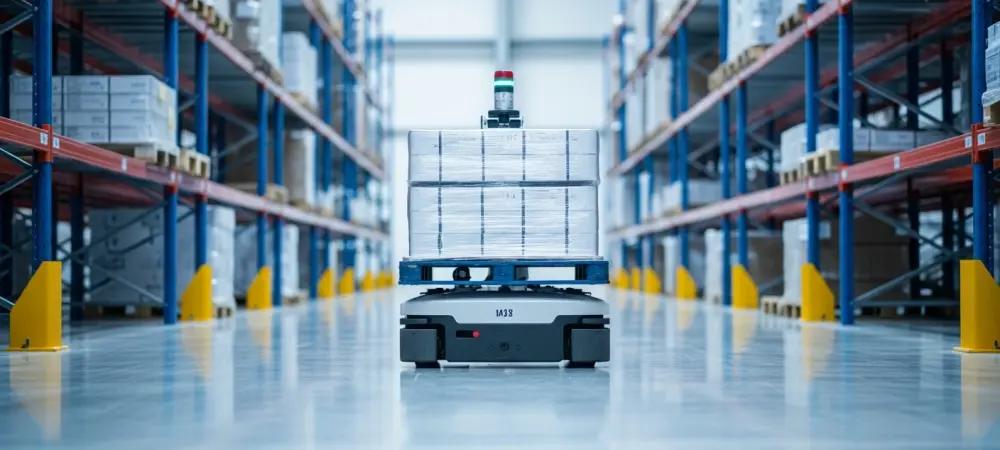
Beyond the assembly line, the technology is transforming warehouse and logistics automation. By leveraging autonomous mobile platforms to streamline the movement of goods, Egyptian logistics firms are finally able to compete with global standards of efficiency. Because the technology was developed in-house, Raedbots solved the “downtime dilemma” by offering rapid-response technical support and readily available spare parts. This comprehensive support system ensured that the move toward automation was not just a one-time purchase, but a long-term strategy for industrial resilience.