

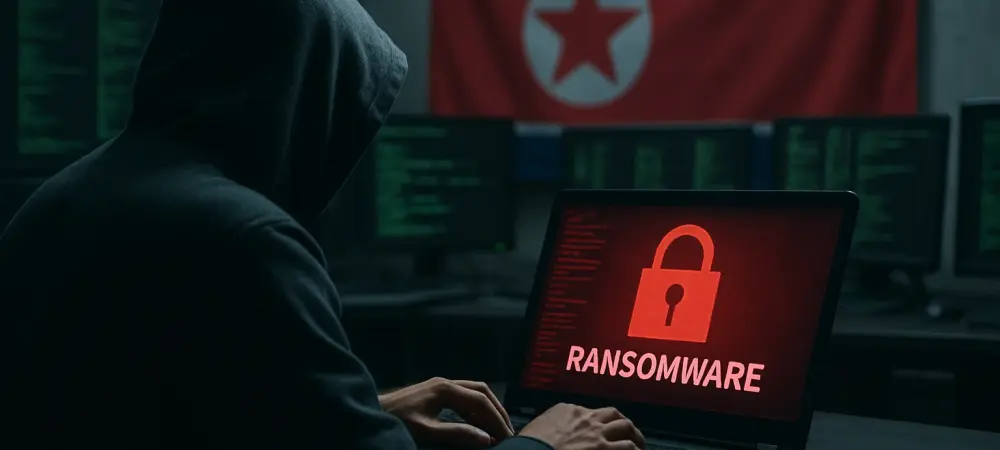
What happens when a seemingly harmless email turns into a weapon of economic destruction? South Korea is grappling with an invisible yet devastating threat from North Korea, where state-sponsored hackers are unleashing sophisticated ransomware attacks to destabilize and profit. These digital assaults, orchestrated by groups like ChinopuNK, are not just about stealing data—they’re a calculated move in a broader geopolitical chess game. This feature dives deep into the shadowy world of cyber warfare on the Korean Peninsula, uncovering the tactics, motivations, and defenses against an enemy that strikes from behind a screen.
Unmasking a Silent Digital War on the Korean Peninsula
In the heart of Seoul, a single click on an email attachment can spiral into a nightmare. North Korean hackers, operating under codenames like ChinopuNK—a subgroup of the notorious Scarcruft (APT37)—are targeting South Koreans with precision. These attacks aren’t random; they’re a deliberate extension of decades-long tensions, blending cybercrime with statecraft to destabilize and profit at the same time. The stakes are high, as every infected device becomes a potential gateway to chaos.
This silent war isn’t fought with missiles but with malware, striking at the core of South Korea’s digital infrastructure. Individuals and businesses alike find their files locked, with ransom demands glaring from their screens in both English and Korean. Beyond the immediate financial toll, these incursions erode trust in digital systems, amplifying the psychological impact of an already fraught relationship between the two nations.
The significance of this cyber onslaught cannot be overstated. South Korea, a global tech hub, faces not just personal losses but a threat to national security as sensitive data gets siphoned off in the process. North Korea’s ability to weaponize code transforms every laptop and smartphone into a battlefield, making this a story of urgent relevance for anyone connected to the digital world.
Why North Korea’s Cyberattacks on South Korea Matter
North Korea’s digital aggression stems from a desperate need for cash amid crippling international sanctions. With traditional revenue streams choked, the regime has turned to cybercrime as a lifeline, targeting South Korea due to both proximity and historical enmity. These ransomware campaigns are more than theft—they’re a form of economic warfare designed to fund state operations while undermining a rival.
The dual nature of these attacks adds another layer of danger. Hackers often pair financial extortion with espionage, stealing classified information alongside encrypting files for ransom. For South Koreans, this means personal breaches can quickly escalate into matters of national concern, as stolen data could fuel future political or military maneuvers.
Beyond individual victims, the broader economy feels the strain. South Korea’s reliance on technology—evident in everything from smart cities to K-pop streaming platforms—makes it a prime target. A successful attack can disrupt entire sectors, costing millions and shaking public confidence, which is precisely the kind of leverage North Korea seeks to exploit in this ongoing conflict.
Dissecting ChinopuNK’s Ransomware Tactics and Tools
ChinopuNK’s approach to cyber warfare is chillingly methodical, unfolding in calculated stages. Their campaigns often begin with phishing emails disguised as routine notifications, such as postal code updates, tailored to South Korean contexts to lure unsuspecting users. Once clicked, these emails unleash a cascade of malware, setting the stage for deeper infiltration.
The group’s arsenal is diverse and sophisticated, featuring tools like NubSpy and ChillyChino for maintaining access, FadeStealer and LightPeek for harvesting data such as keystrokes, and TxPyLoader for evading detection through techniques like transacted hollowing. The final blow comes with VCD, a custom ransomware with hardcoded file paths specific to South Korean systems, ensuring maximum damage. Bilingual ransom notes underscore the targeted nature of these attacks.
This multi-phase strategy marks a shift for Scarcruft, traditionally focused on espionage, toward financially driven cybercrime. The use of advanced evasion methods, including rewriting malware in Rust to dodge antivirus software, highlights a level of adaptability that keeps defenders on edge. Each tool serves a distinct purpose, creating a layered assault that’s hard to dismantle.
Expert Insights into North Korea’s Evolving Cyber Strategy
Cybersecurity analysts have noted the unique blend of motives behind North Korea’s digital campaigns. According to researchers, groups like ChinopuNK operate under state directives to merge intelligence gathering with revenue generation, a tactic distinguishing them from other nation-state actors. This hybrid model is evident across multiple North Korean factions, including Kimsuky and Andariel, who similarly wield ransomware as a dual-purpose weapon.
The technical evolution of these groups is equally striking. Experts point out that the adoption of cutting-edge evasion tactics, such as leveraging obscure programming languages, reflects a conscious effort to stay ahead of global defenses. This adaptability ensures that even as multiple tools are deployed, the risk of detection remains low, complicating efforts to track or neutralize threats.
Such insights paint a picture of a regime that views cyber warfare as both a survival mechanism and a strategic asset. The ability to pivot between espionage and extortion demonstrates not just technical prowess but a deeper intent to maximize impact. As these strategies grow more complex, they signal a persistent challenge for South Korea and the international community alike.
Defending Against North Korea’s Ransomware Threats
Countering North Korea’s cyber onslaught requires vigilance at every level. Individuals must scrutinize emails for signs of phishing, especially those mimicking local services, and avoid interacting with unverified attachments or links. A healthy dose of skepticism can prevent the initial breach that hackers rely on to gain entry.
Robust technical defenses are equally critical. Keeping antivirus software updated and enabling multi-factor authentication can thwart many infostealers and backdoors used in these campaigns. For businesses, investing in regular security audits and employee training ensures that potential vulnerabilities are identified and addressed before exploitation occurs.
Staying informed about regional cyber trends offers another layer of protection. Following updates from cybersecurity firms helps anticipate new tactics, while developing incident response plans prepares victims to act swiftly if an attack succeeds. Building this resilience transforms passive targets into active defenders, disrupting North Korea’s digital ambitions one step at a time.
Reflecting on a Digital Standoff
Looking back, the cyber skirmishes between North Korea and South Korea reveal a battleground where code has become as lethal as conventional weapons. The relentless ingenuity of groups like ChinopuNK forces a reckoning with the fragility of digital systems, exposing vulnerabilities that transcend borders. Each encrypted file and stolen byte serves as a reminder of the high stakes at play.
Moving forward, the focus must shift to collective action. Governments, businesses, and individuals should collaborate on stronger cybersecurity frameworks, sharing intelligence to outpace evolving threats. Investing in education and cutting-edge defenses will be key to staying ahead of state-sponsored hackers. Ultimately, turning this silent war into a story of resilience demands innovation and unity, ensuring that technology remains a tool for progress rather than a weapon of destruction.