

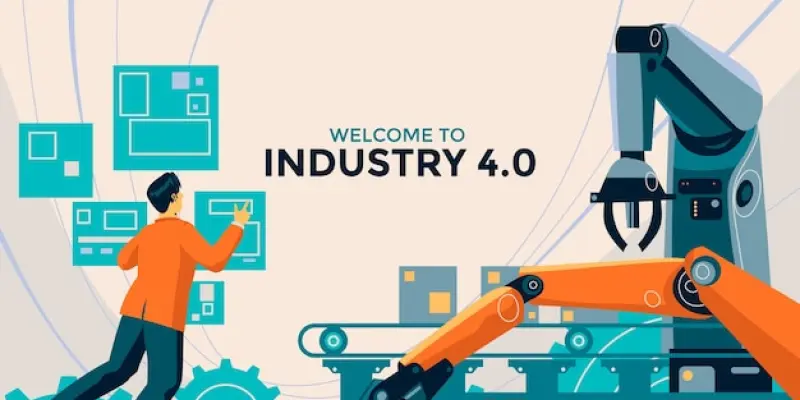
In the rapidly evolving landscape of global markets, Industry 4.0 represents a monumental shift in the way industries operate, marking a distinct departure from traditional manufacturing practices. Characterized by the integration of smart technologies such as automation, artificial intelligence (AI), the Internet of Things (IoT), and blockchain into business operations, this revolution promises unprecedented levels of efficiency, productivity, and innovation. Industry 4.0 unfolds as a powerful wave that is reshaping sectors across manufacturing, healthcare, finance, automotive, energy, aerospace, and beyond. It embodies the confluence of technological advancements, burgeoning consumer demand, and strategic investments, driving market growth and creating new opportunities. The dynamic nature of Industry 4.0 is a testament to the relentless pace of innovation, where AI integration further elevates operational efficiency and decision-making capabilities. As companies adapt to these changes, the impact on global industries is profound, signaling a transformative era that engages both established players and emerging startups in a competitive race.
The Current Status and Growth Prospects of Industry 4.0
The Industry 4.0 Market has swiftly evolved into a cornerstone of modern industrial practices, significantly influencing various sectors by offering advanced digital solutions. The integration of smart technologies into operations has resulted in far-reaching enhancements in efficiency, productivity, and innovation. Across the globe, industries are witnessing a tangible shift in their approach as they increasingly embrace these transformative capabilities. Key players in the Industry 4.0 Market, such as Siemens AG, ABB Ltd., Cisco Systems Inc., General Electric, and IBM, are leading the charge by developing and implementing cutting-edge solutions that redefine traditional processes, enabling smarter and more agile business models. The rapid adoption of AI in manufacturing, alongside IoT and blockchain technologies, stands out as a hallmark of this revolution. These technologies empower businesses to make data-driven decisions, optimize processes, and realize new efficiencies. Despite early-stage challenges in technology adoption, the market continues to expand, with projections indicating robust growth from 2025 onward driven by technological innovation and increasing market penetration.
Furthermore, the relentless pursuit of enhancing customer experience, operational precision, and sustainability has become a prominent driver of innovation in the Industry 4.0 Market. Companies, including established giants and innovative startups, are focusing on developing personalized solutions tailored to specific consumer and business needs. Collaborative partnerships between tech companies and industries play a crucial role in pushing technological boundaries. Government initiatives supporting technological adoption also contribute to the conducive environment for market growth. As such, strategic investments and research endeavors remain vital in maintaining competitiveness and sustainably expanding market influence. More sectors recognize the strategic importance of Industry 4.0 technologies, paving the way for exponential advancements within manufacturing, healthcare, automotive, and beyond. This continued adoption and innovation promise a future of diversified applications and prospectively lucrative business opportunities, alongside a groundbreaking impact on traditional operational paradigms.
Challenges Faced in the Industry 4.0 Market
Even as the Industry 4.0 Market continues to flourish, several inherent challenges complicate the trajectory of its growth. Technological barriers, including data security issues and interoperability challenges, remain significant obstacles in the widespread adoption of smart technologies. The sophisticated nature of technologies like AI and IoT poses risks related to data breaches, regulatory compliance, and system integration. Companies often grapple with securing sensitive information, especially as IoT devices proliferate across sectors, creating a vast and interconnected network of devices and data points. Moreover, the integration of diverse systems demands interoperability solutions that ensure seamless operations, where compatibility issues can arise. Regulatory uncertainty further complicates this landscape, as differing standards and requirements across regions create compliance challenges. The cost of implementation also stands as a formidable hindrance to some businesses aiming to capitalize on Industry 4.0 advances, given the substantial investments required for acquiring and maintaining cutting-edge technology infrastructures.
Navigating the complex regulatory environment and high initial costs necessitates strategic planning and resource allocation to avoid stifling innovation and market expansion. Regional disparities in regulations require companies to adapt their processes and technologies accordingly, leading to increased operational costs. The extensive initial investment needed to deploy Industry 4.0 solutions may deter smaller enterprises or those experiencing financial constraints. Yet, organizations are increasingly recognizing the long-term benefits that come with overcoming these barriers. Through strategic initiatives and a proactive approach toward technological adoption and standardization, businesses can mitigate these challenges. Collaborative efforts among industry leaders are instrumental in pushing for regulatory harmonization and affordable technology solutions. Furthermore, fostering skilled workforces equipped to manage and develop advanced systems plays a vital part in overcoming technological hurdles, thereby amplifying the potential for comprehensive growth and seamless integration of Industry 4.0 technologies across diverse sectors.
Key Trends and Technological Segments in Industry 4.0
The Industry 4.0 Market is not only defined by its transformative effect on industries but also by several emerging trends and technological segments that promise to reshape the landscape further. Among these trends is the increasing emphasis on AI integration, where AI is deployed to enhance operational efficiency and decision-making across various sectors. AI in manufacturing, for instance, has become essential in optimizing processes, predicting maintenance needs, and boosting productivity through data-driven insights. This trend reflects the growing awareness of AI’s role in redefining business models and capabilities, driving the shift towards more autonomous and intelligent systems. Furthermore, there is a pronounced focus on sustainability, as companies seek eco-friendly solutions that align with responsible practices and regulatory standards. Industry 4.0’s technologies are instrumental in developing greener processes and solutions, addressing the escalating demand for environmentally sensitive operations and products.
Beyond these broader trends, the article deconstructs the significant technological segments within the Industry 4.0 ecosystem, each contributing uniquely to the market’s progression. Robotics, industrial sensors, machine vision, digital twins, automated guided vehicles, and machine condition monitoring constitute key components of Industry 4.0, serving as vital elements in modernizing operations. Collaborative robots and industrial robots continue to revolutionize manufacturing by offering efficient, precise, and safe automation solutions. Machine vision technologies enhance accuracy by providing real-time quality control, while digital twins enable virtual modeling and simulation for improved project planning and management. This diversity of segments underscores Industry 4.0’s diverse applications across manufacturing, automotive, medical, aerospace, and other industries. By leveraging these technologies, companies gain a competitive edge, ensuring operational excellence, and unlocking novel opportunities designed to fulfill the dynamic demands of the market. Such advancements further reinforce the pivotal role of Industry 4.0 as a central force in modern industrial transformation.
Future Opportunities and Strategic Considerations
As Industry 4.0 unfolds, numerous opportunities emerge for sectors eager to capitalize on technological advancements and market shifts. The market extends its growth trajectory beyond traditional domains, with burgeoning interest in smart cities and autonomous vehicles as areas ripe with potential. Companies across industries are urged to harness the innovative capabilities of Industry 4.0 technologies to enhance user experience and streamline processes, setting the stage for unparalleled advancements. Research and development investments are critical to stay ahead of competitors and adapt to the rapidly changing market dynamics. Embracing new technologies with agility and foresight ensures continued relevance and success in the evolving landscape. Firms are directed toward cultivating strategic partnerships with technology providers and startups, fostering collaborative environments conducive to breakthrough innovations. The focus on enhancing experience and automation paves the way for new business models and solutions, positioning Industry 4.0 as a cornerstone in driving future industrial evolution.
The cultivation of a forward-thinking approach extends beyond technological adoption, encompassing the development of skilled workforces equipped to navigate and leverage emerging systems. As industries integrate diverse technologies, fostering proficiency in areas such as AI, IoT, and automation is vital for achieving optimal results. Enabling an adaptable and knowledgeable workforce capable of handling cutting-edge solutions mitigates potential operational risks and accelerates market penetration. Companies are encouraged to prioritize training and development programs, enhancing their workforce’s capacity to unlock the full potential of Industry 4.0 technologies. Additionally, maintaining vigilance over emerging trends ensures timely responses to shifts in consumer demand, market conditions, and regulatory frameworks. This strategic awareness facilitates informed decision-making and long-term planning, providing a solid foundation for future growth and adaptability within the Industry 4.0 landscape. As industries grapple with challenges and opportunities, strategic foresight, together with technological integration, paves the way for sustained progress and transformation within global markets.
Conclusion: Emerging Frontiers in Industrial Revolution
In the swiftly transforming global market landscape, Industry 4.0 signifies an enormous shift in industrial operations, departing from conventional manufacturing methods. Defined by the incorporation of smart technologies like automation, AI, IoT, and blockchain into business workflows, this revolution offers unmatched efficiency, productivity, and innovation. It emerges as a powerful force altering sectors such as manufacturing, healthcare, finance, automotive, energy, aerospace, and beyond, embodying a blend of technological progress, rising consumer demand, and strategic investments. These elements propel market expansion and open new horizons. The vibrant essence of Industry 4.0 reflects the relentless pace of technological advancement, especially as AI integration enhances operational efficiency and strategic decision-making. As companies adapt, the global industry impact is profound, heralding an era of transformation that engages both established entities and emerging startups in a fierce competitive landscape.