

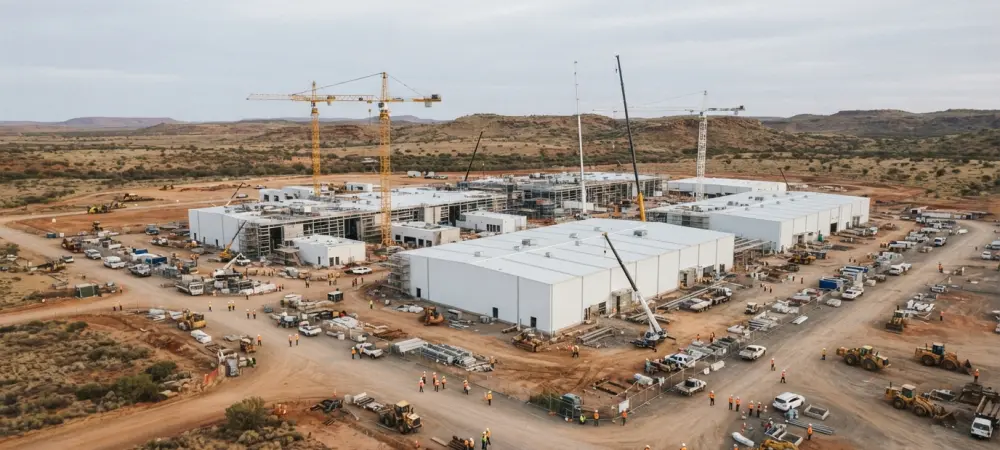
The sheer scale of the global digital appetite has transformed data centers from secondary utility buildings into the backbone of modern industrial power, driving a race for capacity that rivals the gold rushes of previous centuries. Australia has emerged as a critical hub in this evolution, where the intersection of land availability and advanced connectivity creates a unique environment for hyperscale expansion. AirTrunk, having recently solidified its financial backing through a landmark $16.1 billion acquisition by Blackstone and the Canada Pension Plan, is now executing a visionary strategy to reshape the Australian landscape. This investment represents more than just a capital infusion; it signifies a fundamental shift in how large-scale infrastructure projects are integrated into the national economy. By identifying strategic locations in Victoria and New South Wales, the developer is positioning itself to handle the immense workloads required by modern enterprises while addressing the logistical challenges of massive builds.
Strategic Growth in the Australian Market
The Mickleham Project: Northern Melbourne Infrastructure
In the northern outskirts of Melbourne, a massive transformation is underway within the Fusion Business Park as AirTrunk formalizes its commitment to a sprawling one-million-square-foot campus in Mickleham. This ambitious project is slated to house up to seven high-capacity buildings, effectively turning a previously speculative site into a cornerstone of the Victorian digital corridor. The magnitude of this development reflects a calculated response to the surging demand for cloud services and data residency requirements that have become paramount for Australian businesses. By choosing a location with significant room for expansion, the company ensures that it can scale alongside its clients, providing the necessary floor space and power density to support high-performance computing clusters. This move effectively consolidates the northern Melbourne area as a primary zone for technological development, attracting further investment into the local supply chain.
Regional Connectivity and Resilient Engineering
Beyond the physical footprint of the campus, the Mickleham facility serves as a vital node in a broader network designed to reduce latency and improve the reliability of digital services across the southern states. The development process emphasizes a phased approach, allowing for modular growth that aligns with current market conditions while preparing for the inevitable surge in data traffic. Engineering teams are focused on creating a resilient environment that can withstand external fluctuations while maintaining the strict uptime requirements demanded by global hyperscale clients. This concentration of technical resources in the Mickleham region not only strengthens the local economy through the creation of specialized construction jobs but also establishes a template for how large-scale industrial projects can be successfully navigated through complex regulatory environments. The project underscores the importance of strategic land acquisition in maintaining a competitive edge.
Sustainable Integration and Community Focus
Reclaiming Industrial Ground in New South Wales
Further north, in New South Wales, the repurposing of the former Hydro Aluminum Kurri Kurri Smelter site marks a significant milestone in the transition from heavy industry to the modern digital era. This 540MW facility is one of the most substantial projects of its kind, integrated into the broader Loxford Waters redevelopment project. By transforming a vacant industrial site into a state-of-the-art technological hub, AirTrunk is demonstrating how legacy assets can be revitalized to serve contemporary needs without requiring the disruption of greenfield land. The scale of this facility is noteworthy, as its power capacity far exceeds typical data centers, positioning it as a primary engine for regional processing. This redevelopment strategy breathes new life into the Kurri Kurri area, providing a stable economic foundation that replaces the lost industrial output of the former smelter while aligning with statewide digital transformation goals.
Future Considerations for Infrastructure Development
The expansion of high-capacity data infrastructure in Australia proves that the successful integration of hyperscale facilities requires a departure from traditional industrial development models. Stakeholders realize that long-term operational success depends as much on community acceptance and environmental stewardship as it does on raw computing power. Moving forward, developers and investors should prioritize the repurposing of existing industrial sites and the implementation of water-free cooling technologies to mitigate the environmental impact of massive builds. It is essential for project planners to engage with local populations through direct financial incentives and vocational programs to secure a sustainable social license. By aligning corporate growth with national energy transition goals, the sector demonstrates it can serve as a stabilizing force for the electrical grid. Future projects must continue to innovate in resource management to ensure the digital backbone remains resilient.