

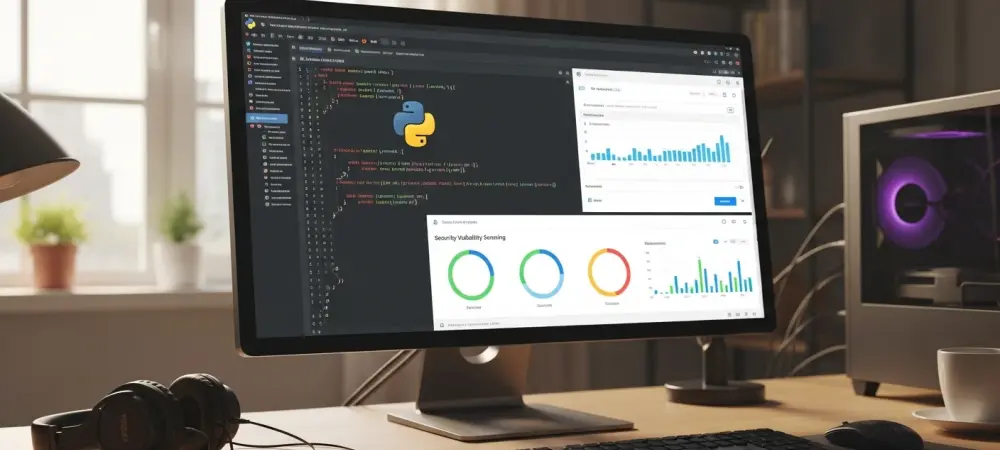
The rapid evolution of integrated development environments has reached a point where artificial intelligence functions as a foundational pillar rather than a mere peripheral extension of the programmer’s traditional toolkit. This paradigm shift is particularly evident within the Python ecosystem, where the language’s inherent readability serves as a bridge between human intent and machine execution. Developers no longer view AI as a curiosity but as a critical collaborator that manages the heavy lifting of boilerplate code and repetitive syntax. As software complexity scales across cloud-native architectures and distributed systems, the ability to leverage intelligent assistants becomes the differentiating factor between stagnant projects and those that achieve rapid market deployment. This transformation is redefining the very identity of a software engineer, moving the profession away from rote manual input toward a more strategic role centered on high-level architectural design and complex logic validation. By automating the more mundane aspects of the development lifecycle, these tools enable a level of productivity that was previously unattainable within standard engineering timelines.
Python’s Synergy with AI Tools
Python’s unique architectural design makes it the most compatible language for large language models because its syntax closely mirrors the logical structures of human thought and natural language communication. This compatibility allows modern AI models to ingest massive datasets of open-source repositories and return suggestions that are not only syntactically correct but also contextually relevant to the specific problem being solved. Current trends indicate that most developers have moved away from web-based chat interfaces in favor of deeply integrated solutions within environments like PyCharm or VS Code. These tools provide real-time code completion that adapts to the local project structure, understanding how different modules interact without requiring the developer to copy and paste code into external platforms. This seamless flow reduces the cognitive load on the engineer, as the AI anticipates the next line of logic based on the specific libraries and coding patterns already present in the workspace.
Beyond the basic generation of code snippets, intelligent assistants are now demonstrating an advanced mastery of specialized Python frameworks such as FastAPI, Django, and the scientific stack including NumPy and Pandas. These tools can automatically suggest optimized data processing pipelines or identify potential performance bottlenecks in a web application’s middleware before the code is even committed to a repository. One of the most significant advantages found in this new workflow is the ability to generate comprehensive unit tests and technical documentation on the fly, which historically accounted for a substantial portion of a developer’s manual workload. By handling these necessary but time-consuming tasks, AI allows engineering teams to maintain rigorous quality standards while accelerating the pace of production. This shift ensures that the focus remains on solving unique business problems rather than wrestling with the repetitive boilerplate code that often bogs down large-scale software projects.
Human Oversight and Security Integration
Despite the impressive capabilities of automated coding assistants, the industry is seeing a renewed emphasis on the necessity of human oversight to ensure the integrity of the final software product. A successful development strategy relies on a symbiotic relationship where the AI acts as a high-speed generator of ideas and structures, while the human developer serves as the primary validator and critical thinker. Relying too heavily on machine-generated output can lead to technical debt if the underlying logic is not thoroughly understood and verified by a seasoned professional. Engineers are finding that the most effective way to utilize these tools is to treat them as junior partners that require clear direction and constant review. This approach preserves the developer’s role as the main architect of the system, ensuring that they retain full ownership of the logic and can perform complex troubleshooting when the system behaves unexpectedly in a production environment.
Safety and security have emerged as the most critical concerns when integrating AI-generated code into sensitive enterprise applications or financial systems. There is a documented risk that large language models might suggest deprecated library functions or introduce subtle security vulnerabilities such as injection flaws if left unchecked. To counter these challenges, modern engineering teams are adopting a multi-layered security approach that integrates AI coding tools with automated vulnerability scanners like Bright Security or Snyk. By embedding these scanning solutions directly into the continuous integration and delivery pipeline, organizations can automatically verify every line of code for compliance with modern security standards. This secure-by-design methodology allows teams to reap the speed benefits of AI while maintaining a robust defense against potential exploits. Consequently, the development process has become more resilient, as security is no longer an afterthought but a fundamental component of the generation phase itself.
The Shift Toward Holistic Project Intelligence
The current trajectory of Python development suggests a transition from tactical, file-level assistance toward a more holistic, project-wide intelligence that understands the entire software development lifecycle. While earlier iterations of AI tools focused on completing a single function or script, modern systems are gaining the ability to analyze how changes in a specific microservice might ripple through an entire distributed architecture. This high-level visibility allows for more intelligent refactoring and helps maintain consistency across large codebases where multiple teams are contributing simultaneously. By monitoring the interactions between different modules, AI can flag potential architectural conflicts or suggest improvements to the system’s overall scalability and maintainability. This shift marks the beginning of a new era where the machine understands the intent behind the project, offering suggestions that align with long-term goals rather than just solving immediate syntax errors or basic logical hurdles.
As these models continue to evolve from simple coding assistants into strategic partners, they are providing deeper insights into the long-term health and sustainability of software projects. This progression includes the ability to predict future maintenance requirements and identify areas of the code that may become technical debt as the application scales. By analyzing historical commit data and project requirements, AI can offer advice on which architectural patterns will best support planned feature expansions or increased user loads. This level of foresight transforms the developer’s workflow into a proactive rather than reactive process, where potential issues are addressed months before they manifest as critical failures. The integration of such strategic intelligence ensures that Python applications are built on a solid foundation, capable of adapting to changing technological demands without requiring a complete overhaul of the existing codebase. This evolution is fundamentally changing how senior engineers plan their development roadmaps.
The shift toward an AI-augmented Python environment redefined the standard operating procedures for engineering teams across the entire technology sector. Organizations that successfully navigated this transition established clear protocols for the validation of machine-generated code and prioritized the continuous training of their staff in security best practices. It became clear that the most effective leaders were those who integrated automated scanning tools directly into their development pipelines to neutralize the risks of inherited vulnerabilities. Moving forward, the industry adopted a rigorous approach to software architecture, where developers transitioned into roles focused on oversight and high-level system design. To remain competitive, engineering departments emphasized the need for a robust testing culture and the implementation of project-wide intelligence tools. These steps ensured that the speed gained from artificial intelligence was matched by a corresponding increase in application reliability and long-term maintainability.