

The Dawn of a New Era in Pedagogy
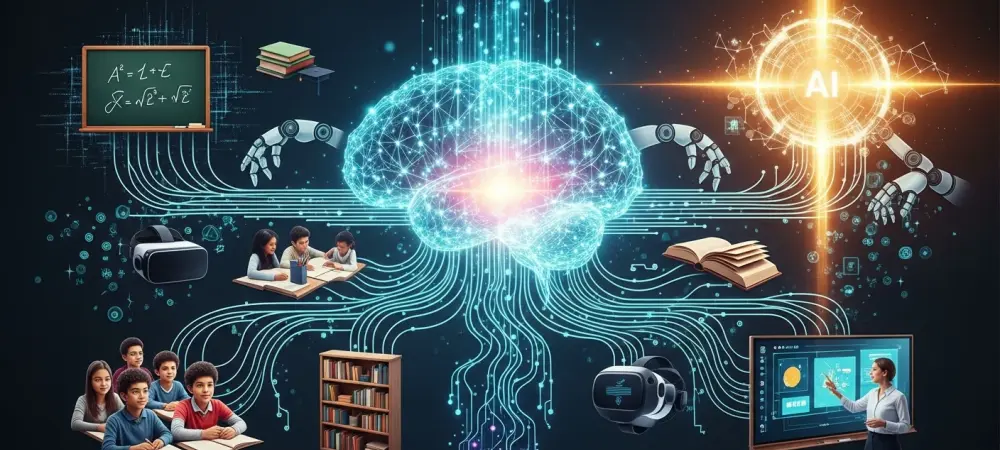
The global educational technology market has reached a critical juncture where the integration of artificial intelligence is no longer a peripheral upgrade but the central nervous system of modern learning environments. The contemporary educational landscape is undergoing a profound and irreversible transformation, fueled by the rapid advancement of artificial intelligence. At the heart of this shift is the transition from rigid, traditional instructional methods to dynamic, technology-driven ecosystems that prioritize personalization and efficiency. This analysis explores how AI-driven tools are no longer just experimental novelties but have become essential catalysts for change in classrooms, homes, and independent study environments. By examining the move toward “Smarter Classrooms,” the objective is to uncover how these innovations bridge the gap between high-level pedagogical goals and the daily logistical challenges faced by educators and parents. The current market trajectory suggests that institutions failing to adopt these systems risk obsolescence as the demand for tailored learning experiences continues to soar across all age groups and socioeconomic backgrounds.
From Static Textbooks to Dynamic Systems
Traditional education has long struggled with a “one-size-fits-all” approach, a historical byproduct of the industrial-age schooling model that prioritized standardization over individual mastery. In a standard classroom setting, teachers have historically been forced to use static, repetitive materials that may be too advanced for some students while being insufficiently challenging for others. This mismatch leads to a cascade of negative outcomes, including student disengagement, a lack of motivation, and uneven academic progress. Furthermore, the manual creation of diverse materials was once a labor-intensive process that consumed hours of an educator’s time—time that could have been better spent on direct mentorship or interactive instruction. Understanding this background is vital, as it highlights why the current shift toward automation is not merely a trend, but a necessary evolution to solve systemic inefficiencies that have plagued public and private institutions for decades.
The Strategic Power of Automated Content Creation
Tailoring the Learning Experience Through Personalization
One of the most critical aspects of AI in education is the ability to provide adaptive personalization at a granular level. Unlike traditional textbooks, AI-generated content can be adjusted to match the exact grade level and complexity required for a specific learner. Platforms like Brainator illustrate this by processing user inputs—such as specific subjects and difficulty levels—to generate ready-to-use materials like worksheets and quizzes in seconds. This ensures that no student is left behind or held back by a curriculum that does not fit the individual pace. By utilizing real-world data and user feedback, these tools allow for a high degree of customization that was previously impossible to achieve at scale. This level of responsiveness is fundamental to maintaining student interest and ensuring that pedagogical goals are met in a timely fashion.
Enhancing Efficiency and Reducing Educator Burnout
Another essential angle is the shift in how educators and parents manage their time to maximize student outcomes. The primary subject of this analysis is the use of AI to alleviate administrative burdens, specifically the “planning-to-execution” gap that often leads to systemic fatigue. Professional educators can use AI tools to maintain high standards of material quality without the burnout associated with manual planning. Similarly, parents and homeschoolers benefit from a professional-grade curriculum that can be adjusted on the fly. This democratization of curriculum building allows for a more flexible approach to learning, where the focus moves from the labor of creating content to the impact of delivering it. As a result, the educational sector is seeing a renewed focus on the human elements of teaching, which were previously sidelined by clerical duties.
Bridging the Accessibility Gap in Global Education
The integration of AI also addresses deep-seated complexities regarding the cost and accessibility of high-quality resources on a global scale. Traditionally, specialized educational materials were prohibitively expensive or required high levels of technical expertise to develop. AI tools offer a cost-effective alternative, allowing users to generate their own materials on demand and bypassing the need for costly subscriptions or pre-packaged physical workbooks. There is a common misunderstanding that AI replaces the teacher; however, industry observations suggest that it actually serves as a powerful auxiliary. By handling repetitive tasks, AI liberates humans to focus on the nuanced aspects of education, such as emotional support, ethical guidance, and critical thinking.
Predicting the Future of the Smarter Classroom
As the horizon of learning technology expands, the role of the educator is evolving from a “content creator” to a “facilitator” and “mentor.” Emerging trends indicate that AI integration is moving from an experimental phase to an essential requirement for any modern educational institution. Expectations for future innovations include even more sophisticated predictive analytics that can identify a student’s struggle before a quiz is even administered. Additionally, the rise of “EdTech” will likely lead to regulatory changes and new standards for how data-driven learning is implemented throughout the academic sector. The overarching trend is clear: the future of learning will be defined by speed, extreme personalization, and universal accessibility. This transformation will likely lead to the complete decentralization of educational resources, making elite-level instruction available to anyone with a basic digital connection.
Practical Strategies for Navigating the AI Shift
To successfully navigate this transformation, stakeholders should adopt proactive strategies that align with current technological capabilities. For teachers, the best practice is to embrace AI as a co-pilot rather than a competitor, using it to automate grading and worksheet generation to free up time for student interaction. Parents should leverage these tools to supplement school curriculums, creating reinforcement exercises that target a child’s specific weaknesses. For educational institutions, the recommendation is to invest in low-barrier-to-entry platforms that do not require extensive technical training for the staff. By applying these insights, users can transition from being passive consumers of technology to active architects of a customized learning journey. Those who master these tools early will find themselves at a significant advantage in terms of pedagogical effectiveness and administrative efficiency.
Embracing a More Equitable Educational Future
The digital transformation of education stood as an inevitable and necessary step in an increasingly fast-paced world. As this analysis explored, the integration of AI tools reduced the friction of content creation and allowed the focus of education to return to what mattered most: the student’s journey toward mastery. This topic remained significant because it directly impacted the cultivation of future generations and their ability to compete in a global economy. By working in tandem with technology, educators created a more efficient, engaging, and equitable learning environment for students across the globe. The arrival of these systems signaled a collaborative era between human ingenuity and artificial intelligence, ensuring that instructional standards remained high while operational costs decreased. Ultimately, the successful implementation of these technologies provided a foundation for a more inclusive and effective educational paradigm that catered to the needs of every individual learner. This shift ensured that the potential of every student could be realized through precision-engineered support systems.