

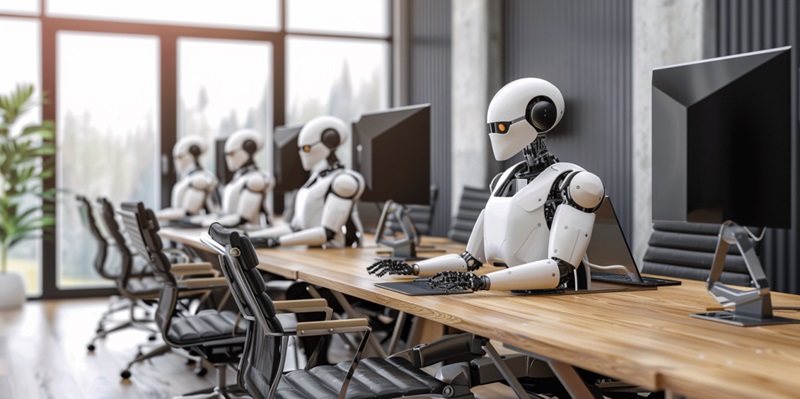
The modern workplace is undergoing an unprecedented metamorphosis, owed largely to the advent and integration of artificial intelligence (AI). As the digital age propels forward, white-collar professionals are shifting from mere participants to proactive instigators in this technological evolution. They employ AI to skillfully navigate the onslaught of emails, chat messages, and back-to-back meetings, extracting enhanced productivity from their workdays. This phenomenon has escalated to where a remarkable 75% of desk workers now incorporate AI into their daily office routines.
AI Adoption Across Generations
The allure of AI in the workplace is not confined to the tech-savvy or the young. It spans across the generational divide, with Baby Boomers to Gen Z professionals finding utility in AI tools. This cross-generational embrace is testament to AI’s capability of transcending traditional professional boundaries, demonstrating its critical role in the functioning of a modern, efficient workplace. The universal appeal ensures that the workforce, irrespective of age, is becoming increasingly AI-centric, revolutionizing labor practices across the board.
AI is no longer just a trendy gadget or software for personal entertainment; it has become an essential cog in the machinery of business operations. The technology’s ability to automate routine tasks and provide analytical insights is liberating workers from mundane duties, allowing them to focus on more strategic, creative work. This transition underscores the depth of AI’s reach, affirming its status as a powerful equalizer among the working generations.
Statistical Insights on AI in the Workplace
Emerging labor trend reports by industry giants such as Microsoft and LinkedIn showcase a vivid image of AI’s penetration into the white-collar domain. In a span of just six months, there has been a near doubling in the percentage of office workers who utilize AI as part of their roles. These statistics are not just numbers; they are indicators of a digital tidal wave that engulfs conventional work practices, endorsing AI’s growing significance in everyday professional tasks and decision-making processes.
The fact that three-quarters of desk workers now interlace their responsibilities with AI assistance marks a watershed moment for productivity and efficiency. Despite such burgeoning numbers, surprisingly, less than half of those harnessing AI’s capabilities have been formally trained in its use. This discrepancy highlights not only the natural inclination of modern workers towards AI but also the pressing need for structured AI education within the workplace.
Self-Directed AI Skill Acquisition
With formal training in AI remaining a luxury for many, the workforce is resorting to a self-directed approach towards AI literacy. A growing trend on professional networking sites like LinkedIn reveals an increasing number of content writers, marketers, and designers are proudly adding AI to their skill repertoire. This self-teaching ethos underscores the resourcefulness and adaptability of today’s employees and their determination to not only keep pace with but master the digital future.
This proactive personal development effort is a clear signal of workers taking charge of their career trajectories. It’s a response to a competitive job market where AI proficiency is rapidly becoming a differentiator, and an acknowledgment that staying relevant in one’s professional life now mandates a certain literacy in AI and automation tools. The surge in AI skill endorsements underlines the readiness of the workforce to transform challenges into opportunities.
AI Competence as an Employment Advantage
Nurturing AI skills is translating into a significant competitive advantage in the job market. Businesses are scrambling to onboard individuals adept in AI, recognizing the importance of such expertise in driving innovation and staying ahead in a rapidly evolving landscape. The ability to comprehend and apply AI is not just a desirable trait but is increasingly becoming a determining factor in employability.
Yet, it’s not just about securing or maintaining employment. Mastery of AI tools has a direct correlation with job satisfaction and resilience against professional burnout. Employees armed with AI competencies report an empowerment that goes beyond fiscal remuneration—it’s the satisfaction derived from being at the forefront of workplace innovation and efficiency. This empowerment becomes especially critical in an era where a significant portion of the workforce contemplates a job change within a year.
AI’s Impact on Productivity and Workload
The adoption of AI within the workforce has proven to be more than a trend; it’s a productivity catalyst. Regular users of AI tools are reportedly reclaiming an average of 30 minutes per day, demonstrating AI’s concrete impact on reducing workloads. These minutes add up, offering substantial time savings and enabling employees to direct their efforts towards high-value tasks that machines cannot replicate.
Nonetheless, this boon in productivity does not come without its pressures. The expectation for employees to continually seek new ways to integrate AI into their workflow intensifies, placing an onus on both the individual and the corporate structure to maintain this upward efficiency curve. It’s a delicate balance where companies must support their workforce in the AI journey, ensuring that they are not overwhelmed but instead are empowered by these intelligent systems.
Challenges and Ethical Considerations of Workplace AI
Despite the evident benefits, introducing AI into the workplace surfaces challenges and ethical concerns. There is an emerging skill gap that threatens to widen if left unaddressed, and ethical quandaries over surveillance and privacy are increasingly coming to the fore. Moreover, the specter of job displacement looms, as automation and intelligent systems become more capable and widespread.
It’s imperative for both employees and employers to remain vigilant and responsive to these issues. Crafting policies that promote equitable access to AI training and preserving a balance between technological efficiency and human creativity is crucial. As we sail into this brave new world of work, it’s the collective responsibility of all stakeholders to navigate the ethical landscape of AI with as much dedication as we do its technical potential.
Navigating the AI Paradox
The landscape of work is transforming in ways never seen before, with artificial intelligence (AI) at the forefront of this change. White-collar workers are no longer just passive users of technology; they’ve become leaders in incorporating AI into their daily office lives. Their workdays are increasingly managed by AI tools, which help them sort through endless emails, instant messages, and maintain packed meeting schedules. This symbiosis with AI has become so ubiquitous that an astonishing three-quarters of office staff members now use AI as part of their everyday tasks. These tech-savvy professionals are capitalizing on AI’s capabilities to maximize productivity, redefining efficiency in the modern workplace. As digital advancements accelerate, the adoption of AI by desk-bound workers is not just a trend but an integral part of their work culture, signaling a new era of corporate productivity.