

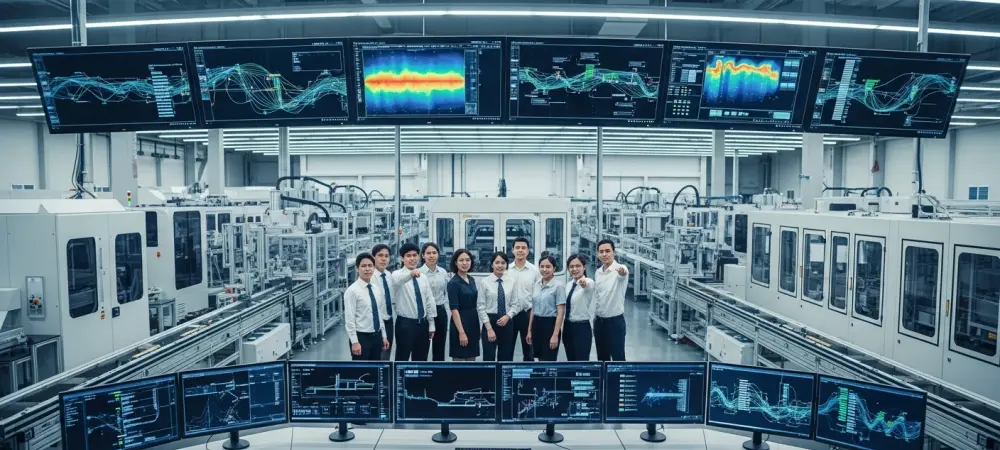
The transition from traditional digital automation to an AI-first IT infrastructure represents a fundamental shift in how industrial facilities manage the delicate balance between output and operational efficiency. Manufacturing leaders no longer view artificial intelligence as a peripheral tool for niche optimization but as the central nervous system that dictates hardware responses and software protocols across the entire value chain. This paradigm shift has moved the industry away from reactive maintenance and static scheduling toward a model of continuous, self-correcting growth. In these high-tech environments, neural networks process petabytes of sensor data to predict failure points long before a technician notices a vibration, while large language models act as intuitive interfaces for complex machinery. By embedding intelligence directly into the core IT stack, factories are achieving levels of precision that were previously considered impossible, effectively eliminating the friction between raw data and actionable insight that plagued industrial operations.
Orchestrating Autonomous Operations: Generative Models in Action
Generative design and real-time supply chain orchestration have become the hallmarks of this new industrial era, allowing companies to iterate on product prototypes at a pace that defies traditional manufacturing timelines. When AI-first IT is deployed, the software does not merely monitor production but actively participates in the creative process by suggesting material alternatives or structural modifications based on current global logistics constraints. For instance, if a shortage of specialized titanium occurs, the system can instantly recalibrate the design parameters for aerospace components to utilize available alloys without compromising structural integrity. This level of agility ensures that production lines remain active despite external market volatility, as the AI autonomously sources alternatives and adjusts machine parameters to accommodate different physical properties. The reliance on human-led procurement and static engineering blueprints is decreasing, replaced by a fluid, intelligence-driven workflow. On the factory floor, this intelligence translates into a sophisticated layer of edge computing that empowers individual robotic units to make high-stakes decisions without constant centralized oversight. This decentralized approach reduces latency and prevents the bottlenecks that often occur when massive datasets must be uploaded to the cloud for processing before a command is issued. Modern assembly lines now utilize computer vision systems that do not just identify defects but understand the context of those defects to determine whether a part requires a simple adjustment or total rejection. Furthermore, these systems communicate with each other through a mesh network, allowing a robotic arm to slow down its pace if it detects that a subsequent station is experiencing a minor mechanical delay. Such granular control creates a synchronized ecosystem where downtime is minimized and the throughput is constantly optimized for current energy costs and labor availability, turning the factory into an evolving organism.
Strategic Implementation: From Legacy Constraints to Scalable Intelligence
Transitioning to an AI-first strategy requires a comprehensive overhaul of legacy IT architectures that were originally designed for siloed data storage and manual reporting. Manufacturers are now investing heavily in unified data fabrics that dissolve the barriers between operational technology on the floor and information technology in the back office. This integration is vital because the effectiveness of any AI model is directly proportional to the quality and accessibility of the data it consumes. Security protocols have also evolved into an AI-driven posture where anomaly detection systems monitor network traffic for subtle signs of cyber-espionage or ransomware attacks that could paralyze automated production. By prioritizing a secure, data-centric foundation, organizations can scale their intelligent systems across global sites from 2026 to 2030, ensuring that a performance optimization discovered in one plant is instantly replicated in another. This global synchronization represents a competitive advantage. Organizations that successfully navigated the shift toward AI-first IT prioritized the development of a robust data governance framework and fostered a culture of continuous technical upskilling. They replaced rigid hierarchy with flexible, cross-functional teams that focused on the integration of machine learning into existing workflows rather than treating technology as an isolated solution. The most effective strategies involved a phased rollout where high-impact pilot programs provided the necessary proof of concept to justify larger capital expenditures in edge hardware and specialized AI accelerators. Moving forward, the focus shifted toward ensuring that these systems remained ethical and transparent, with clear audit trails for every autonomous decision made on the assembly line. Leaders addressed the challenge of interoperability by adopting open-source standards that allowed diverse equipment from multiple vendors to communicate within the same ecosystem. Ultimately, the successful reshaping of the sector depended on treating information as the most valuable raw material.