

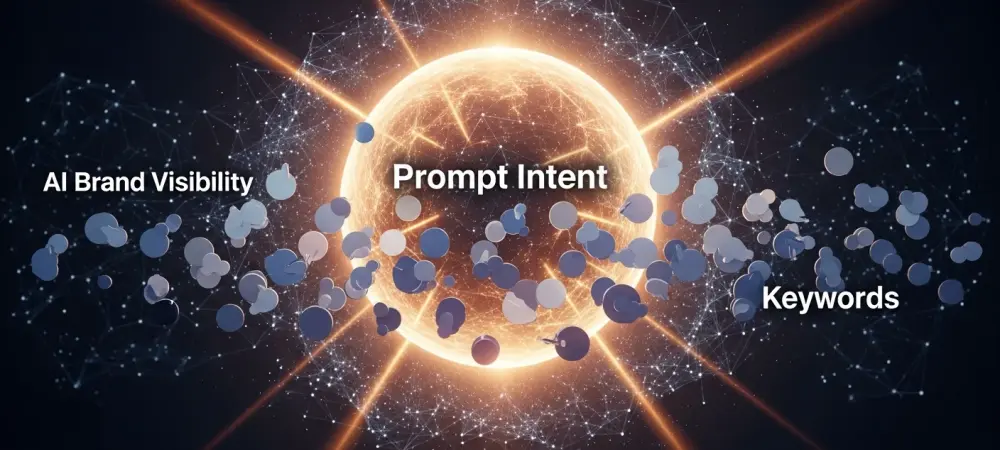
The rapid evolution of generative artificial intelligence has fundamentally altered the digital marketing landscape, prompting experts to reconsider how brand visibility is measured across various conversational platforms. For years, search engine optimization relied heavily on the precise placement of keywords, yet the transition toward large language models suggests that the specific phrasing used by a human being may matter significantly less than the underlying intent of the inquiry. Modern marketers often express concern that a slight change in how a user asks a question could lead to a completely different set of brand recommendations, potentially making visibility tracking an impossible task. However, recent data from comprehensive industry studies, including an extensive analysis by Peec AI, indicates that these systems are far more resilient to linguistic variation than previously assumed. This shift from rigid keyword-centric tracking to more nuanced intent-based analysis represents a major milestone in understanding how artificial intelligence processes human language and assigns value to different brands during a search session.
The prevailing logic among early adopters of AI-integrated search was that every unique wording required a unique optimization strategy to ensure a company remained at the top of the generated list. This fear was rooted in the traditional understanding of search algorithms, which were notoriously sensitive to exact match queries and specific long-tail keywords. In contrast, current research into how AI models perceive user input suggests that there is a high level of stability in brand mentions, even when users use vastly different vocabulary to describe the same problem. This stability allows for a more streamlined approach to digital presence, where the focus moves away from capturing every possible linguistic permutation and toward mastering the core concepts that drive recommendation engines. As AI platforms become more integrated into daily consumer habits, the ability to distinguish between superficial phrasing changes and genuine shifts in user intent will become the primary differentiator for successful brand management in a conversational world.
1. Core Discoveries: Phrasing Predictability and Brand Impact
The investigation into user behavior reveals a surprising level of consistency in how individuals interact with artificial intelligence, with over 90% of user variations sharing a similar core semantic meaning. While it might seem that millions of people would approach a problem from completely unique angles, the data shows that most queries cluster around a few central concepts that the AI recognizes easily. This high level of predictability means that small changes in vocabulary—such as using the word “best” instead of “top-rated”—rarely result in a significant shift in the brands that the AI chooses to highlight. Instead of focusing on specific words, the recommendation engines prioritize the intent behind the query, effectively grouping thousands of different phrases into a single actionable category. This suggests that the internal logic of these models is designed to look past the surface-level wording to understand the problem the user is trying to solve, ensuring that brand visibility remains relatively stable across a broad spectrum of natural language inputs.
Despite this inherent stability, the style in which a request is presented can still have a measurable impact on the depth of brand visibility. For instance, structured requests that specifically ask for a list or a comparison have been shown to increase brand visibility by up to 20% compared to open-ended conversational prompts. When a user explicitly asks for a “list of options” or “top five brands,” the AI engine is forced to retrieve more entries from its internal database, providing more opportunities for mid-tier brands to appear alongside industry leaders. Furthermore, the sensitivity of the AI to wording changes is not uniform across the entire customer journey. The “middle-of-funnel” stage, where users are actively comparing features or seeking specific solutions, is the most sensitive to minor phrasing tweaks. In contrast, the top and bottom of the funnel—representing broad awareness and specific brand intent—show much higher levels of consistency regardless of how the user chooses to frame their request.
2. Research Methodology: Analyzing AI Engine Responses
To reach these conclusions, researchers conducted an exhaustive study involving over 37,000 unique AI responses across the most prominent platforms currently in use, including ChatGPT, Gemini, and Perplexity. This massive dataset allowed for a granular look at how different engines react to the same set of core inquiries presented in varying styles. The study was divided into two distinct parts to capture both natural human behavior and controlled linguistic shifts. Study A focused on a human-centric approach, examining nearly 300 human-written prompts to observe the natural variation in how people describe their needs to an AI assistant. This provided a baseline for what “normal” variation looks like in a real-world setting. By analyzing these prompts, the researchers were able to map out the semantic space that users occupy, identifying the common linguistic patterns that define specific categories of interest, such as consumer electronics or financial services.
Study B took a more technical and controlled approach by using small semantic shifts to identify the exact “breaking point” where an AI engine decides to change its brand recommendations. By systematically altering one word or concept at a time, the researchers could measure the precise impact of semantic distance on the output of the model. To quantify this distance, the team utilized cosine similarity, a mathematical technique that measures how close two pieces of text are in a high-dimensional vector space. This technical approach allowed the researchers to move beyond qualitative observations and establish hard data on how much a prompt can change before the brand results begin to drift. The combination of human observation and mathematical modeling provided a comprehensive view of the relationship between user input and AI output, debunking the myth that these systems are unpredictable black boxes that react wildly to every minor change in user phrasing.
3. Data Insights: Semantic Drift and the Visibility Threshold
The resulting data demonstrated that human-generated prompts are remarkably consistent, showing very little semantic drift even when individuals believe they are being unique in their phrasing. Most human prompts cluster tightly together in the semantic space, which explains why brand visibility remains so steady across different user sessions. The study identified a specific visibility threshold, noting that brand mentions typically remain unchanged until a prompt reaches a significant semantic shift, usually measured as a similarity score below 0.50. Until this threshold is crossed, the AI engine views the different phrasings as essentially the same question and provides the same set of brand recommendations. This discovery is a relief for marketers, as it suggests that they do not need to track thousands of different keyword combinations to get an accurate picture of their brand’s performance in the AI search environment. However, the research also warned against a “semantic blind spot” where high similarity scores do not necessarily mean identical intent. For example, a prompt asking for a service in “New York” and one asking for the same service in “Los Angeles” will have a very high cosine similarity score because almost all the words are the same, yet the intent is fundamentally different. In these cases, the AI recognizes the geographic constraint and shifts its brand recommendations entirely. Beyond geographic shifts, the research highlighted that keyword-heavy prompts actually outperform conversational, natural language prompts in terms of brand density. When a user provides a list of specific requirements or constraints—such as a budget range or specific required features—the AI tends to be more precise in its brand selection. Interestingly, these constraints affect different engines in various ways; sometimes they increase the number of brands surfaced, while other times they cause the engine to narrow its focus to just a few highly relevant options.
4. Funnel Dynamics: The Resilience of Brand Recommendations
Understanding how brand visibility shifts throughout the customer journey is essential for any strategic marketing effort, and the data shows that different funnel stages react differently to prompt variations. At the top-of-funnel (TOFU), where users are asking broad category queries such as “What are the best types of running shoes?”, there is a high degree of stability. Because these queries are general, the AI engines rely on a well-established set of industry leaders and common knowledge to provide answers. Small changes in how the user asks about the category do not usually lead the AI to suggest entirely different brands, as the foundational data for these broad topics is very consistent across the model’s training set. This stability provides a solid baseline for brand awareness, allowing companies to focus on broad category authority rather than obsessing over the nuances of introductory phrasing. In contrast, the middle-of-funnel (MOFU) stage is characterized by high sensitivity to small details and specific phrasing choices. This is the stage where users are comparing specific features, looking for “best value,” or asking for brands that meet a particular set of criteria. At this point, minor tweaks to the prompt—such as adding a requirement for “sustainable materials” or a specific price point—can trigger a completely different set of brand recommendations. This makes the MOFU the most critical area for marketers to monitor and optimize, as it is the point where the AI’s “breaking point” is most easily reached. Finally, the bottom-of-funnel (BOFU) returns to a state of relative stability, largely because these queries often include specific brand names. When a user asks a question like “How does the Brand X warranty compare to others?”, the presence of a specific brand name anchors the query, making the AI much more likely to return consistent information regardless of the surrounding sentence structure.
5. Comparative Performance: Engine Specificity and Stabilization
Each major AI engine exhibits its own unique personality and behavior when it comes to brand visibility and phrasing sensitivity. Google’s Gemini, for instance, demonstrated the fastest stabilization for brand mentions in the study, meaning it quickly identifies the core intent and sticks to a consistent set of brand recommendations even as the phrasing changes. This reflects Google’s long history of intent-based search optimization and its ability to map diverse queries to a central set of entities. On the other hand, Google AI Overviews—the integrated search experience—showed the highest sensitivity to middle-of-funnel phrasing. This suggests that when AI is used to augment a traditional search engine, the interplay between live web results and generative models creates a more volatile environment where small changes in user input can lead to significant shifts in the summarized brand list.
The performance of ChatGPT and Perplexity offers a different perspective on visibility, as these platforms often exhibit wider visibility penalties as phrasing drifts away from the semantic center. Perplexity, which functions as an AI-powered answer engine with a heavy focus on current web citations, is particularly sensitive to how a user frames a question about a specific niche. If the phrasing becomes too obscure or departs too far from the common way a topic is discussed online, the engine may struggle to maintain consistent brand recommendations. Similarly, ChatGPT’s behavior can vary based on the specific version of the model being used, with newer iterations showing more sophistication in handling complex intent. For marketers, this means that visibility cannot be tracked as a single metric across all platforms; instead, it requires a nuanced understanding of how each specific engine interprets language and at what point it decides to switch from one set of brand recommendations to another.
6. Practical Implementation: The Six-Step Measurement Playbook
To navigate this complex landscape, organizations must adopt a structured approach to measuring and maintaining their visibility within AI engines. The first step involves categorizing queries by the customer journey phase immediately, focusing tracking efforts on the middle-of-funnel where wording matters the most. Since this is the area of highest sensitivity, it provides the most actionable data for refining brand presence. Second, it is crucial to base all tracking on how real customers actually speak rather than relying on guessed keywords. By using natural phrasing that matches the target audience’s intent, companies can ensure their data reflects the actual semantic space where their customers are operating. Third, different formatting types should be kept separate in any analysis. One should not compare the brand visibility results of a list-based prompt with those of an open-ended question, as the baseline for brand density is naturally higher in structured formats. The fourth step requires paying close attention to specific requirements and constraints in middle-funnel searches, such as budget or feature sets. Tracking how minor changes in these variables shift the brands being surfaced allows a company to identify the specific “semantic neighbors” they are competing with. Fifth, it is advisable to avoid focusing on rare or extreme phrasing outliers that represent only a tiny fraction of user behavior. Concentrating the optimization budget on the common semantic center where most users cluster is a far more efficient use of resources. Finally, the sixth step is to analyze performance for every AI platform individually. Because engines like Gemini and Perplexity behave so differently, reporting data per engine is the only way to distinguish between broader market trends and the specific algorithmic quirks of a single platform. This playbook provides a clear path forward for maintaining visibility in an era where intent is the primary currency of search.
The shift toward intent-based AI search required a total re-evaluation of how brand performance was historically documented and analyzed. Marketers discovered that the old obsession with capturing every possible keyword variation was largely unnecessary, as the models proved capable of identifying core meanings across thousands of different prompts. By focusing on the semantic center of a query and understanding the specific sensitivity of the middle-funnel, brands were able to maintain a more consistent and impactful presence. The study emphasized that while the wording of a prompt might change, the fundamental problems users were trying to solve remained remarkably stable, providing a reliable foundation for long-term digital strategy.
The industry moved away from reactive keyword chasing and instead moved toward a more sophisticated model of intent management. Organizations that prioritized the quality of their data and the clarity of their brand’s core value propositions found that they were naturally favored by AI recommendation engines. The research highlighted that structure and context were the true drivers of visibility, rather than the superficial use of trending vocabulary. As the conversational search landscape continued to mature, the focus remained on providing the most relevant, feature-rich information that addressed the user’s ultimate goal, ensuring that brands remained visible at the critical moments of the consumer decision-making process.