

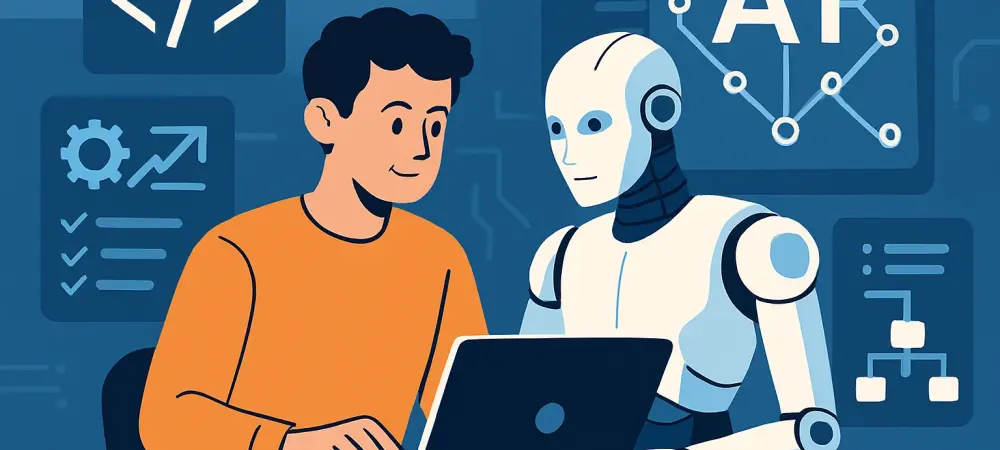
Imagine a world where software development is no longer solely dependent on human coders, but instead, intelligent systems autonomously tackle complex coding challenges, streamline workflows, and innovate at a pace previously unimaginable. This scenario is rapidly becoming reality with the rise of agentic AI—advanced systems designed to make independent decisions and execute tasks with minimal human intervention. These technologies are reshaping the landscape of software engineering, promising to redefine productivity and creativity in the field. As enterprises increasingly integrate AI into their IT strategies, the implications for developers, workflows, and even job roles are profound. From automating repetitive tasks to enhancing problem-solving capabilities, agentic AI is at the forefront of a technological revolution. This transformation, while brimming with potential, also brings questions about reliability, security, and the future of human expertise in tech.
The impact of agentic AI on software engineering cannot be overstated, as it fundamentally alters how code is written, tested, and deployed. Unlike traditional tools that require constant human input, these systems can analyze requirements, generate solutions, and even debug issues on their own. Such autonomy could free developers to focus on higher-level strategic thinking and innovation rather than mundane tasks. However, this shift also suggests a need for new skills, as professionals may need to adapt to overseeing AI outputs rather than crafting every line of code themselves. Beyond individual roles, entire development pipelines are being reimagined, with AI accelerating processes from ideation to implementation. This evolution hints at a future where software projects are completed faster and with fewer errors, but it also raises concerns about over-reliance on technology that may not always deliver flawless results. Balancing efficiency with critical oversight will be key to harnessing these advancements effectively.
Navigating Challenges and Opportunities in AI Integration
As agentic AI continues to evolve, its integration into software engineering is accompanied by both remarkable opportunities and significant hurdles that demand careful consideration. On the positive side, tools powered by AI, such as those aiding in data analysis and code generation, are already demonstrating their ability to simplify complex tasks and boost productivity across enterprise environments. Yet, the technology is not without flaws—issues like inconsistent performance in certain applications reveal that refinement is still needed to meet the high standards of professional settings. Security also emerges as a critical concern, particularly with AI-driven data platforms that handle sensitive information. Risks such as insecure code generation or unintended data exposure through trained models highlight the urgency of robust safeguards. These challenges underscore a broader reality: while the potential for AI to revolutionize development is immense, its adoption must be tempered with vigilance to ensure reliability and protection.
Reflecting on the journey of AI integration, the strides made in enhancing software engineering through autonomous systems have been met with a mix of optimism and caution. The promise of streamlined processes and innovative solutions is evident, yet the limitations in consistency and the looming security risks serve as reminders of the work that lies ahead. Moving forward, the focus should pivot to actionable strategies—investing in the continuous improvement of AI tools to achieve dependable performance and prioritizing the development of comprehensive security frameworks to mitigate vulnerabilities. Collaboration between technology providers and enterprises will be essential to address these gaps, ensuring that agentic AI fulfills its transformative potential without compromising safety or trust. By embracing a balanced approach, the industry can navigate the complexities of this technological shift, paving the way for a future where AI and human expertise coexist in harmony to drive progress.