

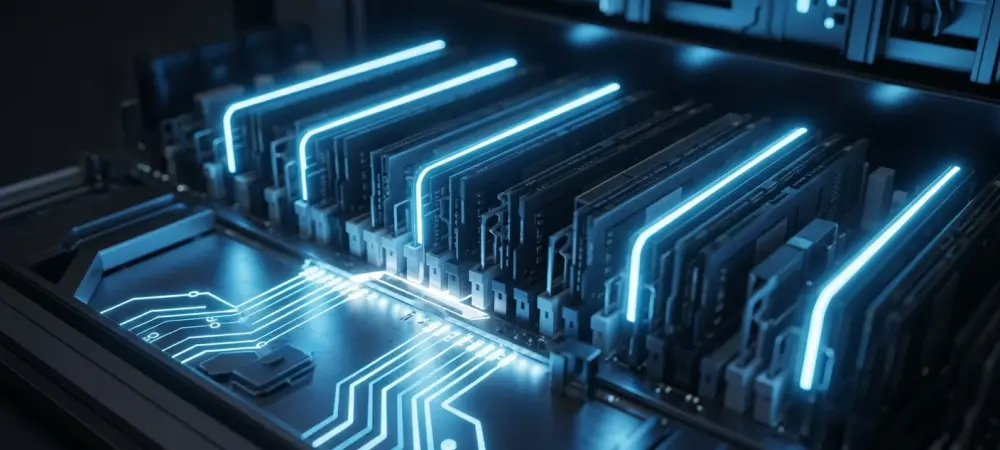
The Dawn: A New Era in Memory Performance
The relentless acceleration of artificial intelligence and high-capacity computing has reached a critical juncture where the existing memory standard can no longer keep pace with processor demands. This next-generation standard promises to redefine the boundaries of speed and bandwidth, effectively doubling the capabilities of the current DDR5 standard. By exploring the collaborative efforts of major manufacturers and the technical specifications currently being drafted, the way this leap in technology will reshape the computing landscape for years to come becomes clear.
From DDR5 to DDR6: Understanding the Evolution of RAM
The journey of Double Data Rate (DDR) memory has been defined by a consistent cycle of doubling bandwidth while improving power efficiency with every new generation. When DDR5 arrived, it introduced a dual 32-bit channel architecture that allowed for significant performance gains over older standards. However, as modern processors increase their core counts and AI workloads demand massive data throughput, even the fastest current modules are beginning to face bottlenecks. Historically, memory transitions are not just about raw speed; they represent architectural refinements that allow the rest of the system to operate without idling. Understanding this progression highlights why DDR6 is a necessary evolution to support the next decade of digital innovation.
Technical Breakthroughs: The Engineering of Speed
Massive Speed Increments: Doubling the Bandwidth
The most striking feature of DDR6 is its sheer velocity compared to previous iterations. While DDR5 currently hovers around a baseline of 4,800 MT/s and peaks in the high 8,000s for enthusiast kits, DDR6 is set to start where its predecessor leaves off. Official standards drafted by JEDEC suggest a baseline speed of 8,800 MT/s, with an official ceiling reaching a staggering 17,600 MT/s. For the enthusiast community, early projections suggest that overclocked modules could eventually push past the 21,000 MT/s mark. This massive increase in bandwidth is essential for feeding data-hungry GPUs and CPUs, ensuring that high-resolution rendering and complex simulations run with minimal latency.
Multi-Channel Sub-Systems: Rethinking Internal Architecture
To achieve these record-breaking speeds, manufacturers are moving away from the internal layout used in previous generations. DDR6 is expected to transition from the dual 32-bit channel configuration found in DDR5 to a more sophisticated four 24-bit sub-channel design. This architectural shift is intended to optimize parallel processing, allowing the memory controller to handle multiple data streams more efficiently. However, this complexity brings its own set of challenges, particularly regarding signal integrity. As frequencies climb higher, preventing data noise becomes significantly more difficult, requiring innovative designs and high-quality substrates to ensure the memory remains stable at extreme speeds.
Compact Form Factors: The Shift Toward CAMM2
Beyond internal architecture, the physical way memory connects to motherboards is also evolving rapidly. The industry is increasingly looking at the CAMM2 (Compression Attached Memory Module) form factor as the primary vehicle for DDR6, particularly in the laptop and small-form-factor markets. Traditional SO-DIMM slots are beginning to reach their physical limits in terms of signal routing and cooling. CAMM2 offers a thinner profile and the ability to maintain shorter trace lengths, which is critical for supporting the high frequencies DDR6 demands. This shift ensures that even portable devices can take full advantage of the performance leap without being held back by outdated mechanical connectors.
Market Realities: Navigating Production Timelines
Despite the excitement surrounding these technical specs, the road to widespread adoption is influenced by broader economic factors. Currently, the global memory market is heavily shaped by the explosive growth of AI, leading manufacturers to prioritize high-margin server components. This means the rollout of DDR6 will likely be staggered, appearing first in enterprise-grade data centers where the need for bandwidth justifies the initial costs. Consumers should temper their expectations for immediate availability; current estimates suggest that mainstream gaming PCs and consumer laptops may not see DDR6 modules until 2028 or even 2029. High manufacturing costs mean that DDR6 will remain a premium product for several years.
Strategic Preparation: What Businesses Need to Know
For organizations and individual users planning their hardware cycles, the arrival of DDR6 requires a strategic approach. Businesses should recognize that current DDR5 systems will remain relevant and highly capable for the next several years, meaning there is no immediate need to delay essential upgrades in anticipation of the next standard. However, for those working in fields like AI development or high-end video production, keeping a close eye on the enterprise rollout will be crucial, as these early modules will set the performance benchmarks for future consumer products. When the transition does eventually reach the mainstream market, buyers should be prepared for a period of platform exclusivity.
Final Thoughts: The Future Landscape of Computing
The analysis of DDR6 development demonstrated that this technology provided the foundation for the next decade of digital advancement. It addressed the critical bottlenecks that threatened to stall progress in high-performance computing and data science. While the projected wait for consumer-grade availability remained significant, the leap toward 17,600 MT/s ensured that hardware kept pace with the increasing demands of software. Strategic planners looked toward the end of the decade, recognizing that DDR6 would eventually stand as the standard-bearer for performance across the entire digital ecosystem, driving innovation in ways that were previously impossible. Organizations that prepared for this shift early gained a distinct competitive edge.