

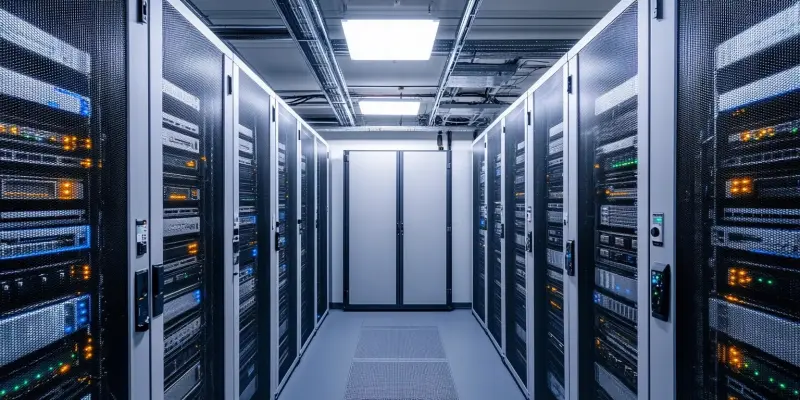
The introduction of Keysight’s AI (KAI) Data Center Builder marks a significant milestone in the realm of AI infrastructure enhancement. Developed by Keysight Technologies, Inc., this innovative software suite serves a critical role in validating and optimizing AI systems by emulating real-world workloads. The growing complexity and expansive nature of AI infrastructures necessitate a tool that can deliver detailed insights into performance effectiveness, and the KAI Data Center Builder fits this need perfectly.
Intelligent AI Infrastructure Validation
Simulating Real-World Workloads
One of the standout features of the KAI Data Center Builder is its ability to simulate real-world AI training tasks. By accurately reproducing these workloads, AI operators, GPU cloud providers, and infrastructure vendors can gain valuable insights into data movement efficiency and network design. This capability is particularly beneficial for those looking to assess the impact of new algorithms, components, and protocols on the performance of AI training systems. With the ability to emulate LLM workloads such as GPT and Llama, and implement model partitioning methods like Data Parallel (DP), Fully Sharded Data Parallel (FSDP), and three-dimensional (3D) parallelism, the KAI Data Center Builder offers an unparalleled understanding of network performance dynamics.
The tool’s simulation capabilities extend beyond basic workload replication, providing users with a comprehensive environment to experiment and analyze various parameters. This allows for in-depth studies of network utilization, latency, and congestion under different configurations. Such detailed insights help identify potential bottlenecks and inefficiencies, paving the way for more informed decision-making in the design and optimization of AI infrastructure. Consequently, AI operators can fine-tune their systems to achieve optimal performance, significantly reducing job completion times (JCT) and enhancing overall efficiency.
Early-Phase Testing and Optimization
Conducting comprehensive validation and optimization early in the design cycle is essential to avoid costly delays and rework. The KAI Data Center Builder allows for thorough testing and fine-tuning of AI infrastructure components long before full-scale deployment. This early-phase validation is critical as it provides a strategic approach to enhancing AI infrastructure. By identifying and rectifying potential issues or inefficiencies early on, AI operators can prevent significant costs and delays associated with late-stage fixes or system overhauls.
Incorporating early-phase testing into the AI infrastructure design cycle also allows for a more agile and responsive development process. With the KAI Data Center Builder, users can rapidly iterate on different configurations and quickly adapt to new requirements or technological advancements. This flexibility is crucial in the fast-paced world of AI, where continuous innovation and improvement are paramount. Moreover, by validating components early, developers can ensure that their AI systems are robust, scalable, and capable of meeting ever-evolving demands, ultimately leading to more effective and reliable AI solutions.
Experimentation and Performance Enhancement
Flexible Experimentation with AI Workloads
The KAI Data Center Builder empowers users to experiment with various AI workloads and system infrastructure parameters. By integrating large language model (LLM) workloads like GPT and Llama and utilizing popular model partitioning schemas, users can explore different partition sizes, distributions, and scheduling configurations. This experimentation is critical for identifying the most efficient setup and reducing job completion times (JCT). The ability to test different configurations without the need for extensive physical resources enables a detailed examination of how various parameters impact overall performance.
This capability to experiment extends to different aspects of the AI infrastructure, including the tuning of GPU interconnects and network communication patterns. By enabling a simulated environment for testing, AI operators can optimize resource allocation, improve load balancing, and enhance overall system efficiency. The KAI Data Center Builder’s flexibility in handling diverse workloads and adjusting parameters ensures that the AI infrastructure can be tailored to meet specific needs and objectives, fostering a more effective and efficient AI training environment.
Analysis of Network Communication Patterns
Understanding network communication patterns is crucial for improving AI workload efficiency. The KAI Data Center Builder facilitates detailed analysis of network utilization, tail latency, and congestion, allowing for the identification of network bottlenecks. Detailed insights into these communication patterns are essential for optimizing performance, as they reveal the underlying causes of inefficiencies and provide actionable data for improvement. By experimenting with different configurations, users can gain a deeper understanding of how network parameters affect overall system performance.
This in-depth analysis helps uncover low-performing operations and areas of congestion that may hinder the efficiency of AI training tasks. By addressing these issues, AI operators can enhance data movement efficiency and reduce delays, leading to faster job completion times. The ability to simulate and analyze network communication patterns also supports the development of more robust and scalable AI infrastructures, capable of handling increasing workloads and demands.
Scalability and Cost-Effectiveness
Enhancing Scalability and Flexibility
Scalability is a key consideration for modern AI infrastructures, and the KAI Data Center Builder promotes the scalability of GPU interconnects within an AI host or rack. By facilitating detailed experimentation with network load balancing and congestion control, the tool supports the development of a flexible infrastructure capable of meeting diverse workload demands. This scalability is critical for ensuring that AI systems can grow and adapt to accommodate larger datasets and more complex algorithms.
The KAI Data Center Builder’s emphasis on flexibility also allows AI operators to easily integrate new technologies and adapt to changing requirements. The ability to experiment with different configurations and optimize performance without extensive physical resources streamlines the development process and enhances overall system agility. This focus on scalability and flexibility ensures that AI infrastructures remain robust and capable of supporting ongoing advancements in AI research and application.
Reducing Resource Costs
Keysight Technologies, Inc. has introduced the KAI Data Center Builder, representing a significant advancement in AI infrastructure development. This groundbreaking software suite plays a crucial role in validating and fine-tuning AI systems by simulating real-world workloads. As AI infrastructures grow more complex and expansive, there is an increasing need for tools that can provide intricate insights into their performance efficiency, and the KAI Data Center Builder fulfills this requirement excellently. By offering detailed performance analysis, it aids in the seamless operation and enhancement of AI systems. With the ever-evolving landscape of AI, having a robust tool like the KAI Data Center Builder allows developers to keep pace with technological advancements. This tool ensures that AI systems operate at peak efficiency, ultimately supporting the development of more sophisticated and reliable AI applications. By replicating real-world scenarios, the KAI Data Center Builder enables more accurate assessments, contributing to overall advancements in AI technology and infrastructure.